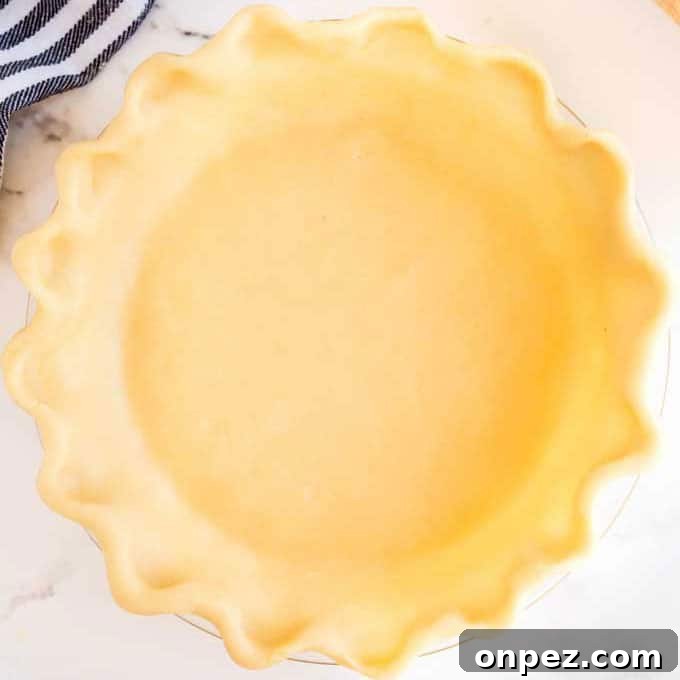
Learn how to make a flaky, buttery homemade pie crust that turns out perfectly every time. This simple, reliable pie dough is the only crust recipe you’ll need for fruit-filled pies, custard pies, and everything in between.
Try this crust with your favorite holiday pies such as Dutch apple pie or a classic pumpkin pie.
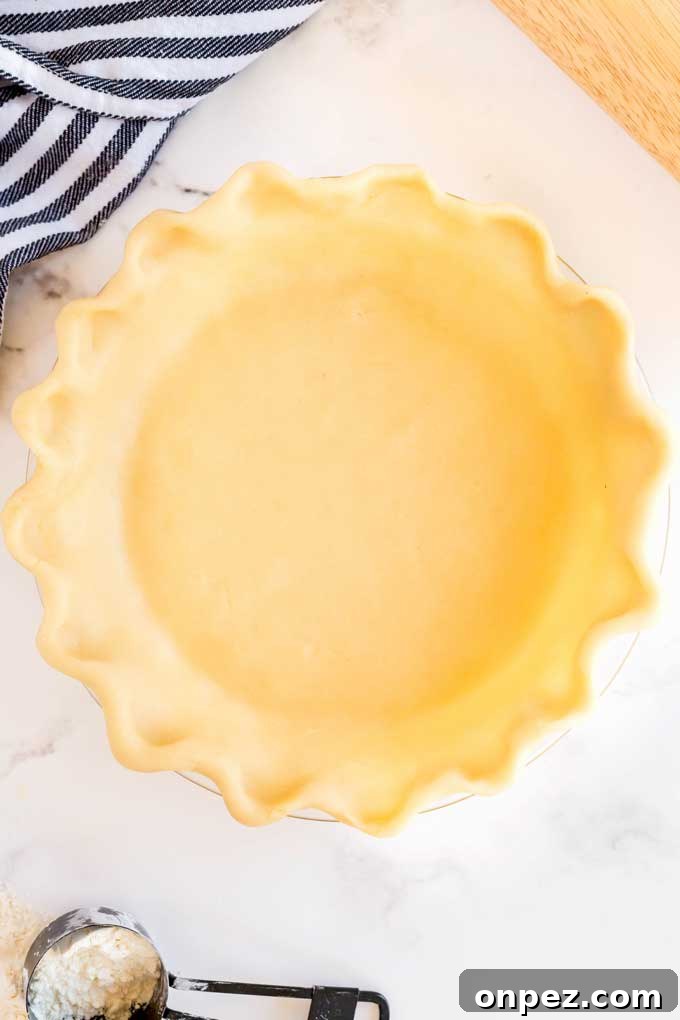
Making pie crust from scratch may seem intimidating, but with a few pantry staples and simple steps you can make an excellent crust with confidence. This recipe yields a tender, flaky dough that is beginner friendly and easy to roll out. You can make it in a food processor for speed and consistency, or by hand if you prefer.
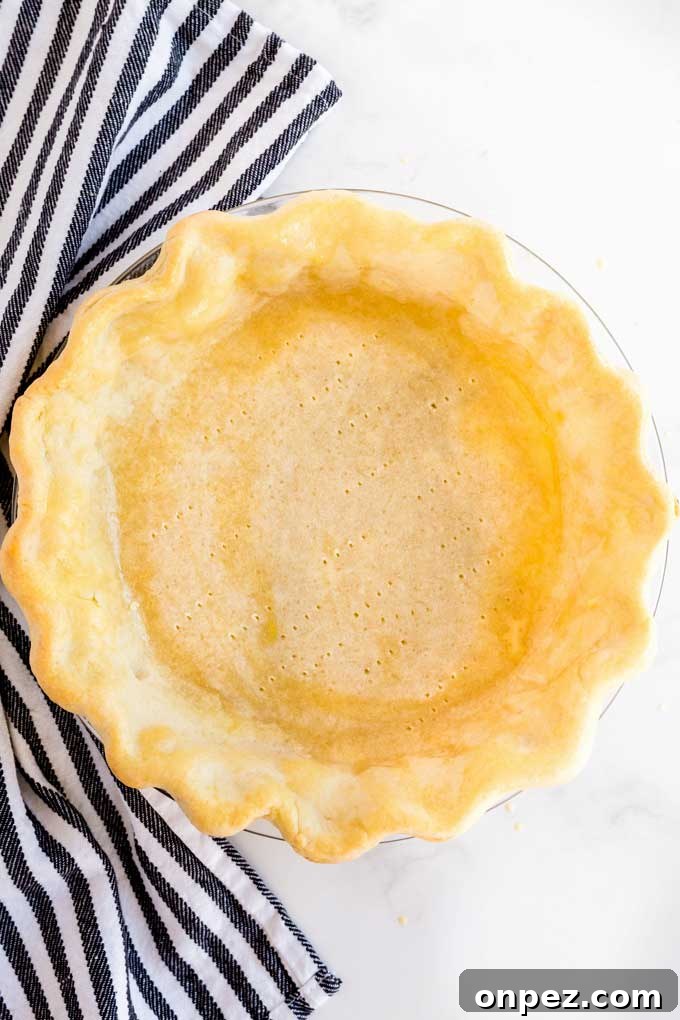
✔️ Homemade Pie Crust
Why choose this recipe? It uses a small list of common ingredients and produces a consistently flaky, buttery crust. The combination of cold butter and shortening balances rich flavor with an extra-flaky texture. The method is forgiving, especially if you use a food processor, making it an ideal choice for home bakers.
⭐️ Why You Will Love This Recipe
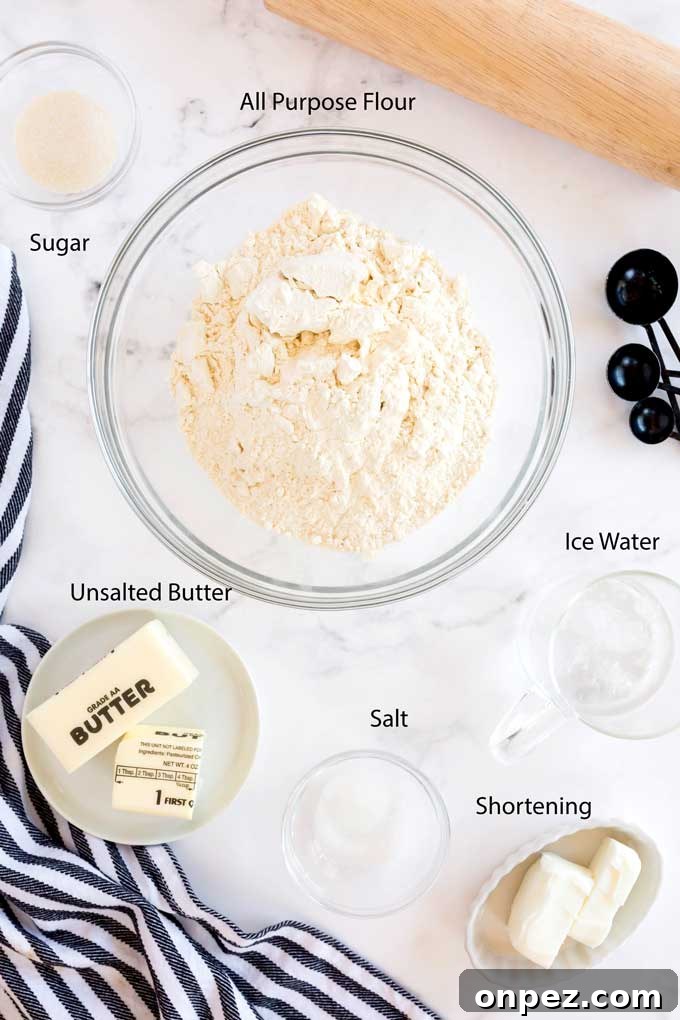
- This crust requires only six pantry staples: all-purpose flour, unsalted butter, vegetable shortening, sugar, salt, and ice water. An optional egg wash gives a glossy, golden finish.
- A food processor speeds up the process and gives very consistent results; making the dough by hand works well too.
- The recipe makes enough dough for one 10-inch double crust or two 10-inch single crust pies.
✔️ Tools for Making Pie Crust
The equipment is basic:
- Food processor (recommended) or pastry cutter for making dough by hand.
- Rolling pin and bench scraper or metal spatula.
- 9-inch or 10-inch pie plate.
- Measuring cups and spoons, mixing bowl, plastic wrap.
- Optional: kitchen shears and a pastry ruler. For blind baking: pie weights and parchment paper.
✔️ All-Butter Crust vs Shortening Crust
Butter delivers superior flavor while shortening contributes extra-flakiness and tenderness. This recipe uses both to achieve a crust that tastes great and has an ideal flaky texture.
✔️ Using Cold Ingredients
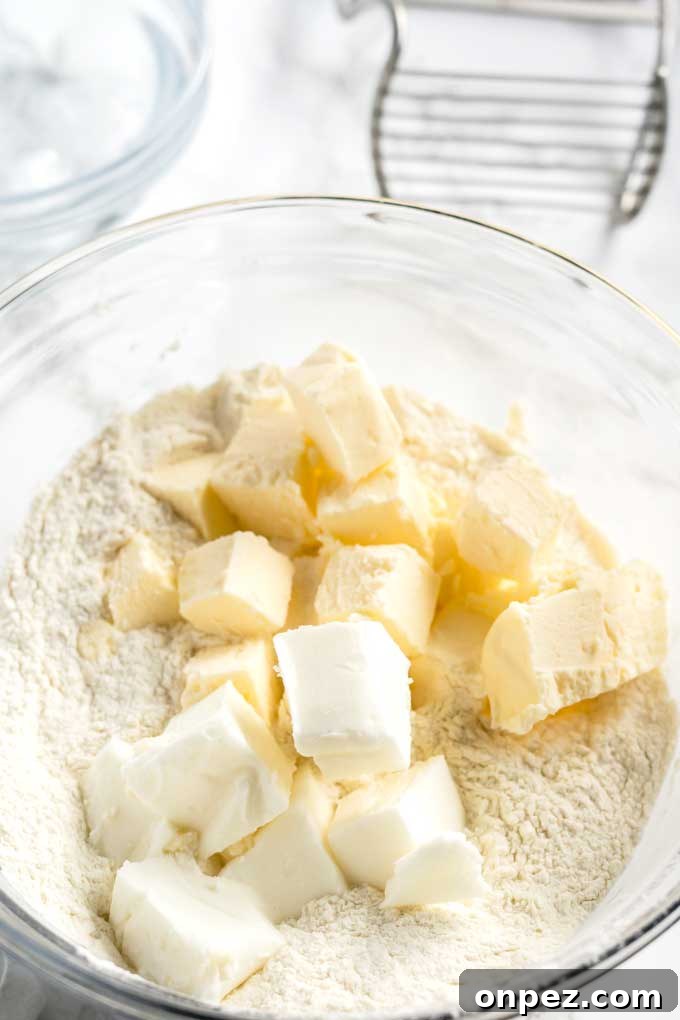
Keep fats and water cold. Cold pieces of fat form small pockets in the dough that create flaky layers as the crust bakes. For best results, measure ingredients in advance and chill them briefly; some bakers even chill the food processor blade. Cold ingredients help ensure a tender, flaky pie shell.
🔎 How to Make Pie Crust
Below are the instructions for making this pie crust both in a food processor and by hand. The full recipe (ingredients and steps) follows.
✔️ Making Pie Crust in the Food Processor
- Cold butter: Dice very cold butter into 1/2-inch pieces and keep it chilled while preparing the dry ingredients.
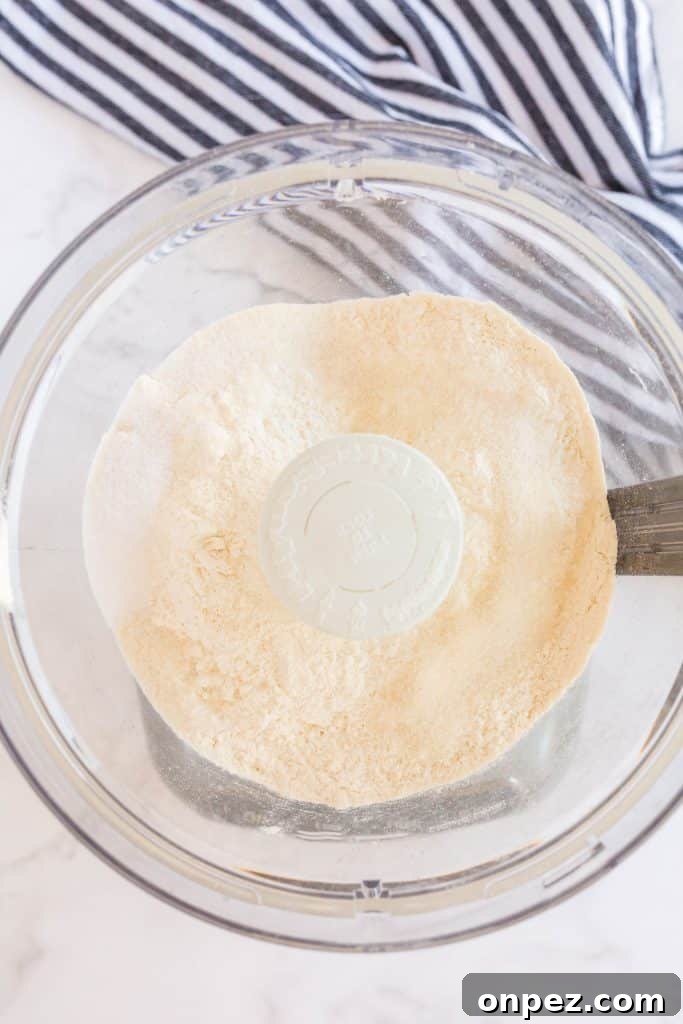
- Combine dry ingredients: Pulse flour, sugar, and salt in the food processor just to mix.
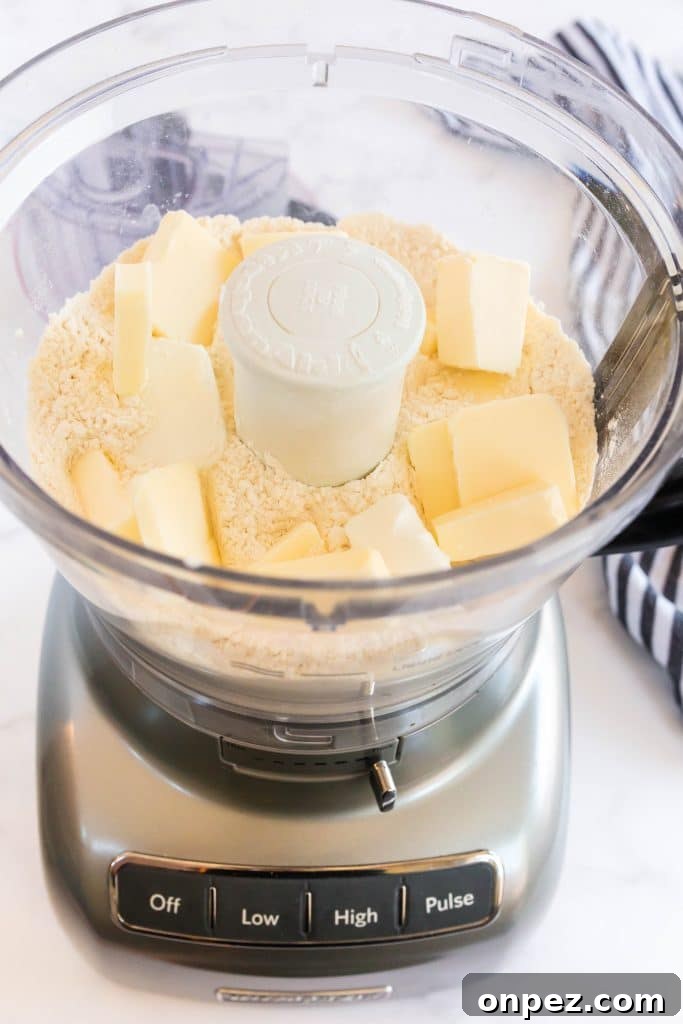
- Cut in the fat: Add cold butter and shortening and pulse until the fat pieces are pea-sized.
- Add liquid: With the processor running, add ice water through the feed tube and pulse until the dough begins to come together and forms a loose ball.
- Gather and chill: Turn the dough onto a floured surface, form into a ball or disk, wrap in plastic, and refrigerate for 30 minutes before rolling. You can also freeze the dough for later use.
✔️ Making Pie Crust by Hand
- Cold butter: Keep butter and shortening cold.
- Combine dry: Stir flour, sugar, and salt in a large bowl.
- Cut in the fat: Use a pastry cutter, two forks, or your fingers to cut the fats into the flour until pieces are pea-sized. Lift and fold the flour over the fats occasionally for even distribution.
- Add liquid: Add ice water a tablespoon or two at a time, mixing until the dough forms large clumps. You may not need all the water.
- Gather and chill: Form the dough into a disk, wrap, and chill for 30 minutes. Freeze if storing for later.
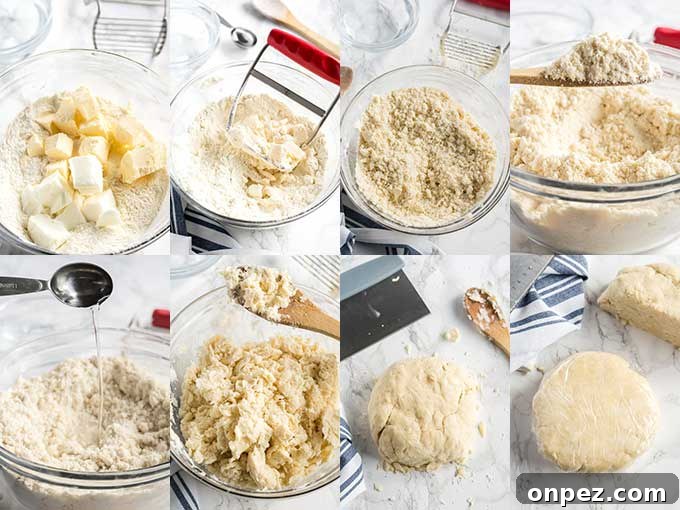
🔎 What Does “Cutting in the Fat” Mean?
“Cutting in the fat” means breaking the butter and shortening into small pieces and coating them with flour so the fat is distributed evenly through the dough. Those bits of fat create flaky layers when baked.
🔎 How to Roll Out Pie Crust
✔️ Rolling Out the Dough
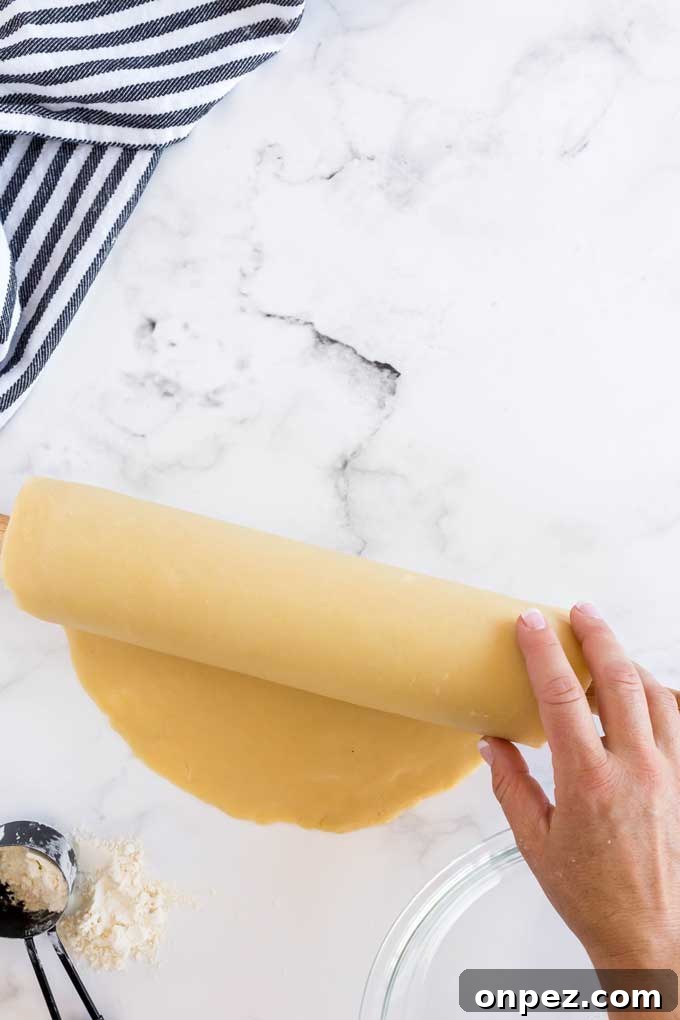
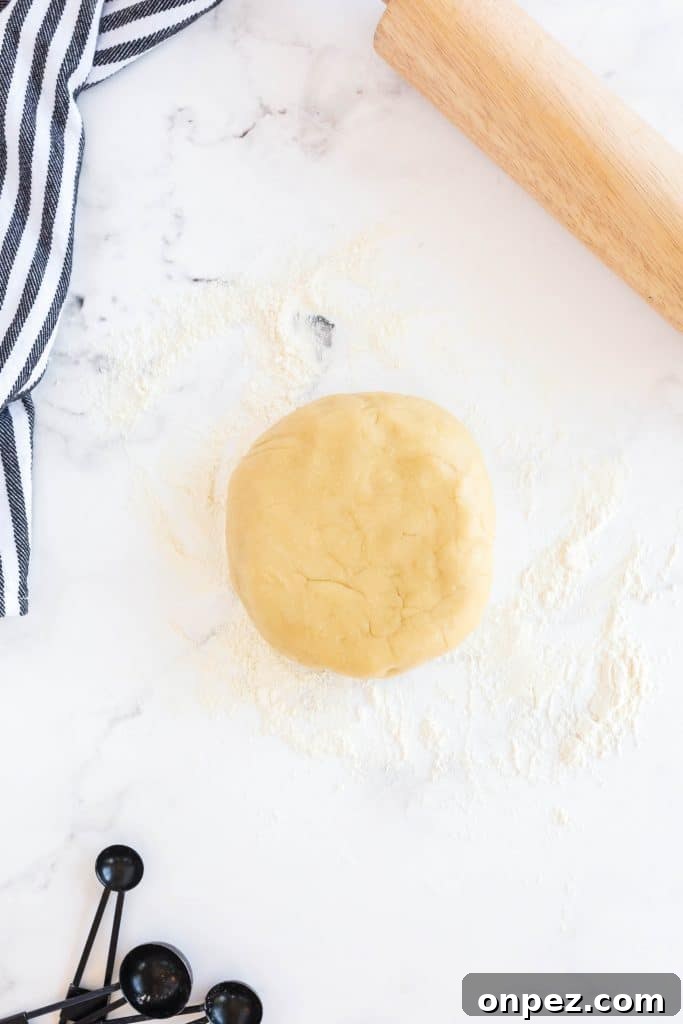
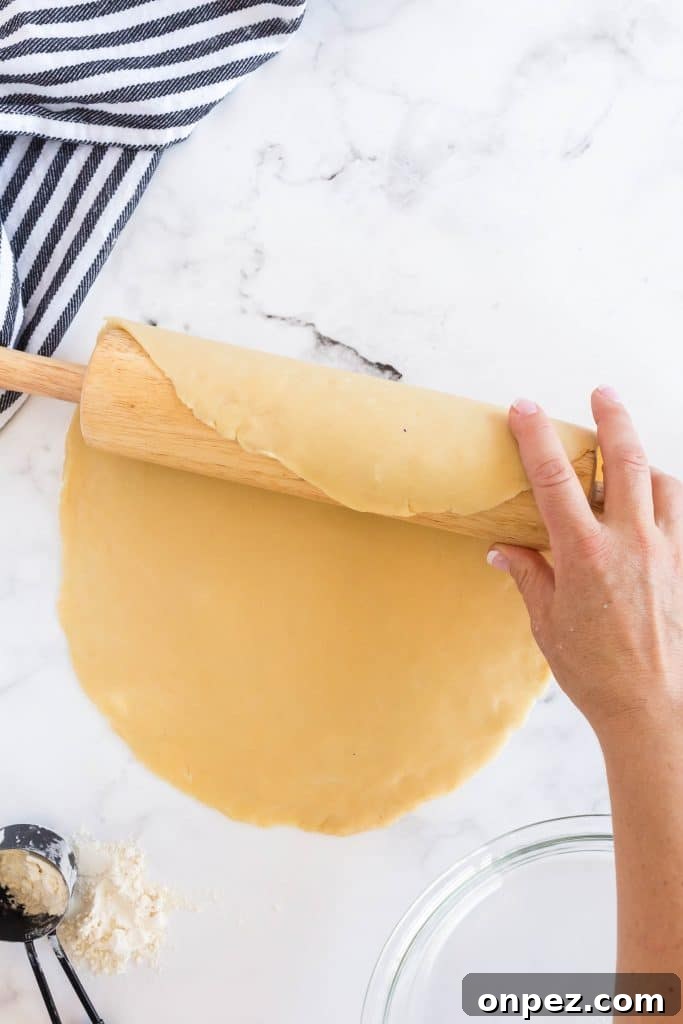
- Flour your work surface and rolling pin lightly, and dust the dough with flour. Roll from the center outward, turning the dough a quarter turn as you go. Work gently to avoid overworking the dough.
- Lift the dough periodically with a bench scraper to ensure it isn’t sticking. Add more flour as needed.
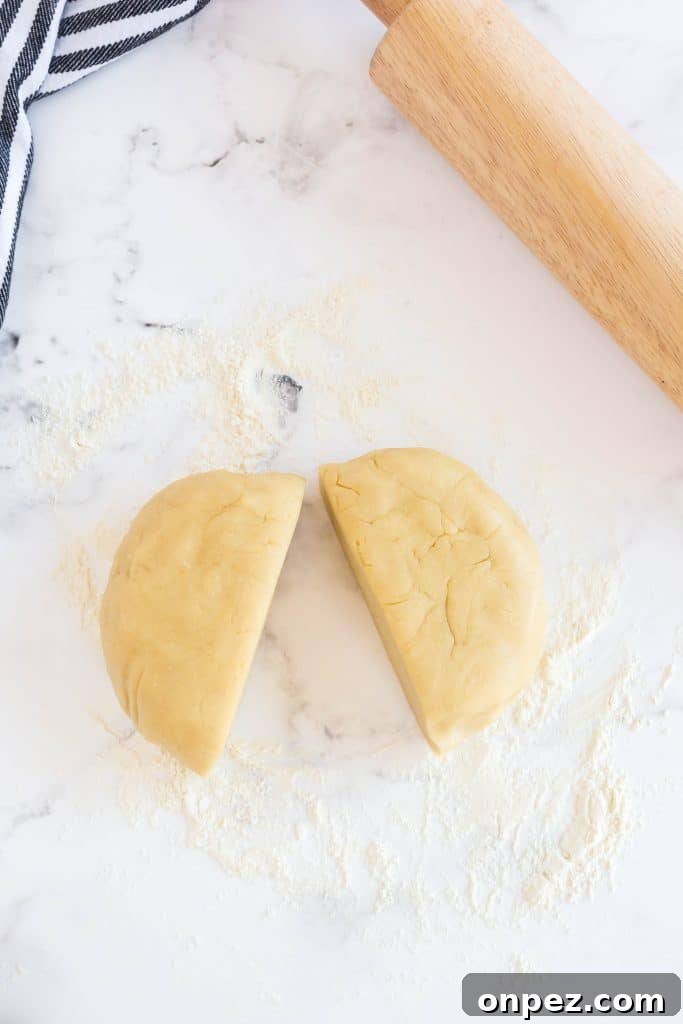
- Roll into a circle large enough to fit a 9- or 10-inch pie plate with a little overhang. The recipe makes enough for two 10-inch single crusts or one 10-inch double crust.
✔️ Transferring the Pie Crust to a Pie Plate
- Loosen the dough from the surface with a bench scraper or spatula.
- Roll the dough onto the rolling pin and transfer it to the pie plate, unrolling it gently over the dish.
- Adjust for even overhang without stretching the dough. Trim excess with kitchen shears or a knife, leaving about 1 inch of overhang if you plan to tuck and crimp the edge.
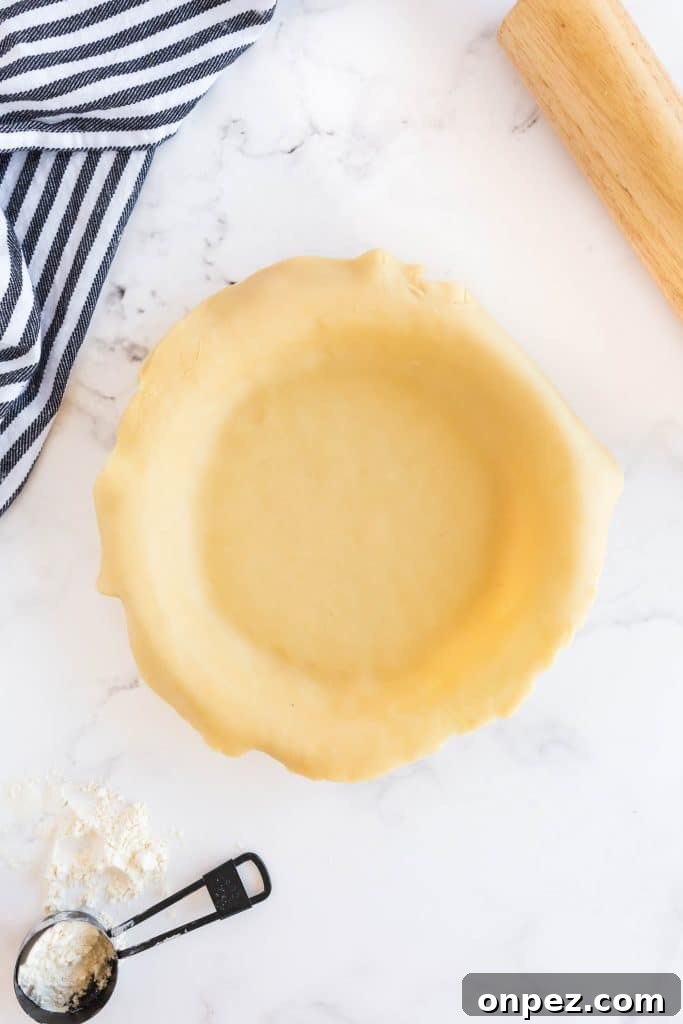
🔎 How to Crimp Pie Crust
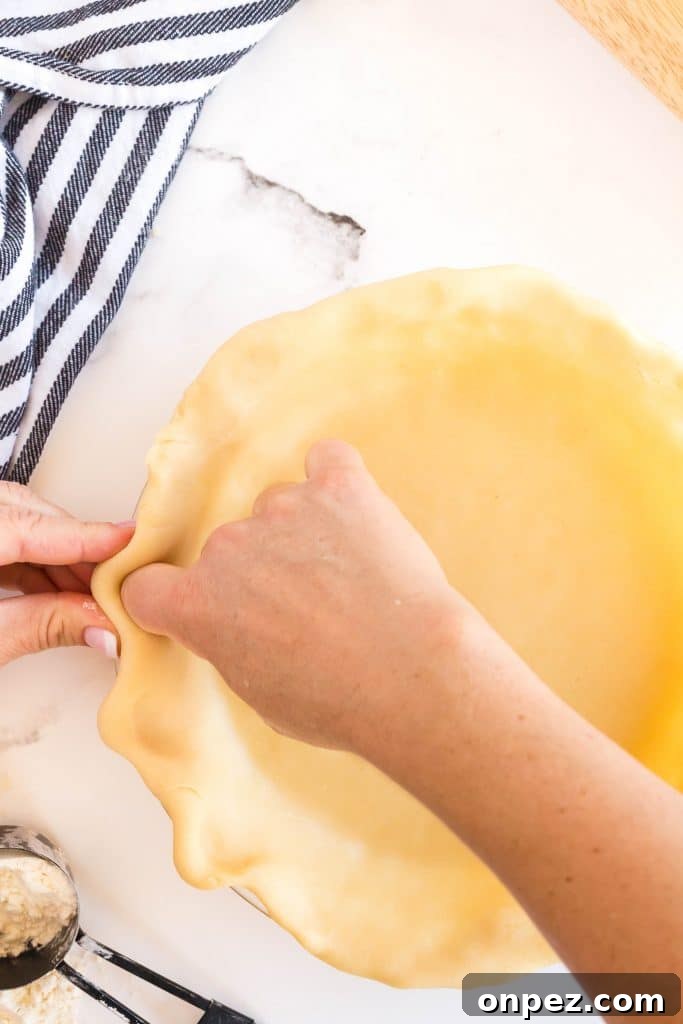
Crimping seals the edge and gives the pie a finished look.
- Tuck the overhang under itself to form a neat ridge.
- With one hand make a small “U” shape using two fingers, and use the index finger of the other hand to press between the “U” and create an indent. Repeat around the pie.
- Optionally brush the crust with an egg wash to promote a golden brown finish.
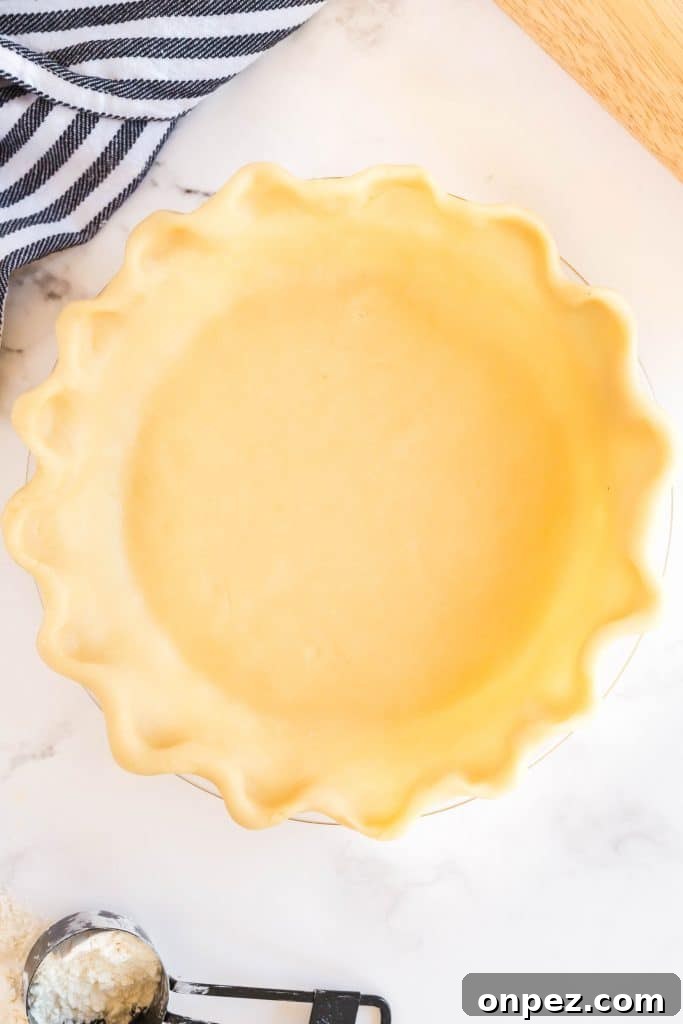
🔎 How to Blind Bake Pie Crust
Blind baking is required for some custard pies, cream pies, quiches, and some fruit pies.
- Preheat the oven to 425°F.
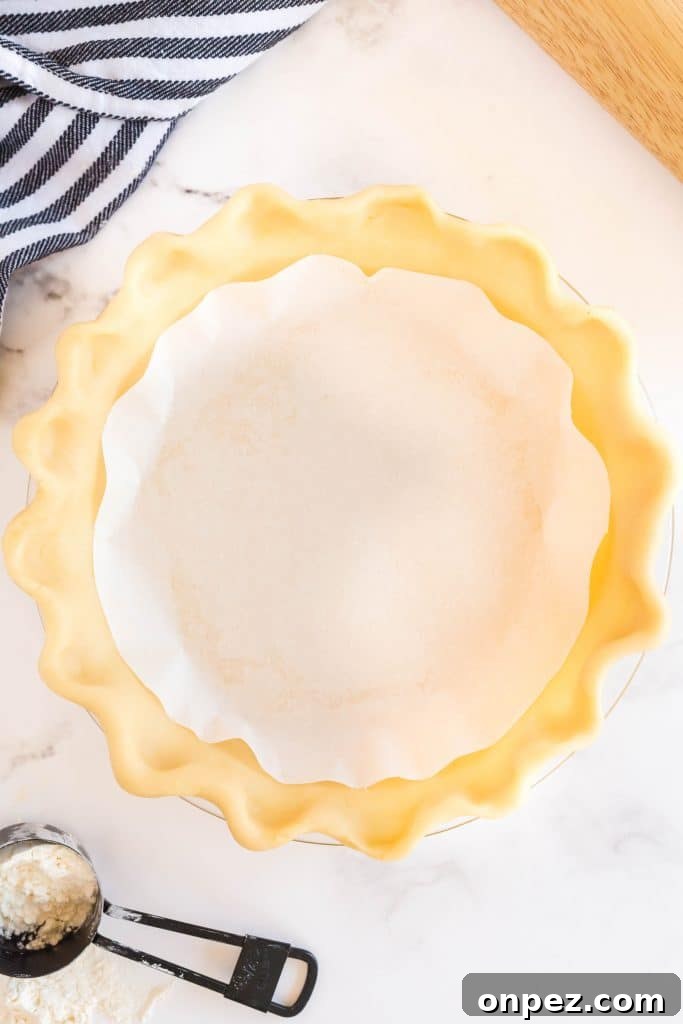
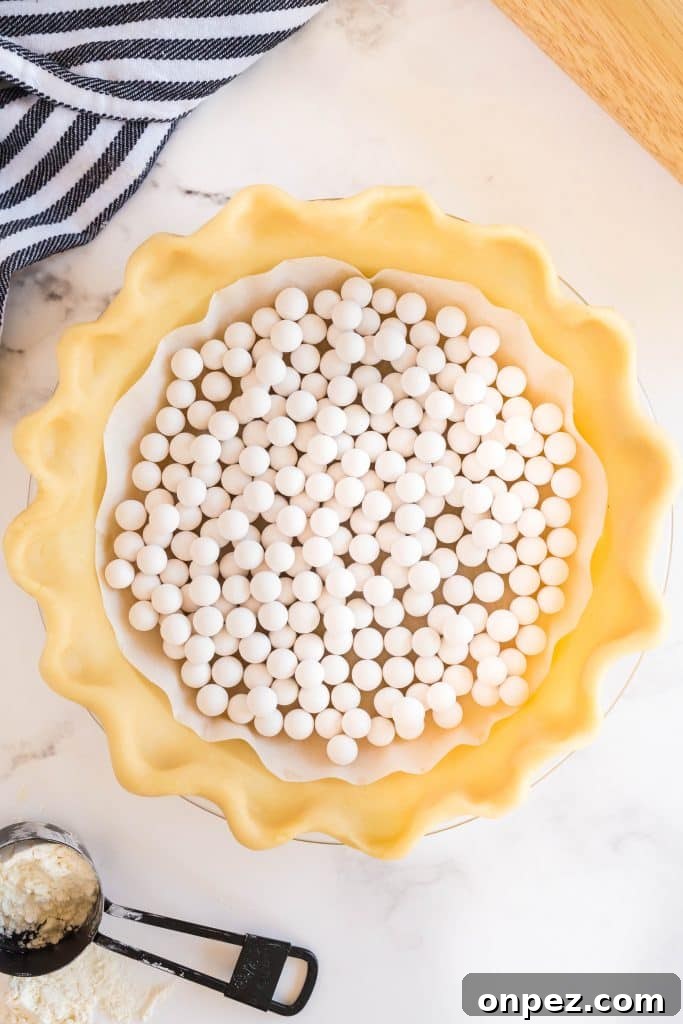
- Line the chilled crust with parchment and fill with pie weights or dried beans.
- Bake until the edges begin to brown (about 15 minutes). Remove weights and paper, brush with egg wash if desired, prick the bottom with a fork, and bake an additional 5–8 minutes until set.
Perfect Homemade Pie Crust — Recipe
Ingredients
- 12 tablespoons (1 1/2 sticks) very cold unsalted butter, diced
- 3 cups all-purpose flour
- 1 tablespoon sugar
- 1 teaspoon kosher or sea salt
- 1/3 cup very cold vegetable shortening
- 1/2 cup ice water (you may not need all of it)
Optional: Egg wash
- 1 egg beaten with 1 tablespoon milk
Instructions
- Cut the cold butter into 1/2-inch dice and keep it chilled while you prepare the flour mixture.
- Combine flour, sugar, and salt in a food processor and pulse to mix.
- Add the cold diced butter and shortening and pulse 8–10 times until the fat is pea-sized. With the machine running, pour ice water through the feed tube and pulse until the dough begins to form a ball.
- Turn the dough out onto a floured surface, form into a ball or disk, wrap in plastic, and refrigerate for 30 minutes.
- After chilling, divide the dough in half if making two single crusts. Roll each piece into a circle on a floured surface, transferring to a pie plate without stretching the dough.
- Trim excess, fold the edge under, and crimp with fingers or a fork. Repeat for the top crust if making a double-crust pie.
To blind bake:
- Preheat oven to 425°F.
- Line the chilled crust with parchment and fill with pie weights or dried beans. Bake about 15 minutes until the edges brown.
- Remove weights and paper, brush with egg wash if desired, prick the bottom with a fork, and bake another 5–8 minutes until set.
Notes
- Keep ingredients cold for the flakiest crust.
- Avoid overworking the dough to prevent toughness.
- Do not stretch the dough when placing it into the pie plate.
- The recipe yields two 10-inch single crusts or one 10-inch double crust.
- Wrap and refrigerate dough for 3–4 days or freeze up to 3 months.
Nutrition (approximate, per serving)
Calories: 201 kcal; Carbohydrates: 19 g; Protein: 3 g; Fat: 13 g.
If you enjoy baking from scratch, this crust is a reliable base for fruit tarts, cream pies, and savory quiches. With practice you’ll master rolling and crimping, but the core of great pie crust is cold ingredients, gentle handling, and patience while chilling. Happy baking!