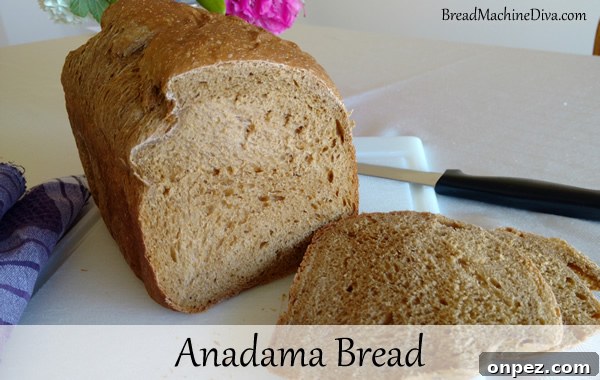
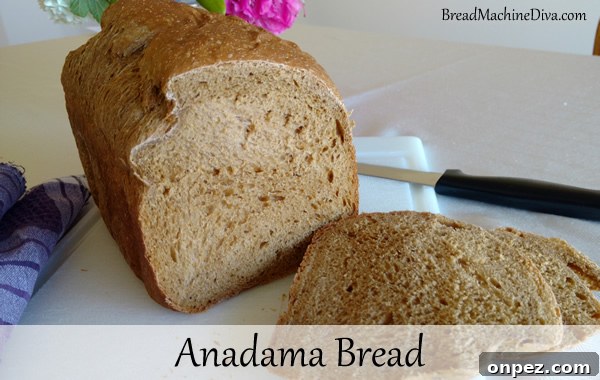
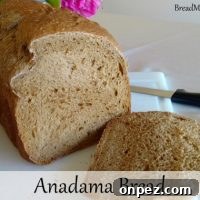
This Anadama bread recipe combines cornmeal and molasses for a classic New England loaf. The result is slightly sweet with a hearty texture and a rich brown color—well worth trying.
Last Updated July 10, 2024 – Originally Published May 23, 2018
Featured Comment
We tried this bread and it is now a STAPLE! It’s so delicious. Hearty, but slightly sweet. It works for sweet or savory applications. It makes the absolute best cinnamon toast ever. ~ Judy
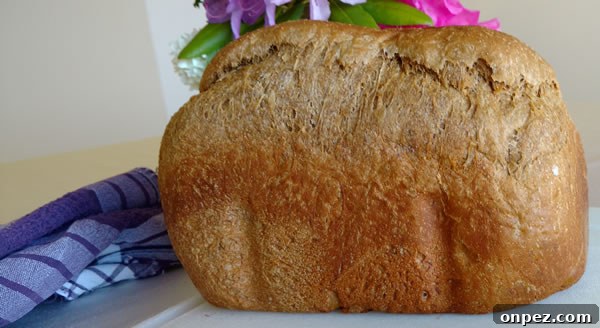
At first the idea of combining molasses and cornmeal in bread sounded odd to me. After tasting Anadama bread, though, any doubts vanished. The molasses adds a mild sweetness and background richness, while the cornmeal gives a pleasant texture and a rustic appearance. The loaf also develops a lovely dark brown crumb that pairs beautifully with butter, preserves, or savory toppings.
How Did Anadama Bread Get Its Name?
A popular New England legend explains the name: a fisherman tired of eating cornmeal porridge made by his wife Anna added flour and yeast to the porridge, baked it, and was heard to grumble, “Anna, damn her.” Whether the story is strictly true or apocryphal, it captures the folklore behind this regional favorite and gives a charming origin to the name “Anadama.”
Where Does Molasses Come From?
Molasses is a thick, viscous syrup produced during sugar production. It forms when sugar cane juice (or sugar beet juice) is boiled and the sugar crystals are removed; successive boilings yield progressively darker and more intense molasses.
There are three common varieties:
- Light molasses: from the first boiling, lighter in flavor and color; suitable when a milder sweetness is needed.
- Dark molasses: from the second boiling, deeper flavor and color—often preferred for Anadama bread.
- Blackstrap molasses: the third boiling, very dark and intensely flavored, with a bitter finish; generally not recommended for this recipe.
For Anadama bread, dark molasses delivers the best balance of sweet and robust flavor, though light molasses can be used if you prefer a subtler result.
What is Cornmeal?
Cornmeal is simply ground dried corn. It varies in grind—from fine to coarse—and in whether it’s whole-grain (stone-ground) or more processed (steel-ground). Whole-grain cornmeal keeps more of the kernel’s germ and bran, offering more flavor and nutrition but a shorter shelf life. For most bread recipes, a medium grind or typical yellow cornmeal works well and provides the classic texture associated with Anadama.
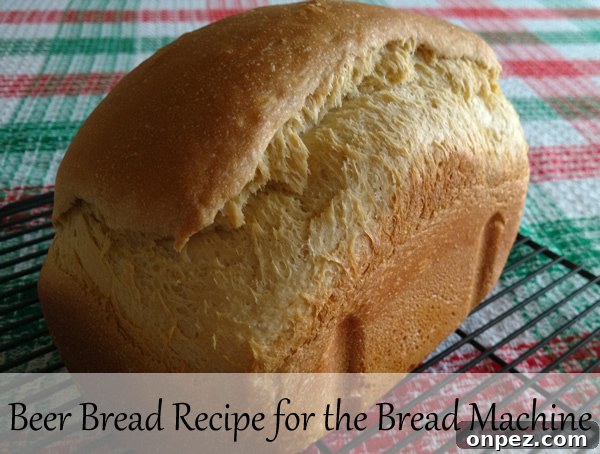
If you enjoy Anadama, you may also like hearty beer bread. It has an old-world flavor, a soft chewy crumb, and a crunchy crust.
How to Make Anadama Bread in a Bread Machine
This recipe is written for a two-pound bread machine. Use the basic (white) setting with medium crust. Different machines recommend different ingredient orders—follow your machine’s instructions. For many machines, adding liquids first is typical.
During the kneading cycle, check the dough after about five to ten minutes. It should form a smooth, round ball. If the dough appears too dry, add water a teaspoon at a time until the texture is right. If it’s too wet and sticky, add flour a tablespoon at a time until it forms a soft ball.
Anadama Bread Recipe for the Bread Machine
Yield: one two-pound loaf (about 14 slices). Use the basic, white setting with medium crust.
Ingredients:
- 1 cup water (236 ml)
- 1/4 cup molasses (dark preferred)
- 3 cups bread flour (about 375 g)
- 1/4 cup cornmeal (about 40 g)
- 1 teaspoon salt
- 2 tablespoons olive oil
- 1 teaspoon active dry yeast
Instructions:
- Add ingredients to the bread machine in the order recommended by the manufacturer (many machines require liquids first).
- Select the basic or white bread setting, choose medium crust, and start the machine.
- After five to ten minutes of kneading, check the dough. It should be a smooth, round ball. Adjust hydration by adding water or flour as needed, a little at a time.
- Allow the machine to complete the cycle. When the loaf is finished, remove it from the pan and cool on a rack before slicing for best texture.
Notes
This recipe was developed and tested using US customary measurements; metric conversions are approximate. Dark molasses deepens flavor and color, but light molasses works if you prefer a milder taste. Avoid blackstrap molasses for this loaf; its intense, slightly bitter profile can overpower the bread.
Course: Bread Machine Recipes
Cuisine: American, New England
Keyword: cornmeal, molasses
Yield: 14 slices per two-pound loaf
Calories: 143 kcal per slice (estimate)
Ingredients
- 1 cup water (236.59 ml)
- 1/4 cup molasses (84 g), dark preferred
- 3 cups bread flour (375 g)
- 1/4 cup cornmeal (40 g)
- 1 teaspoon salt
- 2 tablespoons olive oil
- 1 teaspoon active dry yeast
Instructions
- This recipe is for a two-pound bread machine. Use the basic white setting with medium crust.
- Follow your machine’s recommended order for adding ingredients. Many people add liquids first.
- Check the dough after five to ten minutes of kneading. It should be a smooth, round ball.
- If the dough is too dry, add water a teaspoon at a time. If it’s too wet, add flour a tablespoon at a time until the dough looks right.
- Let the machine complete the bake cycle, then remove the loaf and cool before slicing.
Nutrition (approximate)
Per slice: 143 kcal; Carbohydrates: 26 g; Protein: 4 g; Fat: 3 g; Fiber: 1 g; Sugar: 5 g.
All nutritional information is intended as an estimate only. Consult a nutrition professional if you need precise data for medical or dietary reasons.