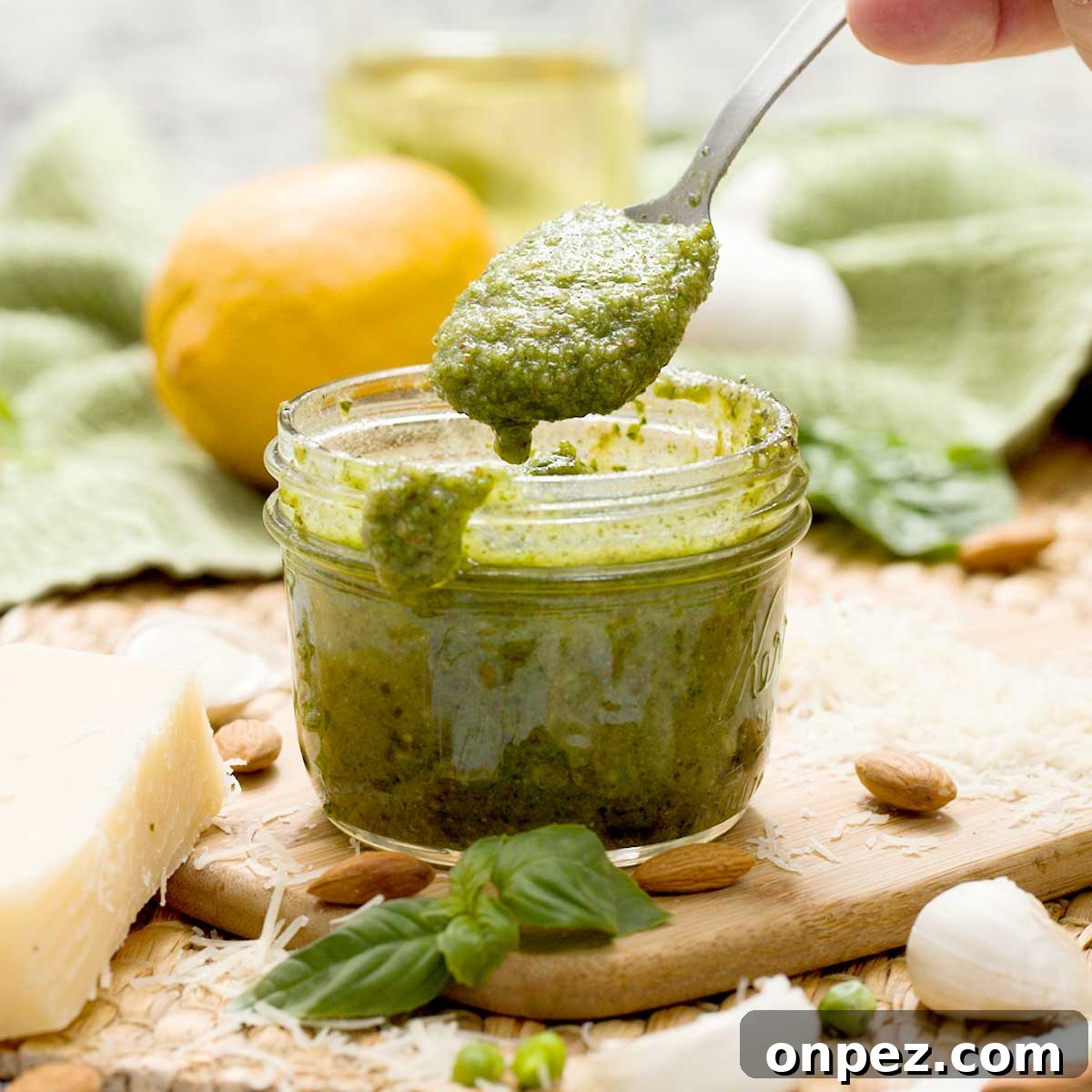
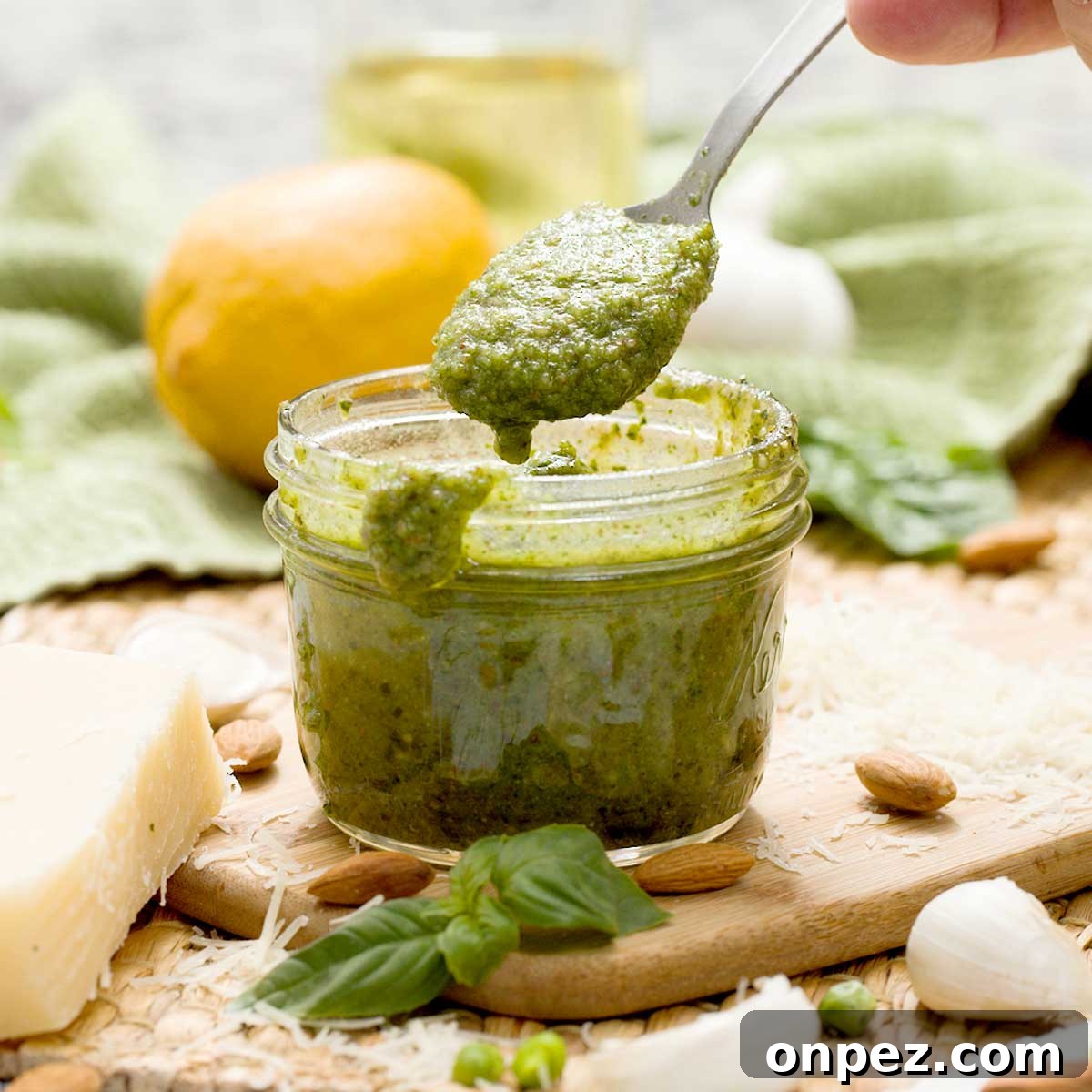
This almond pesto is a bright, classic-style pesto made without pine nuts. It combines fresh basil, toasted almonds, extra-virgin olive oil, grated Parmesan, garlic, lemon juice, and simple seasonings to deliver a smooth, vibrant sauce. Replacing pine nuts with almonds keeps the flavor rich while offering a more affordable, easy-to-find option.
The appeal of this version is its simplicity and reliability. Toasted almonds give the pesto a slightly heartier texture and deeper, nuttier notes, while a small squeeze of lemon lifts the herbs and keeps the overall flavor fresh and balanced. The result is a versatile, everyday pesto you can use on pasta, as a spread, or as a finishing sauce for fish and vegetables.
This is the pesto I prepare most often at home. Pine nuts sometimes upset my digestion, and the almond version feels lighter while preserving that unmistakable pesto character. Even people who prefer the traditional recipe tend to enjoy this almond-based alternative because it keeps the bright basil flavor front and center.
Why This Almond Pesto Works
- Toasted almonds: Lightly toasting almonds releases their oils and deepens their flavor, resulting in a smoother, less raw-tasting paste.
- Process in stages: Blending the almonds and garlic first prevents a gritty texture and helps the rest of the ingredients combine evenly.
- Lemon for balance: A touch of lemon juice brightens the sauce and keeps the basil tasting fresh without overwhelming it.
- Efficient basil use: Using a modest amount of basil keeps the pesto vibrant and cost-effective while still delivering strong herb flavor.
Ingredients & Substitutions
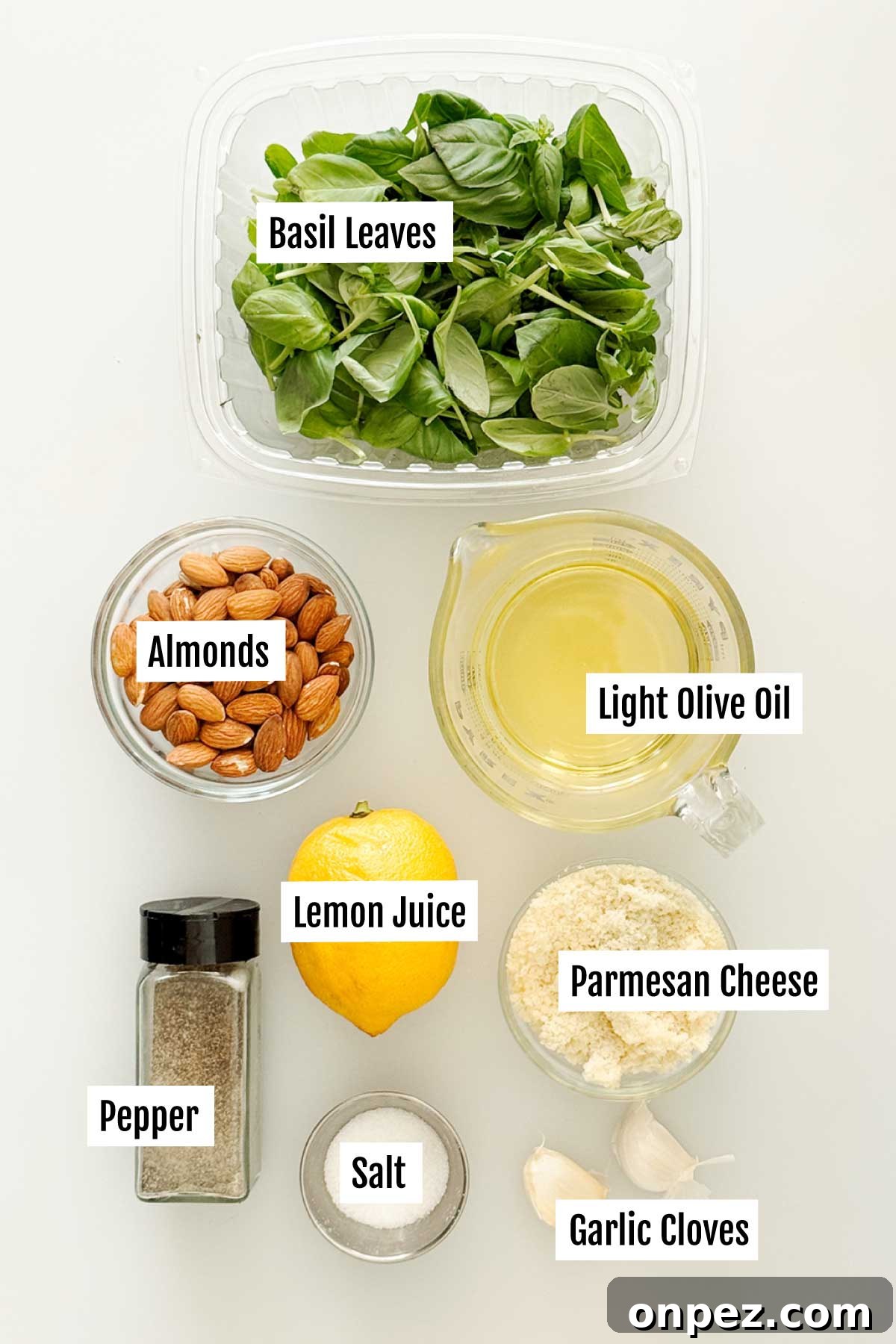
Below are the ingredients I use to make pesto without pine nuts, plus simple swaps to adapt the recipe for different diets or pantry constraints.
- Fresh basil leaves: Use bright, tender basil with no dark spots. The recipe calls for about 3 ounces (roughly 2 packed cups). If basil is scarce, you can substitute up to half the basil with fresh spinach to mellow the flavor and stretch the herbs.
- Almonds: Whole almonds or blanched almonds both work. Toasting them lightly in a dry skillet or oven brings out flavor and helps them blend smoothly.
- Extra-virgin olive oil: A good-quality, mild olive oil carries the flavors. Choose one that complements but doesn’t overpower the basil.
- Parmesan cheese: Freshly grated parmesan adds savory depth and salt. You can use pre-shredded if necessary, but freshly grated blends and melts better into the sauce.
- Garlic: Fresh garlic provides a bright bite. Two cloves are usually enough; add more only if you want a stronger garlic presence.
- Lemon juice: A small splash keeps the pesto tasting lively and helps preserve the green color.
- Salt and black pepper: Season to taste—start conservatively and adjust after blending.
Easily Adapt This Recipe for Any Diet
This pesto is straightforward to modify. Use the suggested swaps below to make it gluten-free, dairy-free, or vegan without losing the texture and flavor you expect from pesto.
- Gluten-free: The recipe is naturally gluten-free. If using commercial products like pre-grated cheese, verify the label for hidden gluten.
- Dairy-free: Replace the parmesan with nutritional yeast or a dairy-free “parmesan” alternative to maintain savory richness.
- Vegan: Use nutritional yeast instead of cheese for a plant-based option that still delivers umami and body.
How to Make This Almond Pesto
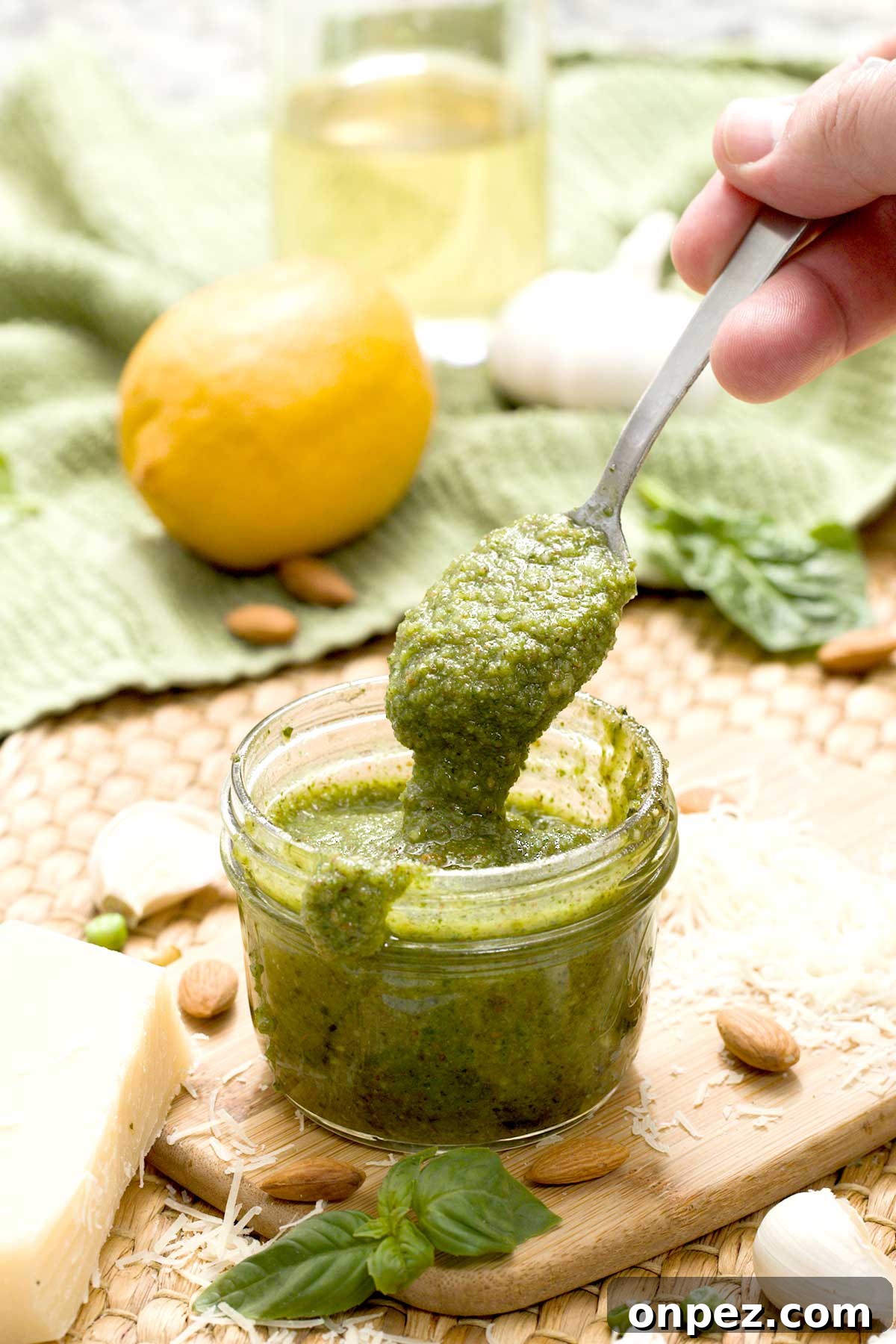
Follow these simple steps to make pesto that is smooth, glossy, and full of bright basil flavor. The method is designed to avoid graininess and achieve a balanced texture.
Step 1: Prep the Ingredients
Wash and dry 3 ounces of fresh basil (about 2 packed cups). Measure 1/3 cup almonds, 2/3 cup light olive oil, 1/2 cup grated Parmesan, 2 teaspoons lemon juice, 1/2 teaspoon salt, a dash of black pepper, and peel 2 garlic cloves.
Step 2: Pulse Almonds and Garlic
Place the almonds and garlic in a food processor and pulse until they are finely chopped and sandy in texture. Scrape down the sides as needed. This initial step prevents the finished pesto from being gritty.
Step 3: Add Basil and Finish
Add the basil, Parmesan, lemon juice, salt, and pepper. With the processor running, slowly stream in the olive oil until the mixture becomes cohesive and smooth—about 30 to 60 seconds. Taste and adjust salt or lemon as needed. The finished pesto should be glossy and well-emulsified.
Expert Tips
- Toast the almonds: A quick toast in a dry pan takes the edge off raw almonds and adds depth.
- Process in stages: Grinding the nuts and garlic first prevents graininess when the basil is added.
- Slowly add the oil: Pouring oil slowly while blending creates a creamy emulsion rather than a separated sauce.
- Use lemon sparingly: A little lemon brightens the pesto; too much will compete with the basil.
Serving Suggestions
- Classic pasta: Toss a few spoonfuls into hot pasta with a splash of pasta water for a quick, flavorful meal.
- Sandwich spread: Use as a spread on sandwiches or to dress grain bowls for instant flavor.
- Finish fish or chicken: Spoon a thin layer over warm, breaded fish or grilled chicken just before serving.
- Toast or crostini: Spread on toast with avocado or ricotta for an easy appetizer or snack.
Frequently Asked Questions
How do I store almond pesto?
Store pesto in an airtight jar in the refrigerator. Smooth the surface and pour a thin layer of olive oil over the top to slow browning. Use within 4 to 5 days for best flavor.
Can I freeze this pesto?
Yes. Freeze pesto in small portions—ice cube trays work well—so you can thaw only what you need. Frozen pesto keeps well for several months.
Why does pesto turn brown?
Exposure to air causes oxidation and browning. Almond pesto can darken faster than versions made with pine nuts. Covering the surface with oil and keeping the container sealed reduces discoloration.
Can I use spinach instead of basil?
You can substitute up to half the basil with fresh spinach to tone down the herbaceous intensity or stretch the basil supply while keeping texture similar.
Do almonds need to be toasted?
Toasting is optional but recommended. Toasted almonds blend more smoothly and give the pesto a richer, more rounded flavor.
What else can I use pesto for besides pasta?
Try it on avocado toast, stirred into creamy sauces, drizzled over roasted vegetables, or as a bright topping for fish and chicken. Pesto is a flexible condiment that complements many dishes.
More Sauce Recipes
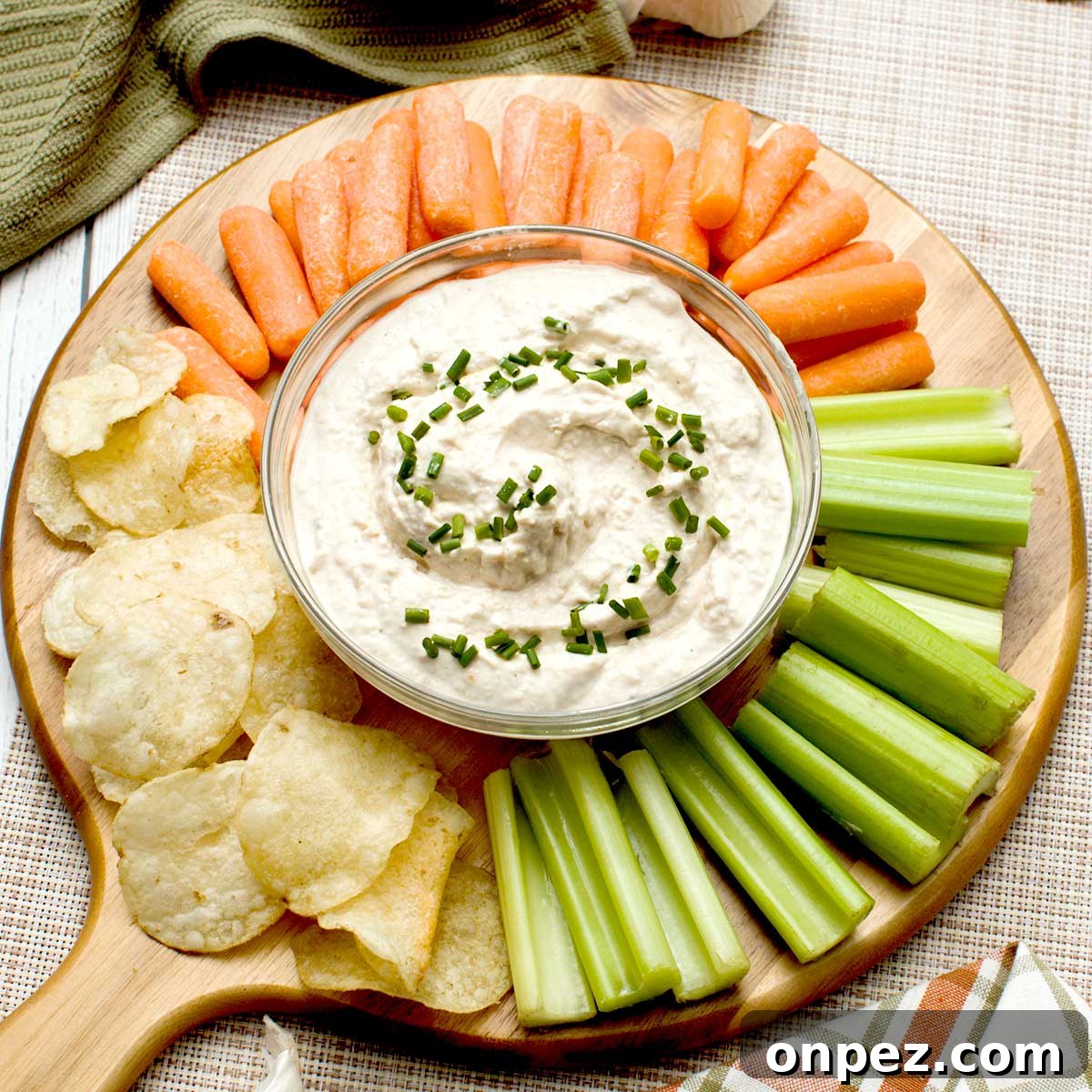
Greek Yogurt French Onion Dip (High-Protein)
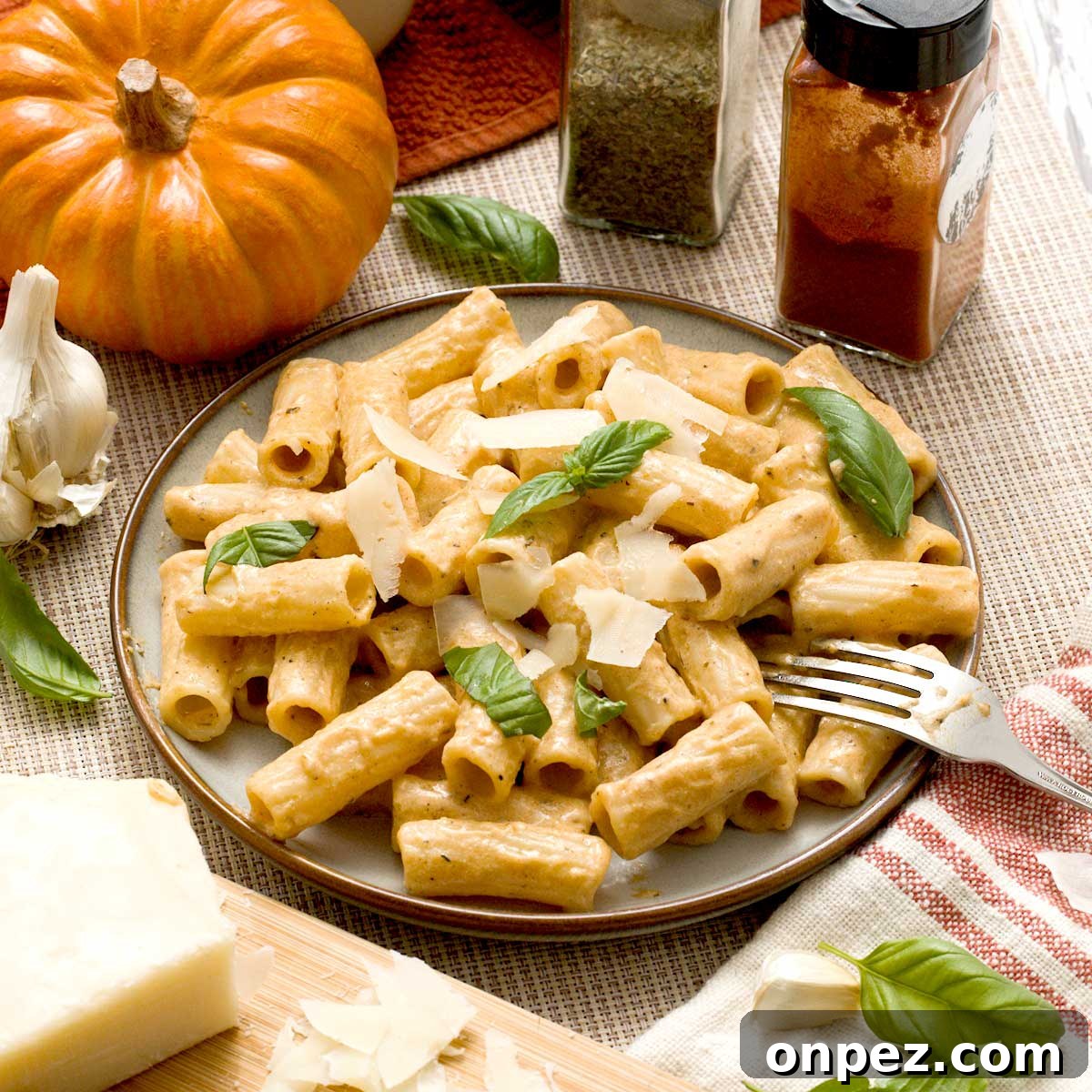
Protein Pumpkin Pasta Sauce with Cottage Cheese
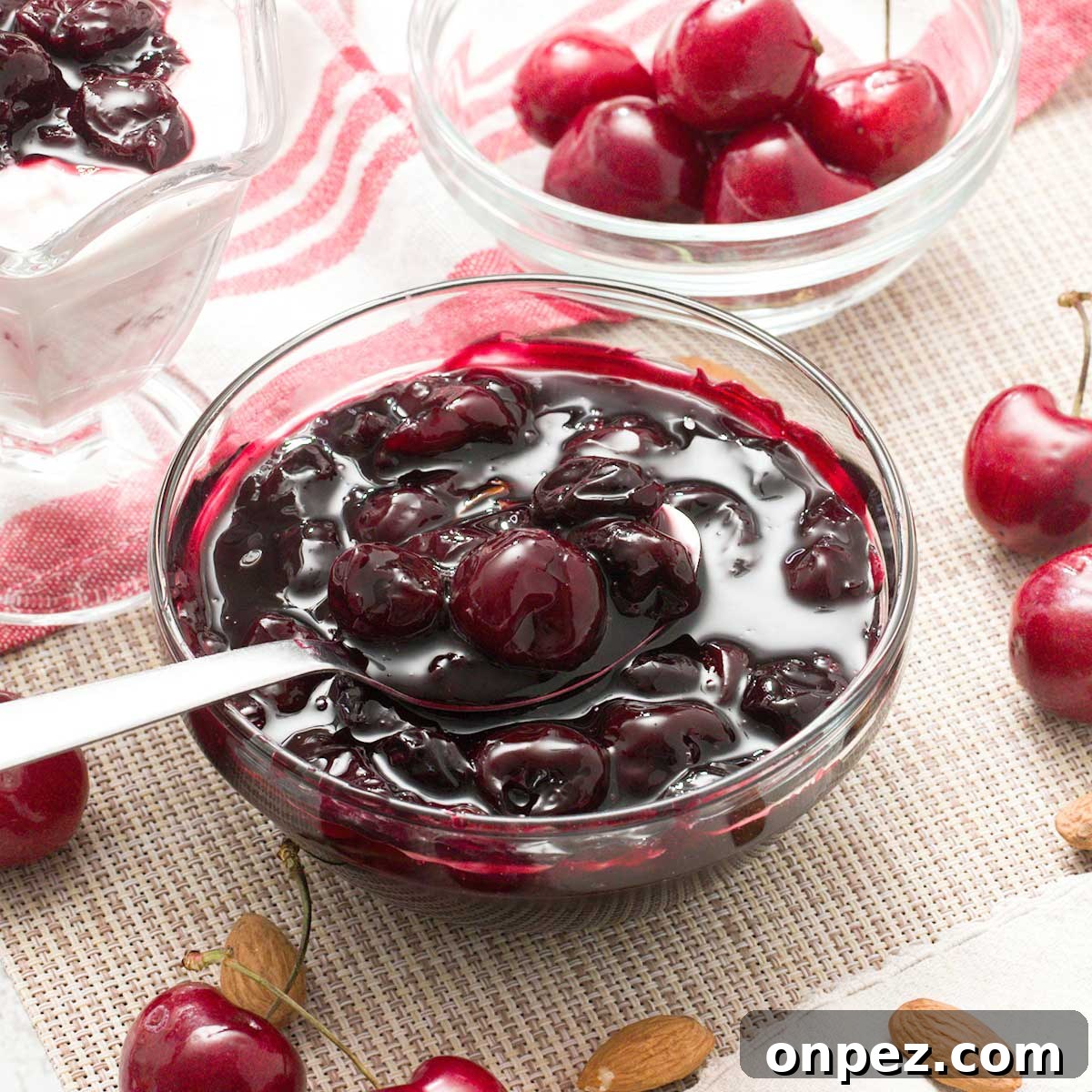
Cherry Compote (Easy 15-Minute Dessert Topping)
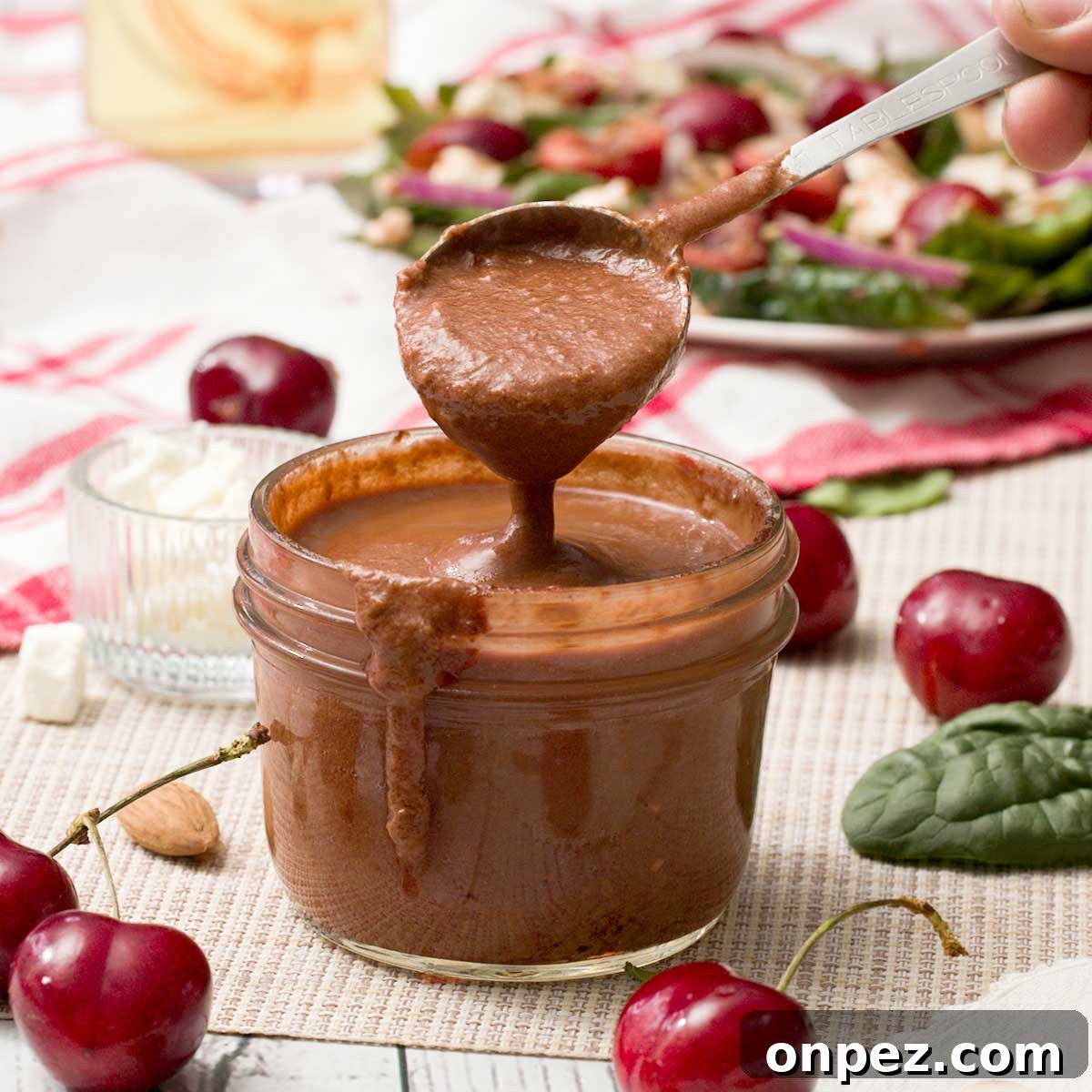
5-Minute Cherry Balsamic Vinaigrette Dressing
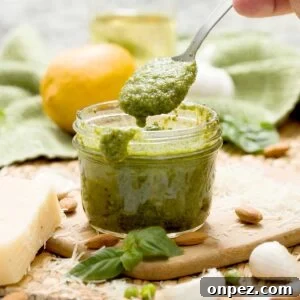
Pesto Without Pine Nuts (Easy Almond Pesto)
This almond pesto is a fresh, vibrant alternative to traditional pesto. It blends basil, toasted almonds, Parmesan, olive oil, garlic, and lemon into a smooth, flavorful sauce perfect for pasta, sandwiches, or as a finishing touch for proteins and vegetables.
Ingredients
- 2/3 cup light olive oil
- 1/3 cup almonds (toasted)
- 3 ounces fresh basil (about 2 packed cups)
- 2 cloves garlic
- 1/2 cup grated Parmesan
- 1/2 teaspoon salt
- 2 teaspoons lemon juice
- Dash black pepper
Instructions
- Wash and dry the basil and measure out all ingredients so they are ready at the start.
- Add the toasted almonds and garlic to a food processor and pulse until finely chopped and sandy.
- Add basil, Parmesan, lemon juice, salt, and pepper. With the processor running, slowly pour in the olive oil and blend until smooth, about 30–60 seconds.
- Taste and adjust seasoning. The pesto should be glossy and well combined.
Video
Notes
Toast the almonds first: Toasting helps them blend smoother and reduces raw flavor.
Blend nuts before basil: This prevents a gritty texture.
Add oil slowly: Pouring oil gradually while blending yields a creamy emulsion.
Use lemon lightly: A small amount brightens the pesto without overpowering the basil.
Nutrition
Serving size: 2 tablespoons • Calories: 179 kcal • Carbs: 2 g • Protein: 3 g • Fat: 18 g • Sodium: 205 mg
Help Fellow Cooks!
If you try this recipe, consider leaving feedback to help others find reliable, delicious recipes.
Important Disclaimer
This recipe is created by a home cook and is not medical advice. Ingredient guidance is reviewed by registered dietitians in general, but this post is not personalized medical guidance. Consult a healthcare provider for specific dietary concerns.