
These Gluten-Free Christmas Cookies are crisp at the edges, tender in the middle, and full of classic buttery vanilla flavour. This easy gluten-free iced biscuit recipe is made without xanthan gum and comes together quickly in a food processor. The dough is sturdy enough to roll and cut into festive shapes, making it a lovely Christmas baking activity for children and adults alike. Finished with a simple royal icing, these gluten-free sugar cookies are perfect for holiday cookie platters, homemade gifts, and festive baking days.

Table of Contents
These gluten-free Christmas biscuits are ideal for festive cookie tins, decorating parties, and edible gifts. They use a homemade gluten-free flour blend and do not require xanthan gum, yet the dough remains easy to handle and the baked cookies hold together beautifully.
If you are looking for a reliable gluten-free Christmas cookie recipe made with simple ingredients, this is a wonderful one to keep. The dough rolls out smoothly, the cookies keep their shape in the oven, and the finished biscuits stay soft for several days when stored correctly.
Choose your favourite Christmas cookie cutters, prepare your baking trays, and enjoy a calm, festive baking project that produces beautiful cookies everyone can share.
Planning a Gluten-Free Christmas?
A gluten-free Christmas can still be generous, festive, and full of favourite bakes. Recipes like these gluten-free Christmas cookies are useful because they can be prepared ahead, decorated with the family, and served throughout the holiday season.

Why You’ll Love These Gluten-Free Christmas Biscuits
- The dough is strong enough to roll and cut into neat shapes.
- The cookies have a rich buttery vanilla flavour.
- They hold their shape well and do not spread when chilled before baking.
- The recipe is made without xanthan gum or guar gum.
- They are soft, sturdy gluten-free sugar cookies that do not crumble easily.
- The simple royal icing makes decorating easy and festive.
- They are a fun Christmas baking activity for children.
- They make thoughtful homemade gifts when packed in a festive box or tin.
Watch this video to see how to make them
Gluten-free flours required
This recipe is designed for a homemade gluten-free flour blend made with sweet rice flour, sorghum flour, oat flour, and tapioca flour. The balance of wholegrain flours and starches is important because it gives the cookie dough enough strength to roll out while keeping the finished biscuits tender.
- Sweet rice flour, also known as glutinous rice flour.
- Sorghum flour.
- Oat flour.
- Tapioca flour or tapioca starch.
For best results, use this specific flour blend rather than swapping in a different all-purpose gluten-free flour. Other blends may contain different ratios of starch and wholegrain flour, which can change the texture of the dough and may cause the cookies to spread, crack, or fall apart.
For reliable gluten-free Christmas cookies, weigh the flours carefully and avoid changing the blend unless you are already familiar with how each flour behaves in gluten-free baking.
Full list of ingredients needed
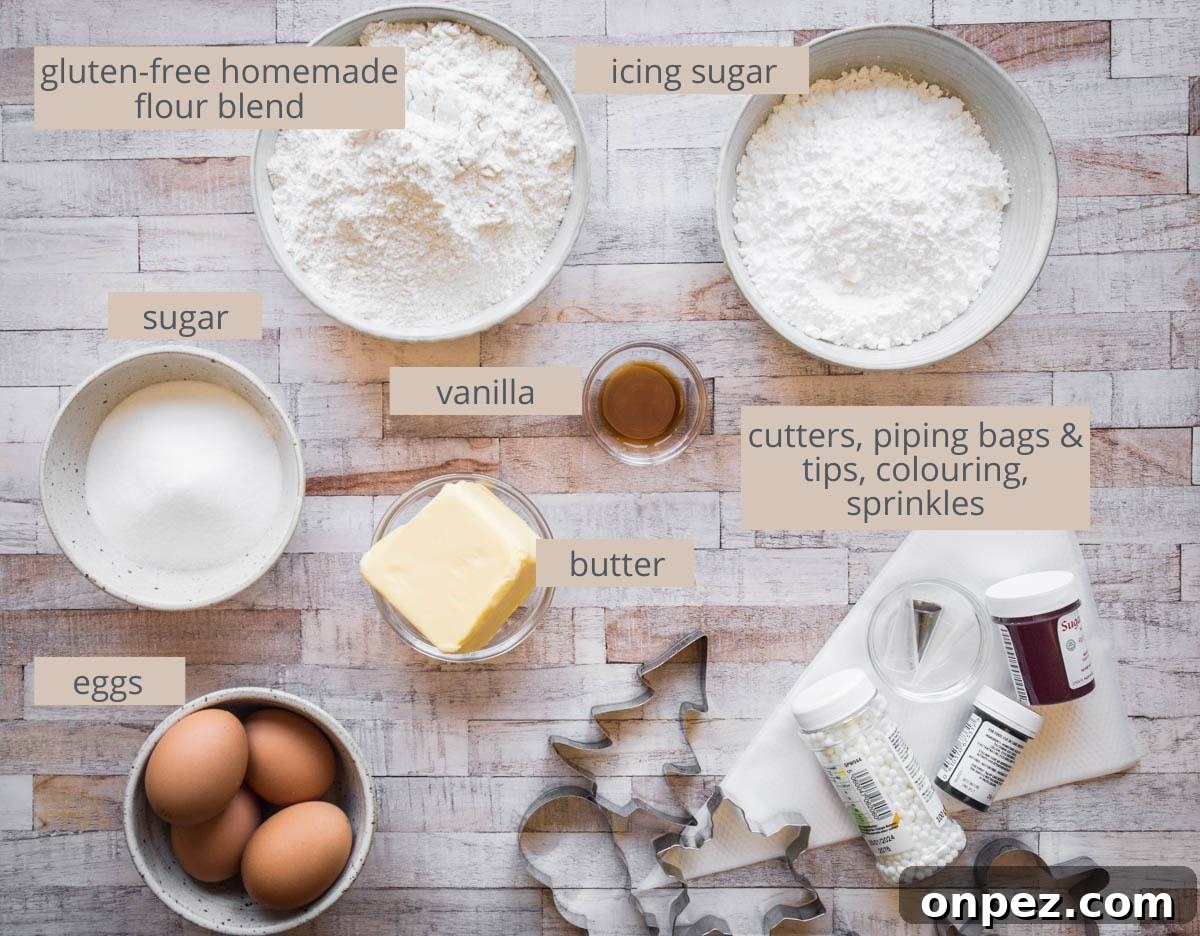
- Homemade gluten-free flour blend: made with sorghum flour, oat flour, sweet rice flour, and tapioca flour.
- Butter: use unsalted butter straight from the fridge.
- Caster sugar: fine white baking sugar. If using granulated sugar, process it briefly first to make it finer.
- Eggs: medium eggs are used in this recipe.
- Vanilla extract: choose a good-quality extract for the best flavour.
- Icing sugar: also known as powdered sugar, used for the royal icing.
- Egg whites: used to make the icing glossy and firm-setting.

A Very Merry Gluten-Free Christmas
A helpful gluten-free Christmas guide can make festive cooking easier, especially when planning bakes, desserts, and make-ahead treats for family and guests.
How to make Gluten-Free Christmas cookies
Full quantities and detailed instructions are included in the recipe card below.
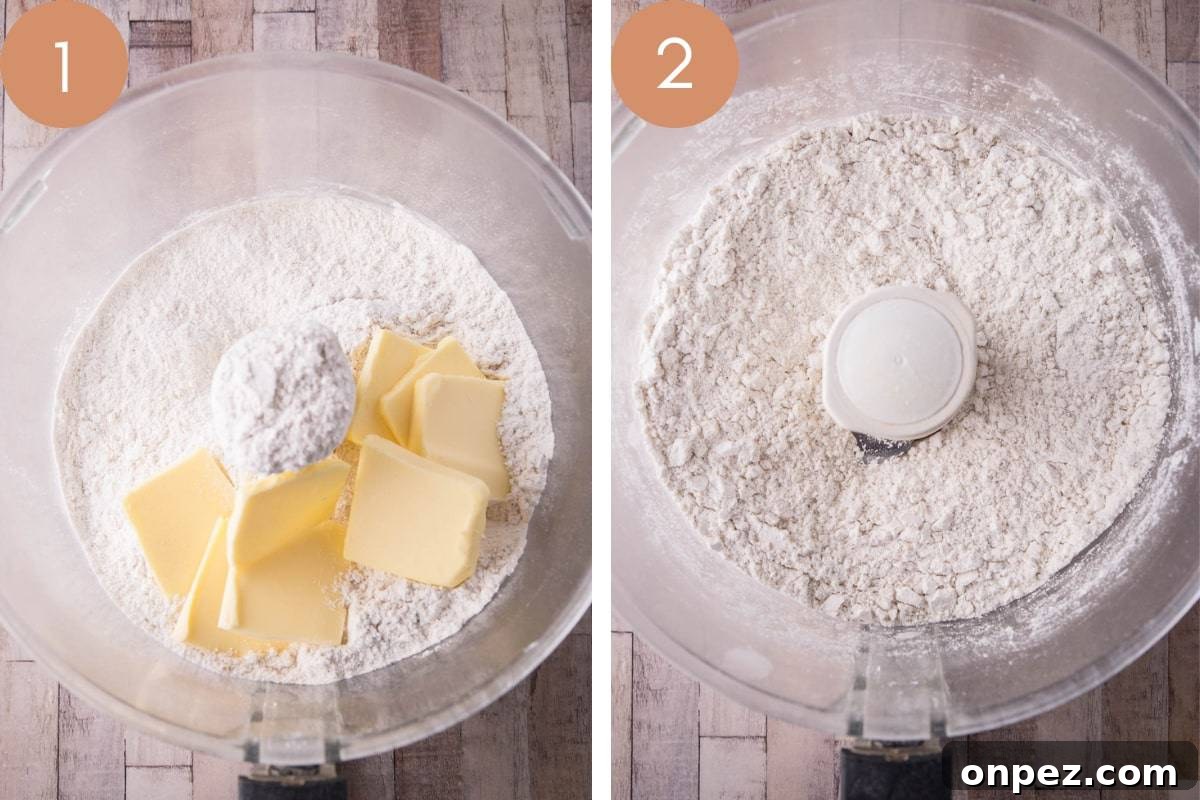
- Place the gluten-free flour blend and cold butter in a food processor and mix briefly until combined.
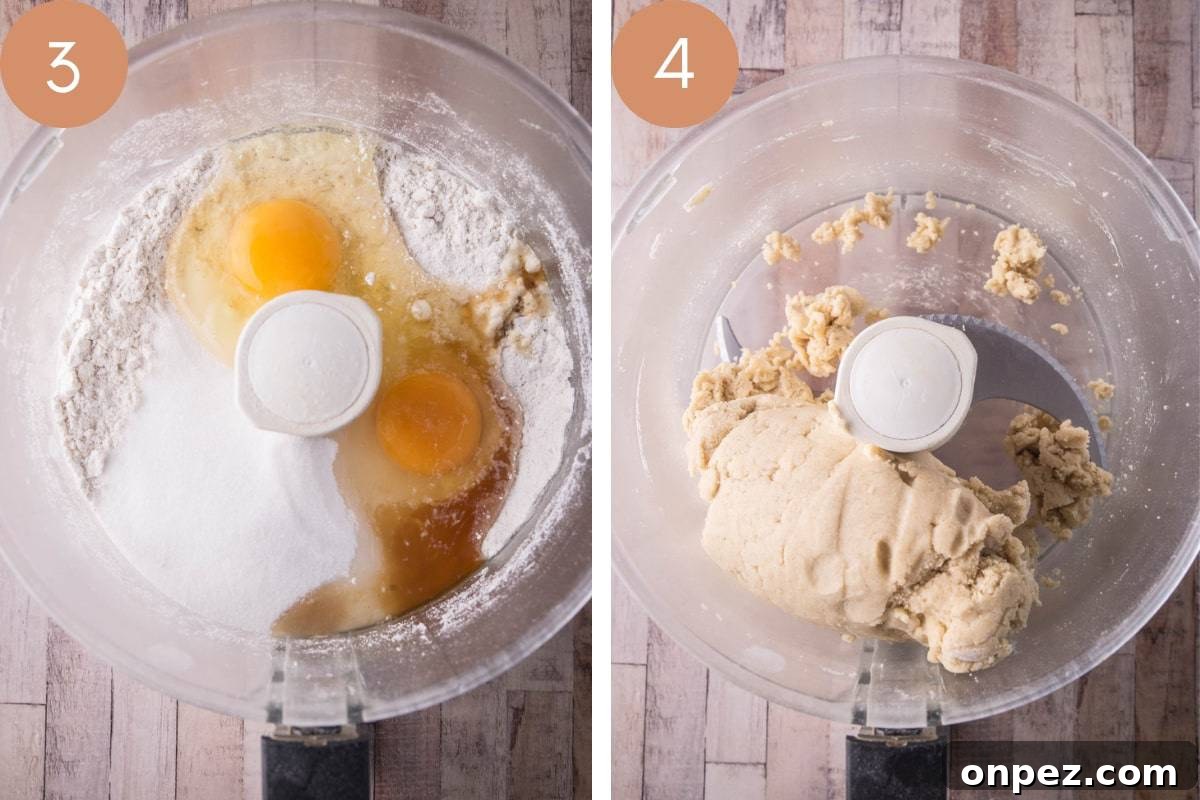
- Add caster sugar, eggs, and vanilla extract. Process until the dough comes together into a large ball.
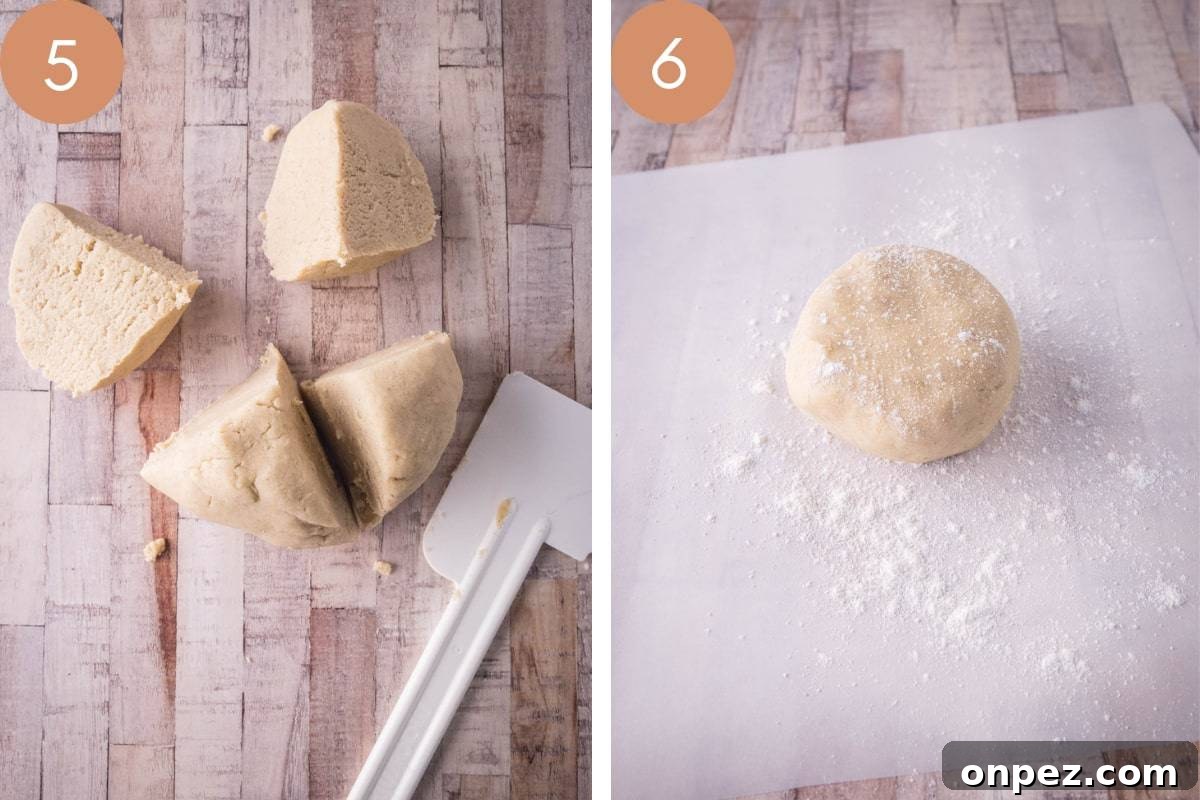
- Tip the dough onto a clean work surface and divide it into four portions.
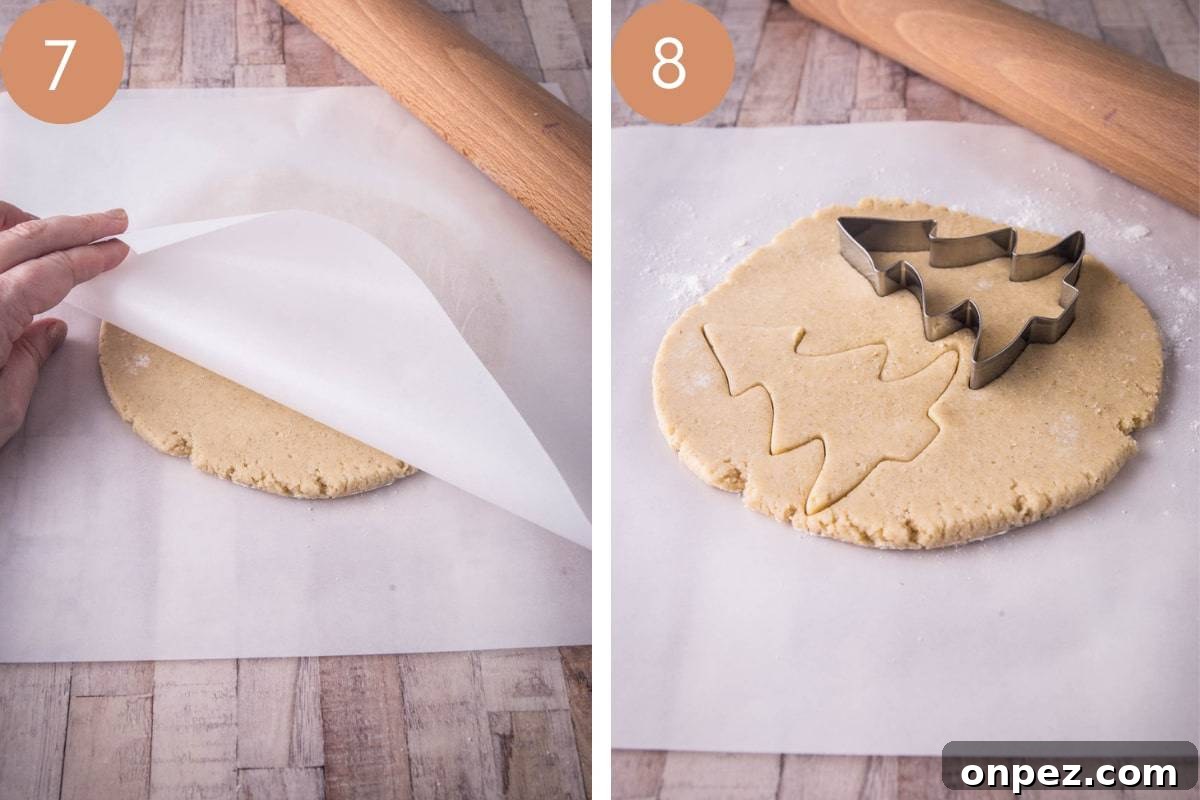
- Roll one portion at a time between sheets of baking parchment.
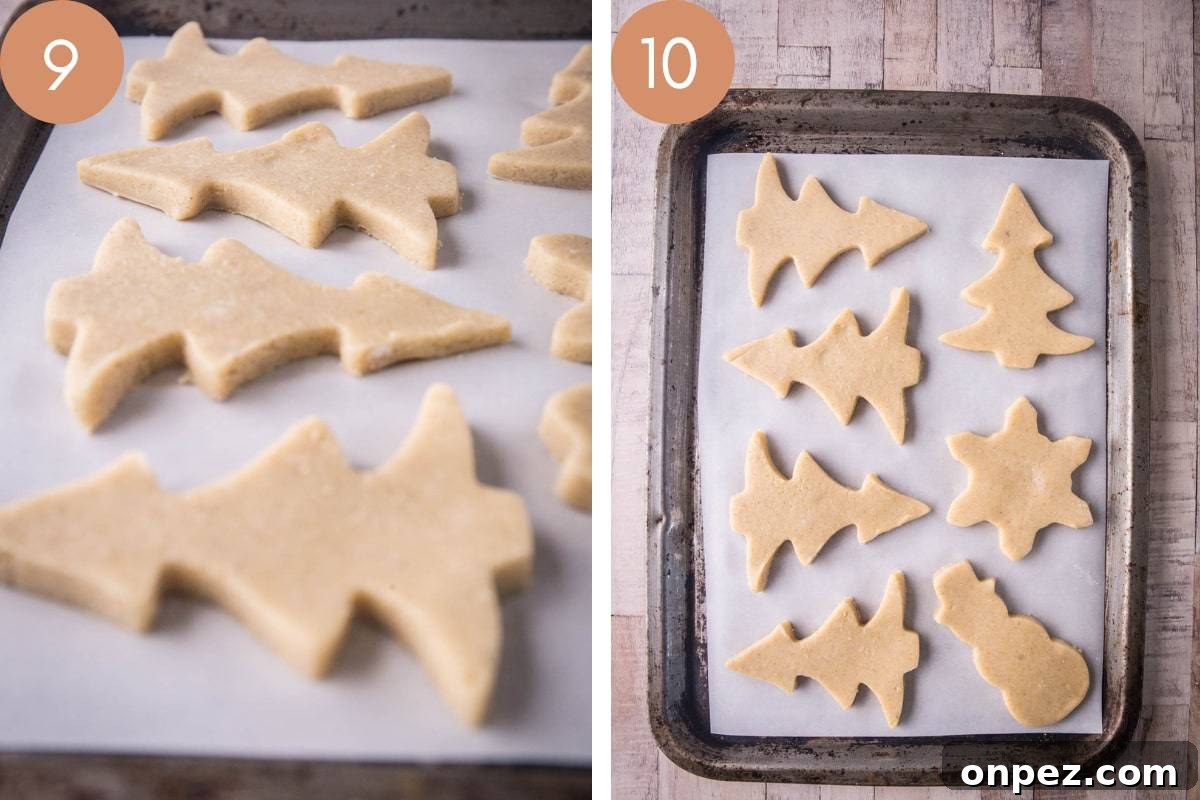
- Cut out the cookies with festive cutters and transfer them to lined baking trays.
- Chill the cut cookies for 1 hour in the fridge or 10 minutes in the freezer.
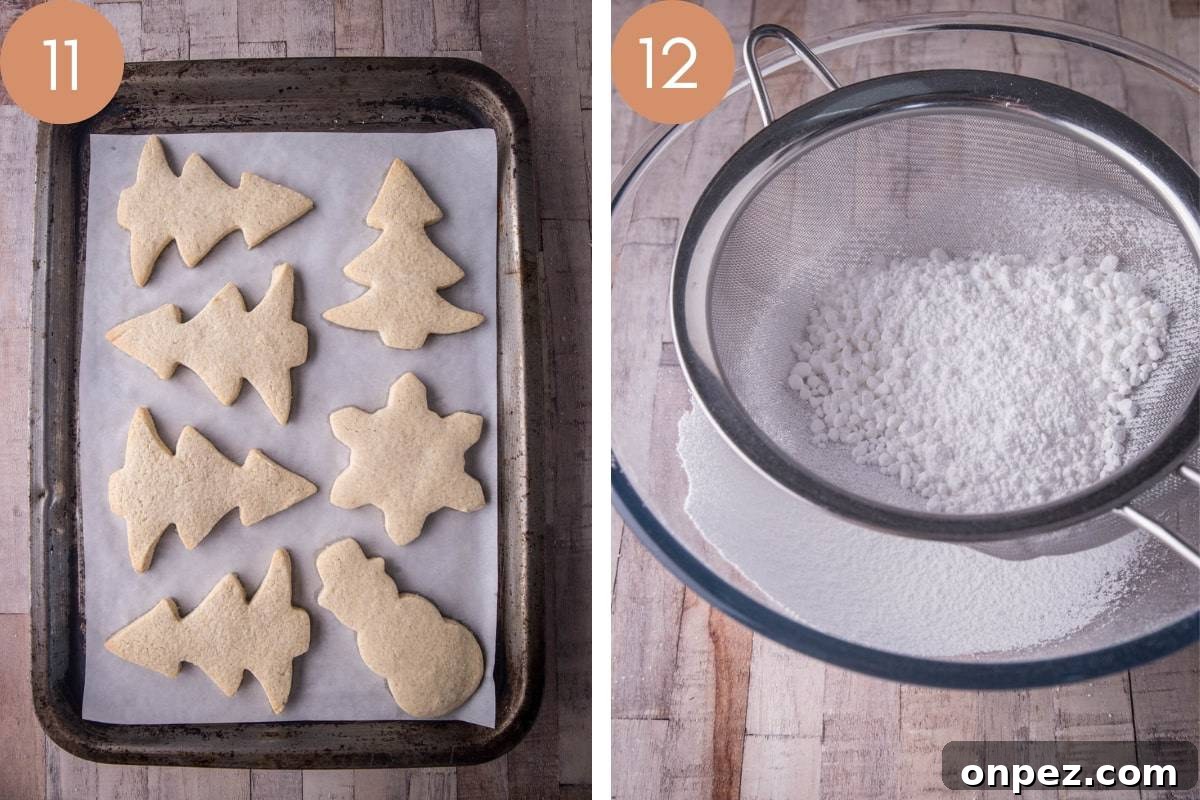
- Bake until the edges are just lightly golden, then leave them on the tray for 5 minutes before cooling fully on a wire rack.
Expert Tips
Use a food processor rather than a stand mixer for this dough. The blade cuts the cold butter evenly into the flour and helps keep the dough cool, which makes it easier to roll.
There is no need to chill the dough before rolling it out, but the cut cookies must be chilled before baking. This step helps the biscuits keep their shape and prevents spreading.
Roll the dough between sheets of baking parchment so you do not need to add too much extra flour. Work with one quarter of the dough at a time to keep the process manageable.
Use baking trays that fit comfortably into your fridge or freezer. Once baked, let the cookies rest on the tray for 5 minutes before moving them, as gluten-free cookies are more delicate when hot.
The cookies may look paler than traditional wheat-based biscuits. They are ready when the edges are only just beginning to turn lightly golden.

How to decorate the cookies
These gluten-free Christmas biscuits are decorated with royal icing, a smooth icing made from egg whites and icing sugar. It dries firm and glossy, which makes it perfect for piping festive designs, borders, and filled areas.
How to make easy royal icing
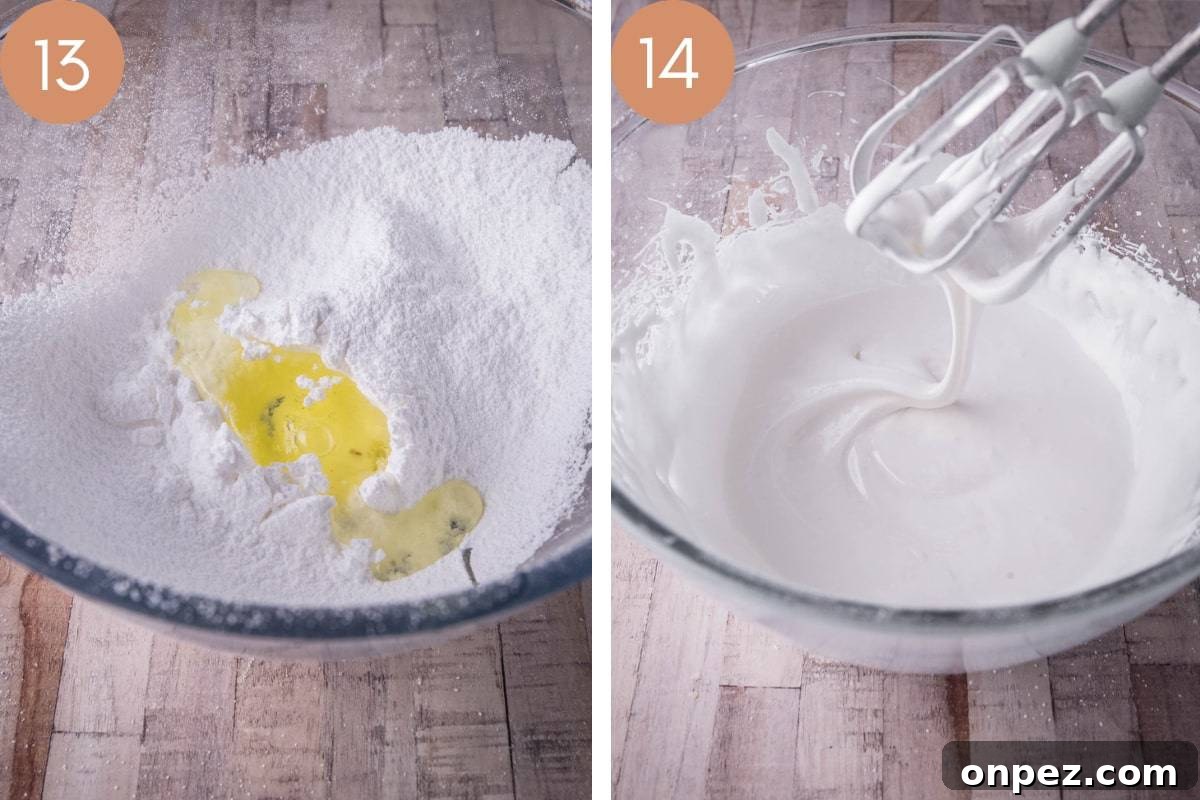
Sift the icing sugar into a bowl, then mix in the egg whites until the icing is thick, smooth, and glossy. The ideal texture should fall slowly from a teaspoon and settle back into the bowl without being watery.
Royal icing tips and troubleshooting
Sift the icing sugar before mixing to avoid lumps. If the icing is too thick, add a few drops of warm water and mix again. If it is too runny, add a little more icing sugar.
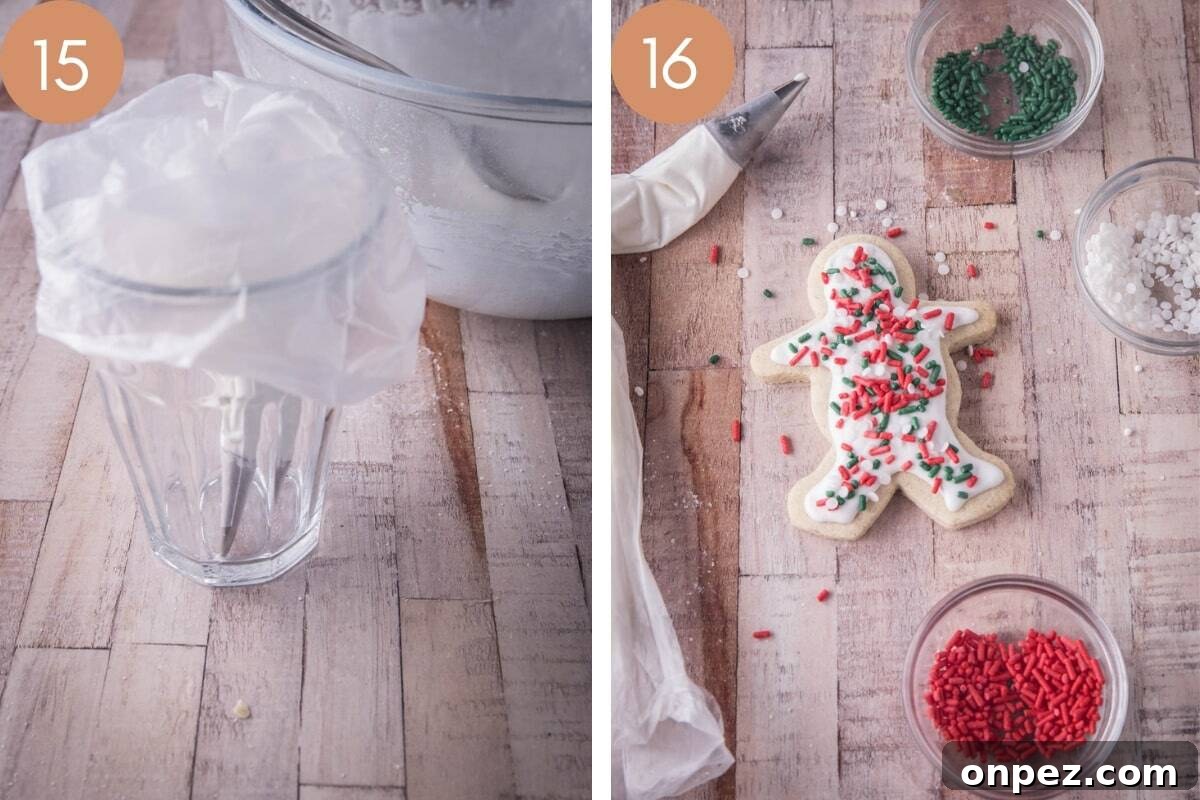
Small piping bags fitted with a fine nozzle work well for cookie decorating. Keep unused icing covered with a damp cloth, as royal icing dries quickly. If icing dries in the piping tip, wipe the tip clean before continuing.
Pipe a border first, then fill the centre of the cookie. Hold the piping bag slightly above the cookie rather than pressing it directly onto the surface, as this gives you more control. Allow the icing to set fully before stacking or storing the cookies.

Which food colourings to use
Paste or gel food colourings are the best choice for royal icing because they create bright colours without thinning the icing too much.
Which sprinkles to use
Always check that your sprinkles are safe to eat and suitable for your dietary needs. Some decorative sprinkles may contain ingredients or colourants you may prefer to avoid. Also check the label carefully to make sure they are gluten-free, as some specialist cake decorations may contain wheat.
Make ahead
You can make the cookie dough in advance. Divide it into quarters, wrap each portion well, and store it in an airtight container in the fridge for up to 2 days. Before rolling, let the dough sit at room temperature for about 1 hour, then knead it briefly with your hands until pliable.
The baked cookies can be made up to 2 days before decorating. Store them in an airtight container at room temperature. The royal icing is best made fresh when you are ready to decorate.

How to store
Store the cookies in an airtight container at room temperature for up to 5 days. They remain soft and delicious. A biscuit tin is a good storage choice because it helps preserve the texture better than some plastic containers.

How to freeze
Fully decorated cookies can be frozen once the royal icing has completely set, which takes about 24 hours. Layer the cookies in an airtight container between sheets of baking parchment and freeze for up to 2 months. Thaw them at room temperature on a wire rack before serving.
You can also freeze the cut-out cookie dough shapes. Chill them first on lined baking trays, then layer them between sheets of parchment in an airtight container. Bake from frozen, adding an extra minute or two to the baking time if needed.
Unrolled dough can also be frozen. Wrap it well, place it in an airtight container, and freeze for up to 2 months. Thaw before rolling and baking.
Variations
These gluten-free Christmas cookies are delicious with vanilla, but you can adjust the flavour for different festive bakes.
- Almond extract: add a small amount to the dough for a gentle almond note.
- Lemon or orange extract: use instead of vanilla for a citrus flavour.
- Lemon or orange zest: add directly to the dough for a fresh, bright taste.
- Maple extract: use for a warm, sweet flavour that works well with festive spices.
- Mixed spice: add a small amount if you prefer a lightly spiced Christmas cookie.

More gluten-free Christmas cookie recipes you’ll love
If you enjoy festive baking, other gluten-free cookie ideas include embossed cookies for patterned rolling pins, chocolate chip cookies with seasonal add-ins, oat and raisin cookies with warming spices, ginger biscuits, and thumbprint cookies filled with jam, curd, chocolate, or mincemeat.

Gluten-Free Christmas Cookies
Ingredients
Cookie Dough
- 275 g homemade gluten-free flour blend
- 115 g butter cold from the fridge, sliced
- 115 g caster sugar
- 2 eggs medium
- 1 teaspoon vanilla extract
- 1 tablespoon gluten-free flour for dusting
Easy Royal Icing
- 300 g icing sugar powdered sugar, sieved
- 2 egg whites medium, about 60g
Instructions
-
Preheat the oven to 180°C / 160°C fan / gas mark 4.
-
Place the flour and cold butter in a food processor. Process for about 10 seconds until the butter is fully combined with the flour.
-
Add the sugar, eggs, and vanilla extract. Process until the dough comes together into a ball.
-
Tip the dough onto a clean work surface and shape it into a smooth ball.
-
Divide the dough into four portions.
-
Roll one portion of dough between two sheets of baking parchment dusted lightly with gluten-free flour. Roll to about 8mm thick.
-
Remove the top sheet of parchment and cut out shapes using cookie cutters. Transfer the cookies to lined baking trays, spacing them about 1 ½ inches apart.
-
Re-roll the dough scraps and repeat with the remaining dough portions.
-
Chill the cut cookies for 1 hour in the fridge or 10 minutes in the freezer.
-
Bake for 12 minutes, until the edges are just beginning to turn lightly golden.
-
Leave the cookies on the tray for 5 minutes, then transfer them to a wire rack to cool completely.
-
To make the icing, sift the icing sugar into a large bowl.
-
Add the egg whites and mix until thick, smooth, and glossy. Adjust with a little more icing sugar or a few drops of warm water if needed.
-
Divide the icing into bowls and colour as desired.
-
Fill small piping bags with the icing and decorate the cooled cookies.
-
Allow the icing to set fully before serving or storing.
Video
Notes
Eggs: This recipe uses medium eggs, about 60g with the shell or 50g without the shell.
Flour blend: If making only the amount needed for this recipe, use 95g sweet rice flour, 65g sorghum flour, 60g oat flour, and 55g tapioca flour.
Important tips: A food processor gives the best dough texture. Keep the cut cookies chilled before baking, and keep royal icing covered with a damp cloth while decorating.
Storage: The iced cookies keep for up to 5 days in an airtight container at room temperature.
Freezing: Freeze fully set decorated cookies between layers of baking parchment for up to 2 months.
Nutrition: Nutrition information is an estimate and is based on one cookie.
Nutrition
Carbohydrates: 30g
Protein: 2g
Fat: 6g
Saturated Fat: 3g
Sugar: 21g