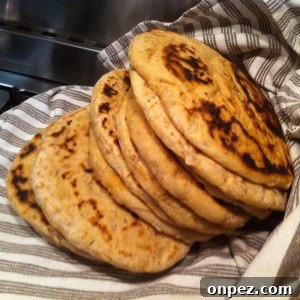
This is a straightforward, quick pitta bread recipe that makes soft, slightly rustic pitas with a pleasant nutty flavour from spelt and rye, plus a subtle warm note from cumin seeds. It’s based on a simple, low-effort mixing and resting technique that reduces intensive kneading while still producing good texture. Ideal for sandwiches, wraps, or serving alongside slow-cooked dishes such as a lamb tangia, or with preserved butter (smen) if you have some to hand.
The method follows a short series of stretches and rests rather than a long knead, which keeps the process fast and reliable for home bakers. Below you’ll find the ingredient list, step-by-step method, and practical tips for baking, cooking surface choices, storage and reheating.
Ingredients
450g strong white flour
300g wholemeal spelt flour
50g rye flakes
5g cumin seeds
12g fast-action yeast
12g caster sugar
12g fine sea salt
45g olive oil
500g warm water
Method
1. Combine all dry ingredients in a large mixing bowl and stir thoroughly to distribute the yeast, sugar, salt, rye flakes and cumin seeds evenly through the flours.
2. Pour in the olive oil and work it into the dry ingredients until the mixture looks slightly coated. This helps develop a tender crumb and adds flavour.
3. Add the warm water and mix until all the dry ingredients are hydrated. The dough should be cohesive but not overworked; you want everything combined and no dry patches.
4. Cover the bowl with a tea towel or plastic wrap and leave it in a warm place for 10 minutes. After the rest, perform a quick “compass knead”: using wet or oiled hands, pull the dough from the north, east, south and west edges toward the centre. This simple fold develops structure without long kneading.
5. Cover and rest for another 10 minutes, then repeat the compass knead. Do this a total of three times at 10-minute intervals.
6. After the final fold, cover the dough and leave it to rest in a warm place for 30 minutes to relax and rise slightly.
7. Turn the dough out onto a lightly floured work surface and divide it into roughly 110g pieces; this should yield about 12 pieces. Gently shape each piece into a small ball and let them rest, covered, for 15 minutes so the gluten relaxes and rolling becomes easier.
8. Using a rolling pin, roll each ball to about 5mm thick and approximately 15cm in diameter. Try to keep an even thickness for best puffing.
9. Cook the pittas on a very hot surface. A cast-iron tava or heavy skillet takes about 2 minutes per side; you’re looking for quick puffing and golden spots. Alternatively, bake on a preheated baking stone or heavy tray in a very hot oven (about 250–260°C / 480–500°F) for 3–5 minutes until puffed and lightly browned. Adjust times depending on how hot your surface is.
10. As soon as they come off the heat, wrap the cooked pittas in a clean tea towel to keep them warm and soft while you finish the rest. This traps steam and preserves the delicate pocket.
11. Serve warm. Stuff with fillings of your choice or tear and dip into sauces. These pittas are excellent with roasted meats, salads, hummus or preserved butter.
Tips, Variations and Storage
– Dough consistency: The dough should be wet enough to come together easily but not sticky. If it feels too sticky, dust the surface with a little flour when dividing and rolling.
– Flour substitutions: If you don’t have spelt, use wholemeal wheat instead. Rye flakes add texture and a nutty flavour; you can replace them with oats if needed, but the final flavour will vary.
– Cumin: Toast the cumin seeds briefly in a dry pan for a few seconds before adding them if you prefer a more pronounced aroma.
– Cooking surface: A cast-iron skillet or a heavy flat pan gives great results for stovetop cooking. A baking stone yields a crisper exterior from the oven.
– Reheating and storage: Keep leftover cooled pittas in an airtight container for up to 2 days at room temperature, or freeze for up to one month. Reheat in a hot skillet, under a hot grill, or wrapped in foil in a hot oven for a few minutes. If frozen, thaw before reheating for best texture.
– Troubleshooting: If pittas do not puff completely, the dough may be too thick or the cooking surface not hot enough. Ensure even thickness and very high heat for best pockets.
Enjoy making these easy homemade pitta breads—simple to prepare, versatile and full of flavour. Tuck in and savour them warm straight from the pan!