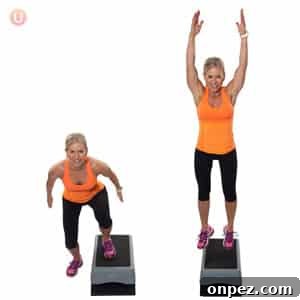
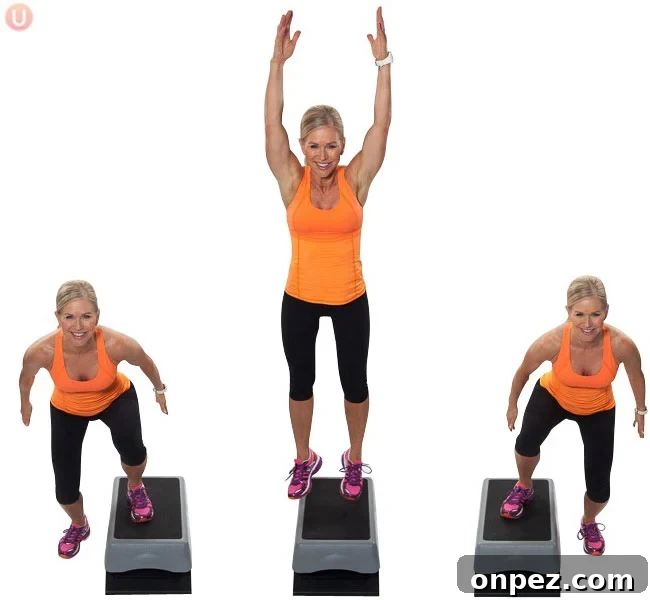
Up and Overs is a straightforward, high-energy cardio move performed using a step or low platform. You move laterally over the top of the step in a side-to-side pattern, accelerating your heart rate while engaging your lower-body muscles. The rhythm is easy to pick up once you establish a steady pace, and you can scale the exercise from a gentle, low-impact version to a more explosive, plyometric variation as your confidence and fitness improve.
This exercise is versatile: beginners can keep their feet close to the floor and focus on a controlled stepping pattern, while more advanced exercisers can add vertical lift and speed to increase the cardiovascular and muscular demand. A low-impact option involves crossing the feet over the platform without hopping, which reduces joint stress while still training coordination and timing.
Up and Overs train not only cardiovascular endurance but also agility, coordination and balance—qualities that benefit athletes and everyday movers alike. Maintaining quick, coordinated footwork helps with everyday tasks and can reduce the risk of trips and falls as you age. Because the movement combines speed with multi-directional stepping, it also sharpens neuromuscular control.
Compared with repetitive cardio machines, Up and Overs introduce variety and a functional element to your workouts. They can be used indoors or outdoors, alone or as part of a circuit, and they pair well with bodyweight strength moves for a time-efficient session that builds both fitness and movement skill.
Up and Overs Exercise Instructions
- Start in a shallow squat with one foot placed near the center of your step or platform.
- Drive through your legs to move laterally over the step, transferring weight and landing with your other foot on the platform.
- Continue by stepping or slightly hopping back over the step to the starting side, repeating the pattern quickly and smoothly.
Targets: glutes, quads, hamstrings
Coaching cues: Keep a soft bend in the knees, hinge slightly at the hips, and maintain a neutral spine. Use your arms to help with balance and momentum—swing them naturally in the direction of movement. Aim for light, springy steps rather than heavy stomps, especially when progressing to faster or higher versions.
Progressions and variations: Begin with a low platform and a deliberate stepping pace to learn the pattern. As you become comfortable, increase speed and add a small vertical hop to make the movement more plyometric. For higher intensity, use a taller step or incorporate a lateral bound to each side. To reduce impact, perform an alternating crossover step without jumping or use a wider stance to slow the tempo.
Programming tips: Use Up and Overs as a cardio interval (for example, 30–60 seconds on with equal rest), include them in a circuit alongside strength exercises, or add them to a warm-up to elevate heart rate and prime the legs. Always start with a short warm-up—dynamic leg swings, ankle mobility, and light marching or walking—to prepare joints and muscles.
Common mistakes to avoid: Rushing before you master the foot pattern, leaning excessively forward, and landing with locked knees. Keep movements controlled and progress only when your technique remains solid at the faster pace.
Safety and equipment: Choose a stable, non-slip step or platform and ensure the surface around it is clear. Wear supportive shoes, and if you have knee or ankle issues, favor the low-impact crossing option or reduce step height. If you experience pain, stop and regress the movement.
Up and Overs are an effective, adaptable addition to any cardio routine. They build cardiovascular capacity, strengthen the posterior and anterior leg muscles, and improve coordination—making them a practical, efficient choice for varied, functional training.