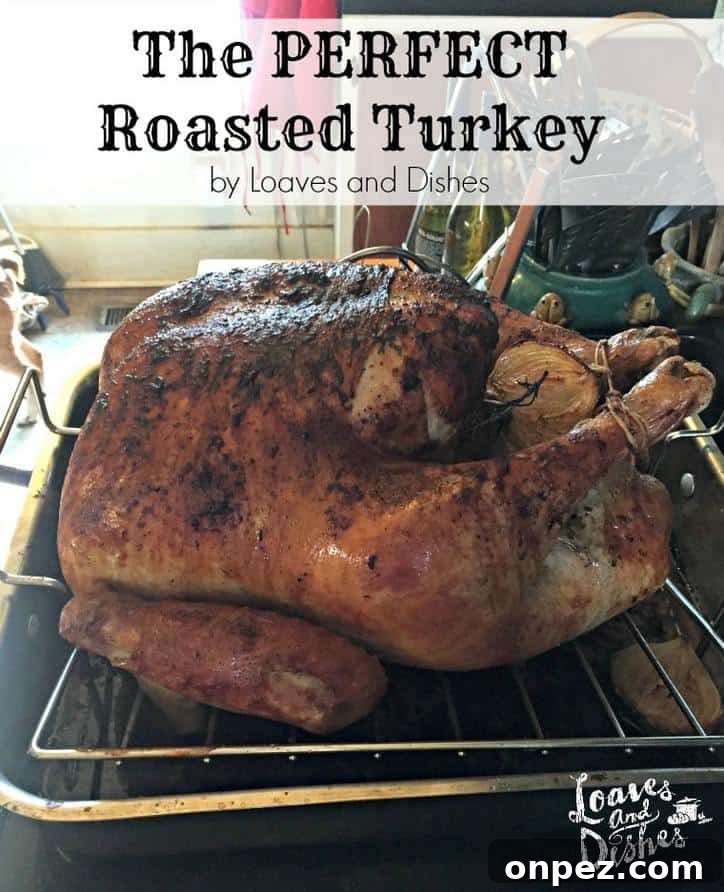
Why am I posting a recipe for the perfect roasted turkey the day after Thanksgiving? Not because I’m mean or confused—it’s because this time I made the turkey twice and finally nailed it. Most of the recipes I share are chosen with you in mind, pictures and all, to inspire you to get into the kitchen and cook. Today’s post is a little different: it’s part memory-keeper, part guide. My husband has long accused me of making dishes he loves but forgetting exactly how I made them. So I’m writing this down so I don’t lose it—and so you can use it too.
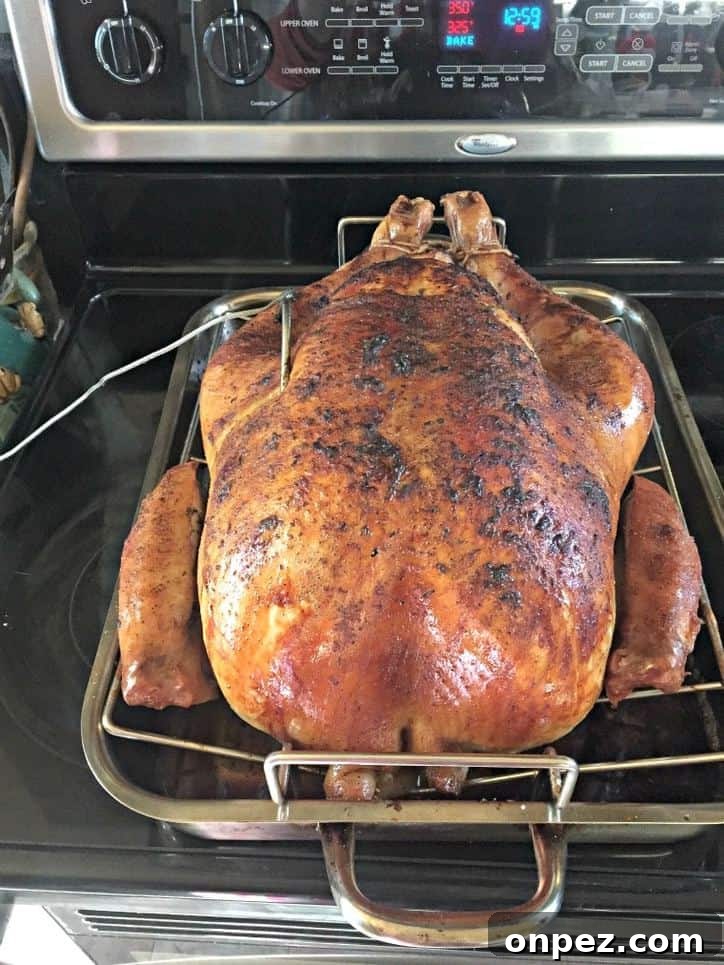
I don’t have glossy food-portrait shots for this post—only phone photos taken while the meal was in progress. Still, the turkey was beautiful: moist, tender and juicy. I feel like a kitchen rock star after serving it. Below I share the practical tips I used, the inspirations that guided me, and a clear, easy-to-follow recipe so you can make the same turkey with confidence.
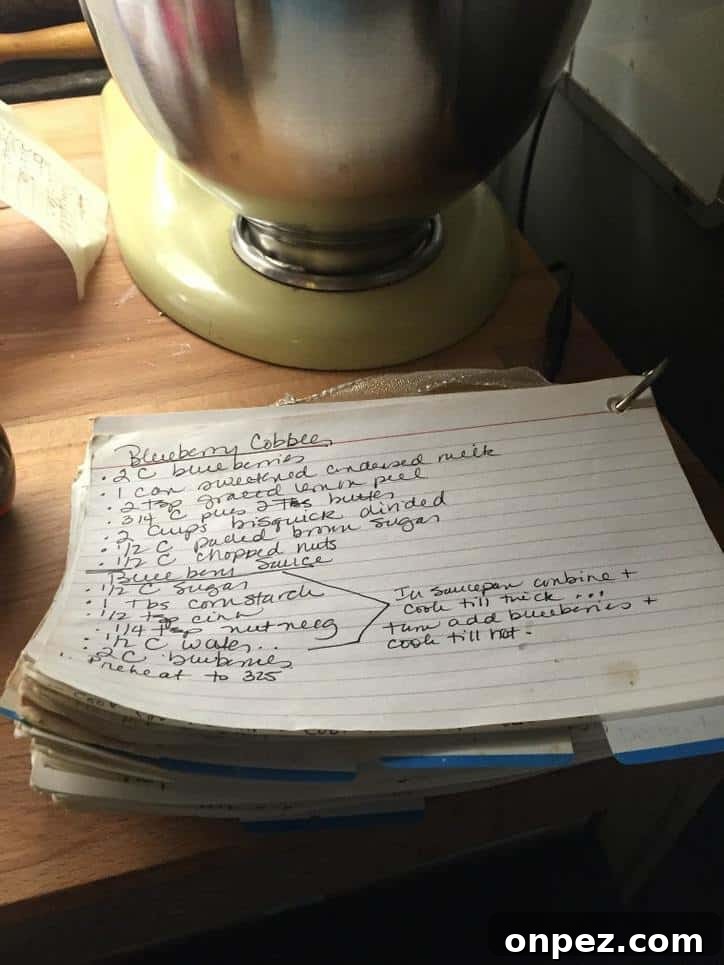
My handwritten recipe cards hang on a ring by the refrigerator. They started when my husband complained that I sometimes couldn’t reproduce a dish I’d made before. Those cards are priceless to me; if anything ever happened, they’d be one of the most valuable things in the house. I add new cards whenever I discover a method worth keeping.
If you like, use this post as a practical guide rather than a picture-perfect tutorial. I drew inspiration from two trusted sources—Alton Brown and Anne Burrell—and adapted ideas that worked best for our family tastes. I used Alton Brown’s brine as a base and Anne Burrell’s butter rub technique, modifying both to avoid issues like the butter flaking off when chilled. The final method below is what I plan to use every year.
Secret Tips to the Perfect Roasted Turkey
- Whenever possible, buy a truly fresh, locally raised turkey. I mean one from a farmer or farmers’ market rather than a mass-distributed frozen bird. Fresh birds can taste significantly better and have superior texture. If you can get one that was on the farm just days before cooking, it’s worth the extra cost.
- Plan ahead for brining: you’ll need a container large enough to fully submerge the turkey and a cold place to keep it for 24 hours. A large canner, food-grade bucket, cooler packed with ice, or an extra fridge/freezer space will work. Make sure the container can be covered and kept very cold for the duration of the brine.
- Start the brine two days before you plan to serve the turkey. The day before, prepare the butter-herb rub and rub it under the skin and over the exterior. Allow the bird to sit uncovered in the fridge overnight to dry the skin for better browning and crispness.
- Roasting schedule: start the bird at 450°F for 30 minutes to encourage crisp skin, then reduce to 350°F for the remainder of the cooking time. A general rule is about 13 minutes per pound, but the oven time is only an estimate—use a thermometer.
- Use a reliable instant-read or probe thermometer. Insert the probe into the thickest part of the breast and remove the turkey when that temperature reaches 161°F; carryover will bring it up to the safe and juicy range. Don’t rely solely on elapsed cook time.
- A sturdy roasting pan with a rack helps air circulate and keeps the bird elevated. You don’t need an expensive pan—a basic roaster with a V-shaped rack will do the job.
- Basting helps flavor and color. A baster bulb or baster tool makes basting much easier and safer; it’s worth having one to avoid frequent reaching into the oven.
- Wear good oven mitts and be cautious when basting or handling the hot pan. Safety matters—avoid using thin towels to remove heavy or hot items from the oven.
Recipe Inspiration
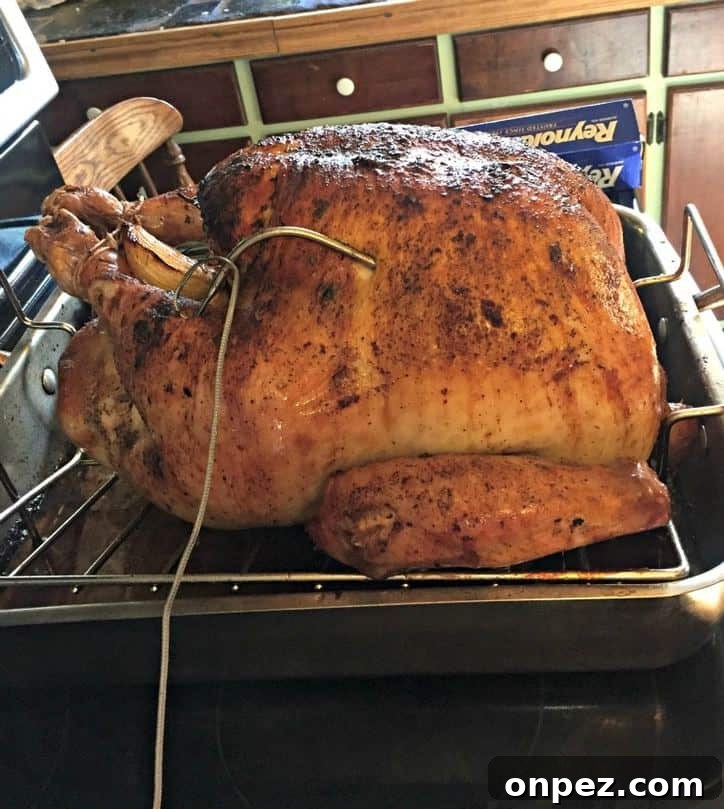
As mentioned, this method blends a classic wet brine with a rich herb-butter rub. The brine seasons the meat through and through, while the butter rub under the skin and over the surface ensures a flavorful, golden exterior. The aromatics tucked into the cavity add subtle fragrance while roasting.
The Recipe for the Perfect Roasted Turkey
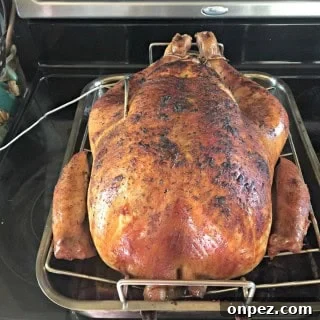
The Perfect Roasted Turkey
Ingredients
For the Brine
- 1 Cup kosher salt (for up to a 16 lb turkey; use 1 ½ Cups if larger)
- ½ cup dark brown sugar (or ¾ cup for greater than 16 lbs)
- 1 gallon chicken stock
- 1 ½ TBS black peppercorns
- 1 ½ tsp allspice berries
- 1 head garlic, halved across the perimeter
- 1 onion, halved across the perimeter
- 2 bay leaves
For the Butter Rub
- 3 sticks butter, softened to room temperature
- 1 bunch rosemary, finely chopped
- ¼ Cup kosher salt
Before Roasting (Aromatics)
- Salt and pepper
- 1 red apple, quartered
- 1 onion, quartered
- 3 cinnamon sticks
- 1 cup chicken stock (to pour in the roasting pan)
- 4 sprigs rosemary
- 2 bunches sage
- Olive oil for any exposed areas where butter flaked off
Instructions
- Two days before serving (Tuesday): Clean your sink and remove the turkey from its packaging. Rinse the bird under running water and remove any giblets from inside the cavity. Let the turkey sit in the sink while you prepare the brine.
- In a large pot, combine the chicken stock, kosher salt, brown sugar, peppercorns, allspice, garlic, onion and bay leaves. Heat over medium, stirring, until the salt and sugar are dissolved and the liquid is warm. Remove from heat.
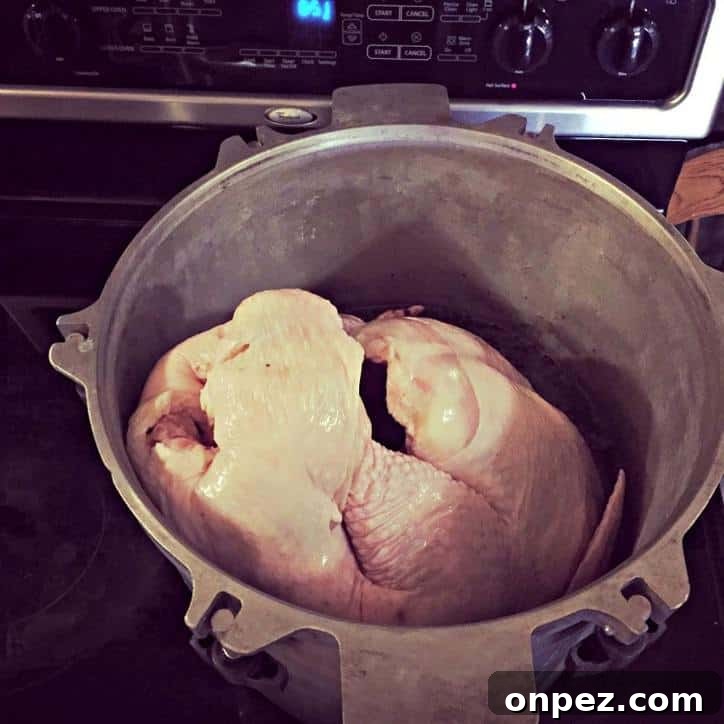
- Add about 2 cups of ice to cool the mixture. When it is cool enough to touch, transfer the brine to the container you will use for soaking the turkey. Place the turkey breast-side down in the brine, then add cold water until the turkey is fully submerged. If it floats, weigh it down so it remains beneath the surface. Cover and chill for 24 hours.
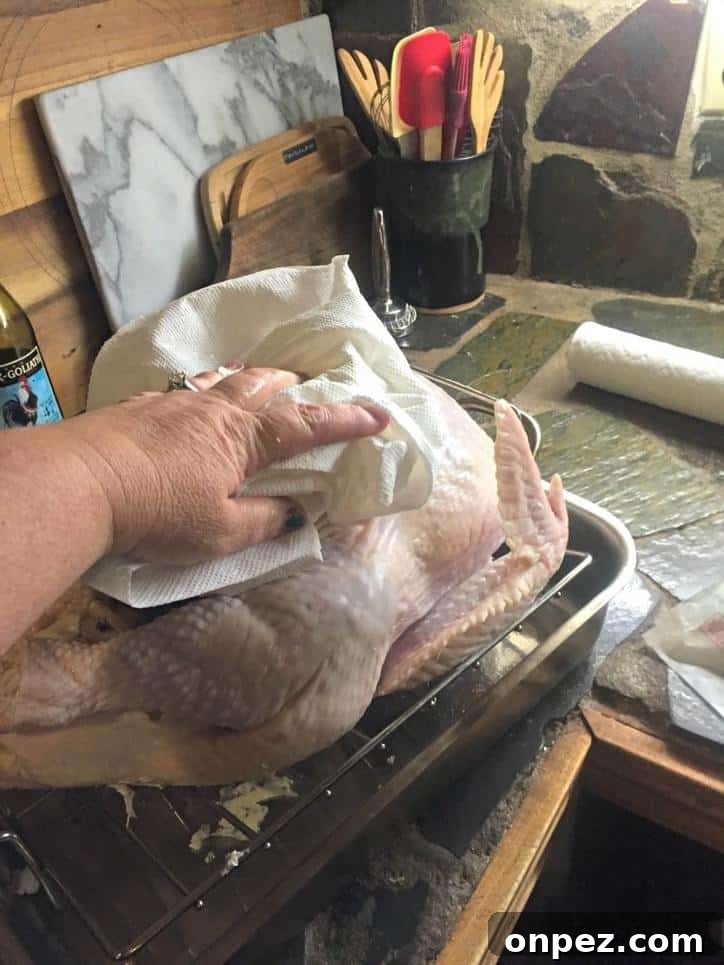
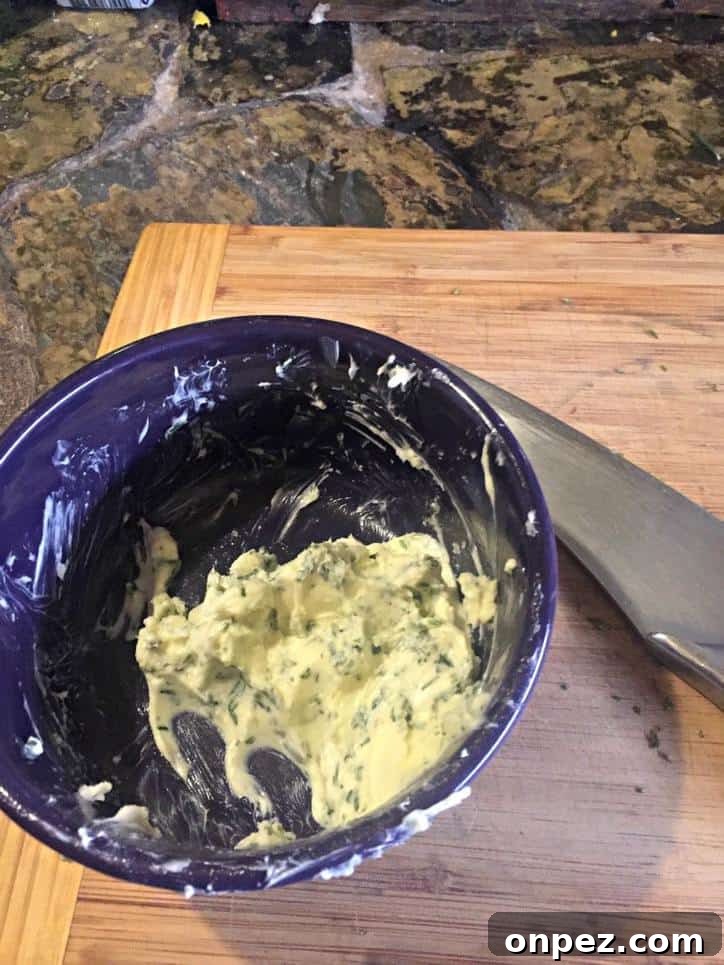
- After 24 hours, remove the turkey from the brine and let it drain. Thoroughly dry the bird with paper towels; the skin must be dry for the butter to adhere. Prepare the butter rub by combining the softened butter, chopped rosemary and salt, then mash into a paste.
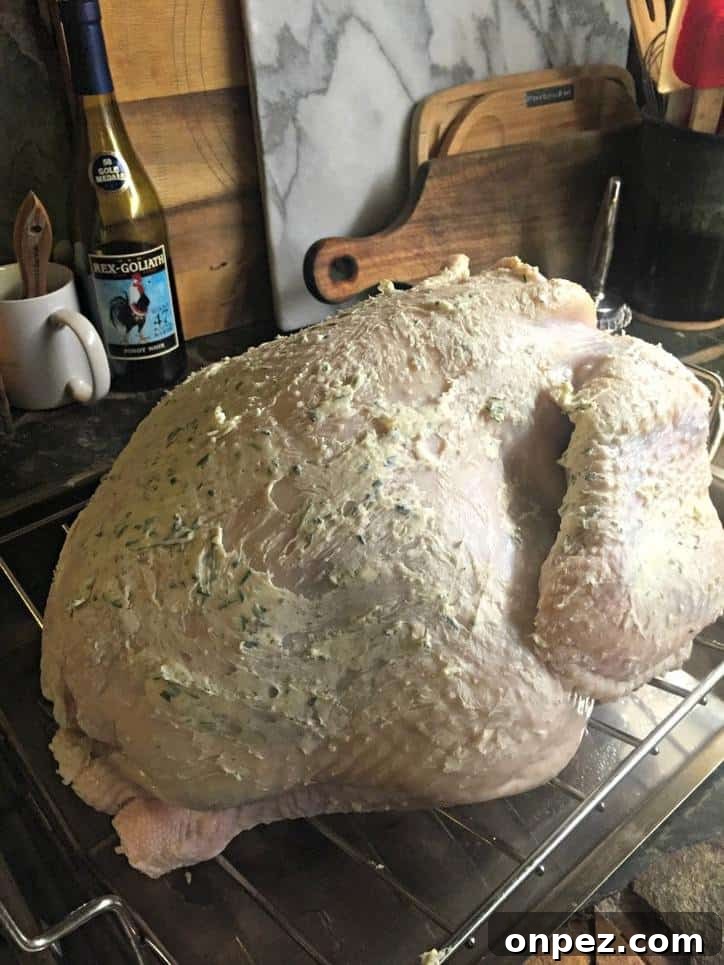
- Gently loosen the skin at the neck and work the butter mixture between the skin and breast meat, massaging it in. It’s fine if small pockets form. Then rub the remaining butter over the outside of the skin, legs, thighs, wings and breast.
- Place the turkey on a roasting rack, put it in the roasting pan, and leave it uncovered in the refrigerator overnight. This helps dry the skin for a crisp finish. Keep other perishable foods away from the turkey while it rests uncovered.
- On roasting day, preheat the oven to 450°F and place the oven rack in the lowest position. Season the inside cavity with salt and pepper and stuff it with the apple, onion, cinnamon sticks, rosemary and sage. Pour 1 cup of stock into the cavity and place the turkey in the oven.
- Roast uncovered at 450°F for 30 minutes to promote browning. After 30 minutes, reduce the oven to 350°F. If the pan is dry, add 1 cup of chicken stock to the roasting pan, and baste the turkey every 30 minutes with the pan juices or stock.
- Use a thermometer probe in the thickest part of the breast. Remove the turkey from the oven when the breast reaches 161°F. Tent loosely with foil and let rest; carryover heat will continue to cook the meat slightly. Discard the aromatics used inside the cavity before serving—they are for flavor, not eating.
Notes
If you can find a locally raised turkey that was never frozen, you’ll likely notice a significant improvement in flavor and texture. A fresh bird brined and butter-rubbed as described will deliver excellent results for your holiday table.
Nutrition
Enjoy making this turkey for family and friends. It’s a reliable method that produces juicy breast meat and crisp, flavorful skin—perfect for any special occasion.