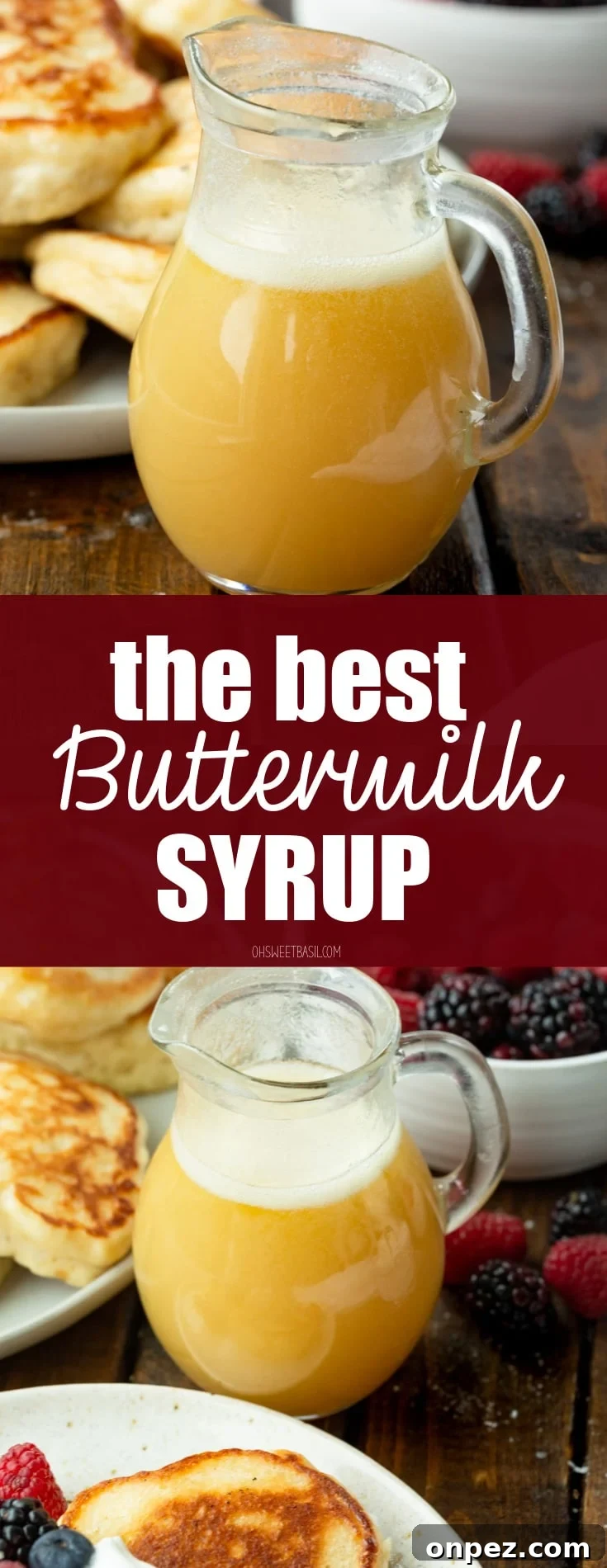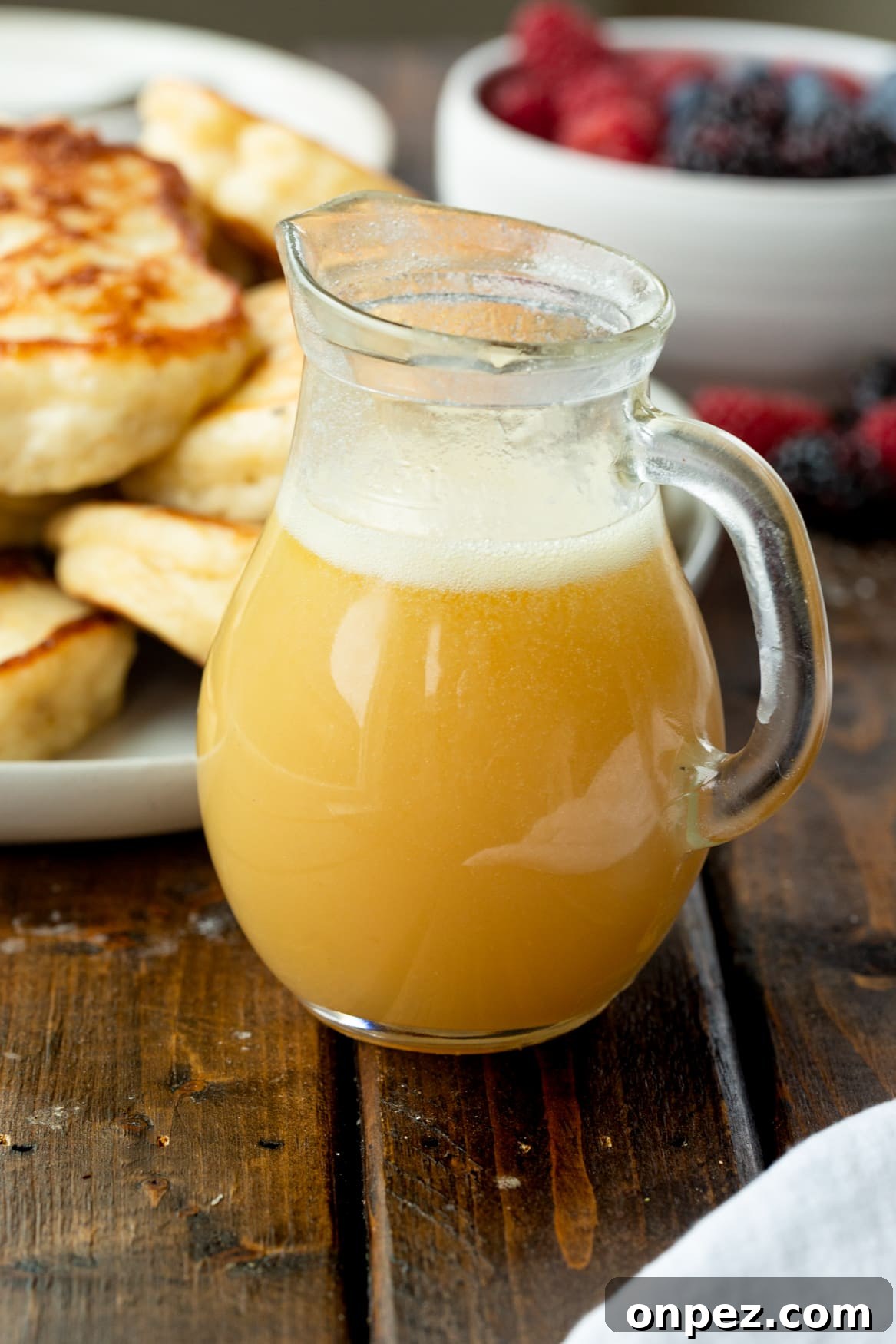
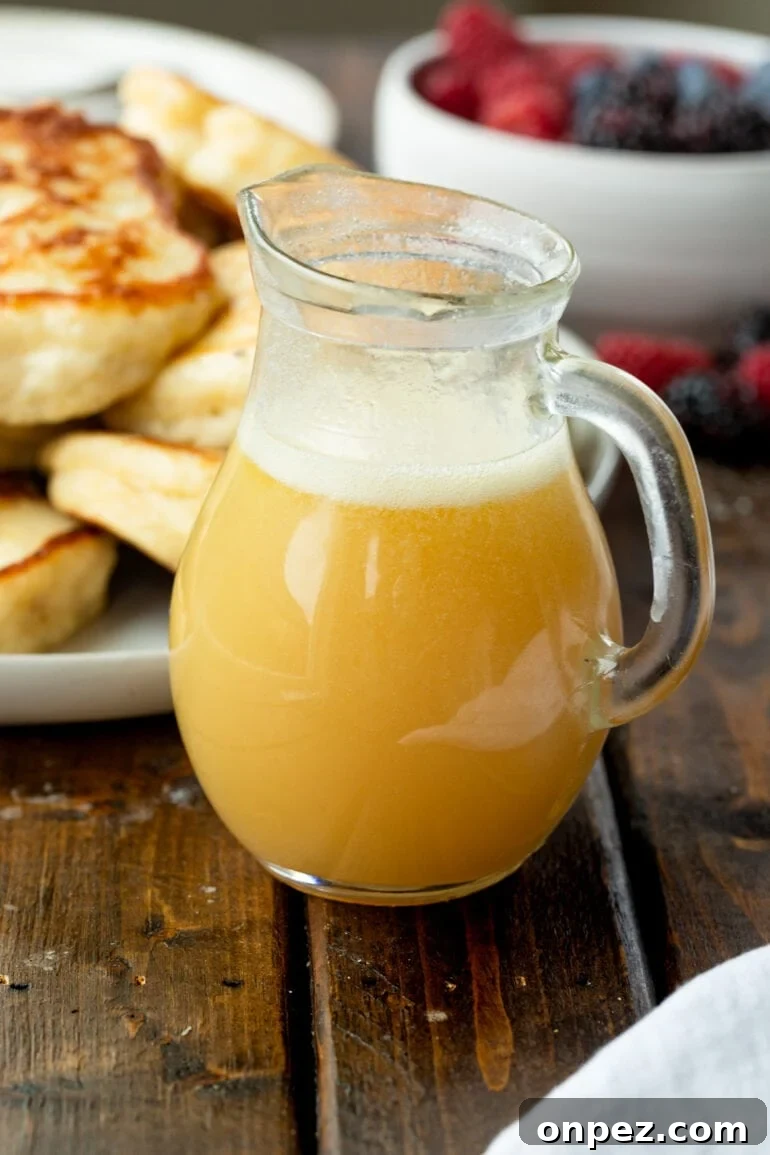
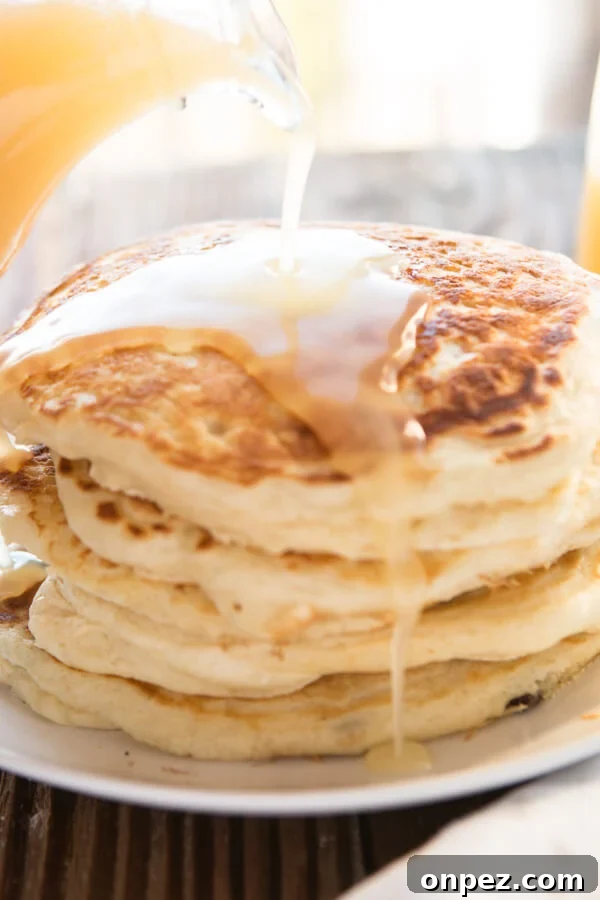
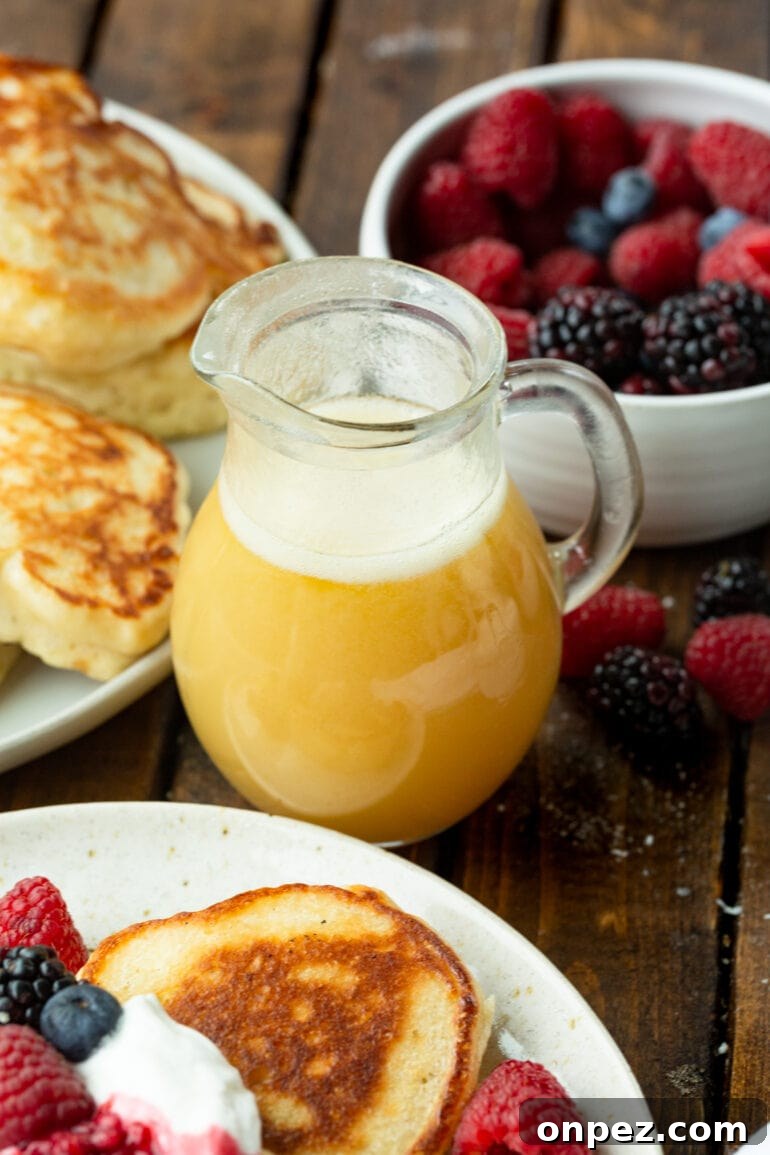
Top your favorite sweet breakfast with liquid gold: buttermilk syrup. This rich, buttery syrup is thick, sweet and ideal for pancakes, waffles, French toast and so much more. It carries a light caramel-like flavor without tasting tangy—creamy, sweet and utterly irresistible. If you love breakfast with a decadent topping, this homemade buttermilk syrup belongs in your kitchen.
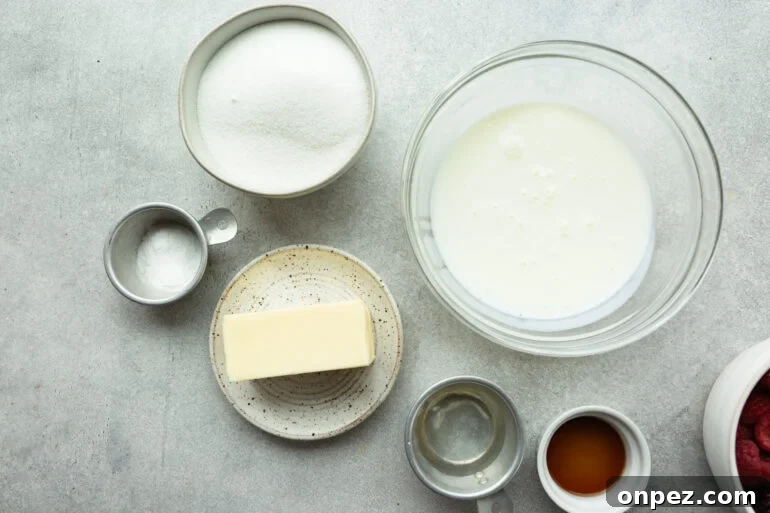
Ingredients Needed for Buttermilk Syrup
You only need six pantry-friendly ingredients to make this homemade buttermilk syrup. They come together quickly to create a sauce that tastes like a lighter, buttery caramel. Here’s what you’ll need:
- Butter (unsalted preferred)
- White sugar (granulated)
- Buttermilk (for creaminess)
- Vanilla (for flavor)
- Corn syrup (light, to enhance caramel notes)
- Baking soda (a small, important addition that causes foaming and lightens the syrup)
Exact measurements are included in the recipe card below.
How to Make Buttermilk Syrup
This syrup takes less than 10 minutes to make and can be prepared while pancakes or waffles cook. Follow these simple steps:
- Melt: In a large saucepan over medium heat melt the butter. Add the sugar, buttermilk, vanilla and corn syrup, stirring until combined.
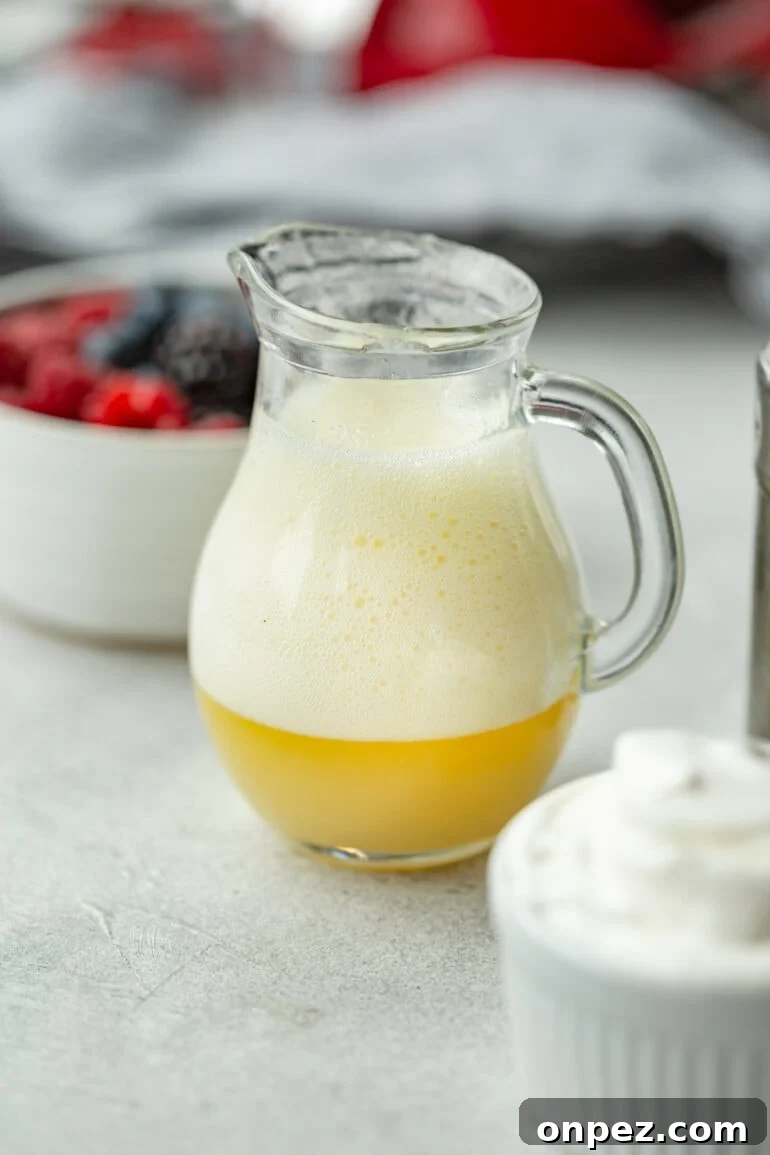
- Boil: Bring the mixture to a rolling boil. Remove the pan from heat and quickly stir in the baking soda. The syrup will foam up significantly—this is normal. Use a large pot and be ready to hold the pan over the sink if needed to avoid spills.
- Simmer: Return the pan to the heat and whisk for about 30 seconds until fully incorporated. Remove from heat and serve warm.
The baking soda creates a dramatic foam that lightens the texture and gives the syrup a delicate mouthfeel. If the foam rises too close to the pot’s edge, briefly remove the pan from the burner and stir to reduce it.
Tips and Variations
This recipe is flexible—try a few variations to match your preferences:
- Swap vanilla for coconut extract for a tropical twist, or try almond or orange extract for a different flavor profile.
- Add 1/4 teaspoon cinnamon or a pinch of nutmeg or cloves for warm spice notes.
- Use brown sugar instead of white sugar for a deeper, molasses-like caramel flavor.
- Drizzle this syrup over ice cream, apple pie, oatmeal, crepes, cinnamon rolls, or apple crisp. It also makes a tasty dip for savory-sweet combinations like sausage dunkers or French toast sticks.
Substitutes: Buttermilk, Sour Milk and More
Buttermilk is a cultured milk product made with lactic acid bacteria; it has a mild tang and thick texture. Sour milk is made by adding vinegar or lemon juice to regular milk to introduce acidity; it’s an effective substitute in most recipes. To make a quick buttermilk substitute: add 1–2 tablespoons lemon juice or vinegar to 1 cup of milk, stir and let sit for at least 5 minutes before using.
Storage and Shelf Life
Store cooled syrup in a sealed jar or airtight container in the refrigerator. Properly stored, it will keep for about 1–2 weeks. Reheat gently in the microwave or on the stovetop before serving; whisk briefly if it separates.
Recipe Card — Buttermilk Syrup
Buttermilk Syrup
Prep: 2 mins • Cook: 6 mins • Total: 8 mins • Servings: 10
Ingredients
- 1/2 cup unsalted butter
- 1 cup sugar
- 1 cup buttermilk
- 2 teaspoons vanilla extract
- 1 tablespoon light corn syrup
- 1 teaspoon baking soda
Instructions
- In a large pot over medium heat, add butter, sugar, buttermilk, vanilla and corn syrup. Stir until combined.
- Bring the mixture to a boil. Quickly remove from heat and stir in the baking soda. The mixture will foam up—this is expected, so use a large pot.
- Return to the heat and stir or whisk for about 30 seconds to incorporate. Remove from heat and serve immediately.
Notes
Store in a jar with a lid in the refrigerator. Reheat gently before serving.
Nutrition (approx.)
Serving size: 1/4 cup • Calories: ~182 • Carbohydrates: 23g • Fat: 10g
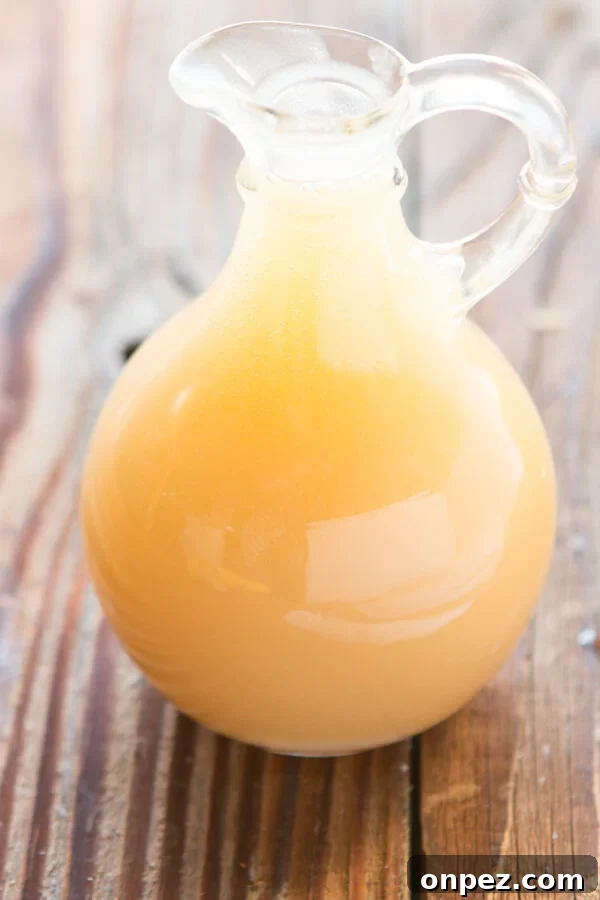
If you love easy homemade toppings, this buttermilk syrup is a must-try. It’s quick to make, stores well and elevates everyday breakfasts into something special. Give it a try on pancakes, waffles, French toast or your favorite desserts—once you taste it, you’ll understand why it’s a keeper in our kitchen.