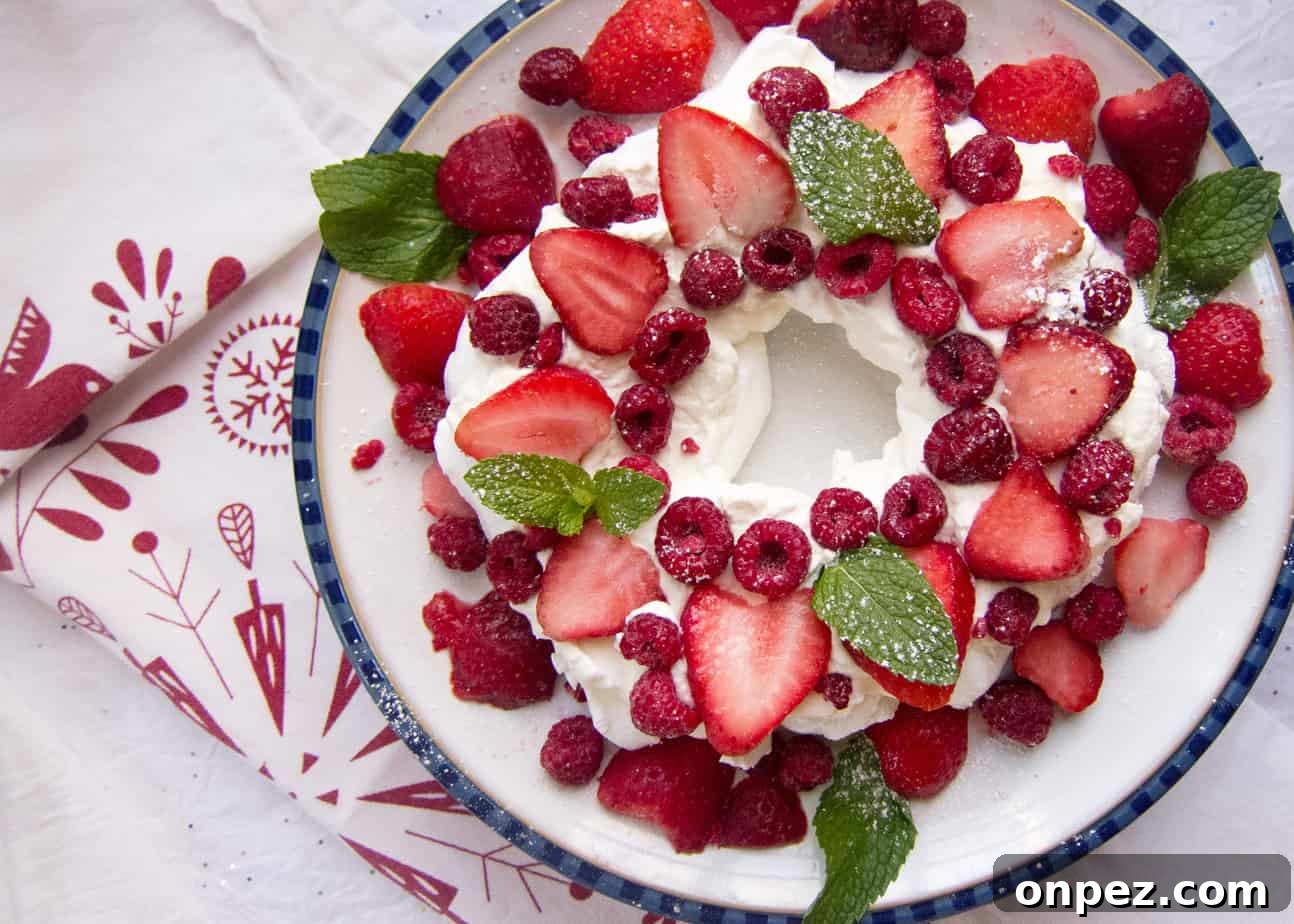
I took some time off this week and spent it baking a variety of treats — from Icelandic skyr and cultured European-style butter to quark, crème fraîche, dulce de leche, and more than ten different types of mini tarts for a new ebook I’ve put together. After so much rich holiday baking, I’m craving lighter desserts. If you feel the same, I have two simple, fruit-forward ideas for you: a Pavlova Fruit Wreath and classic Eton Mess. Both are incredibly easy: all you need is meringue, whipped cream, and fresh fruit.
Pavlova Fruit Wreath
Pavlova is a popular dessert in Australia, often enjoyed during December, at Christmas, or in summer. It’s beloved for being both simple and striking: a crisp meringue shell with a marshmallowy interior, topped with whipped cream and fresh fruit. The combination of crunchy, creamy, and fruity textures is what makes it so special.
Making a Pavlova Fruit Wreath is the same as making a standard pavlova, except you shape the meringue into a ring before baking. I made a small wreath from leftover meringue after piping mushrooms for a Bûche de Noël. If you wish to make a full-size wreath, you can follow any reliable pavlova recipe and shape the meringue into a circle on the baking sheet before it goes into the oven.
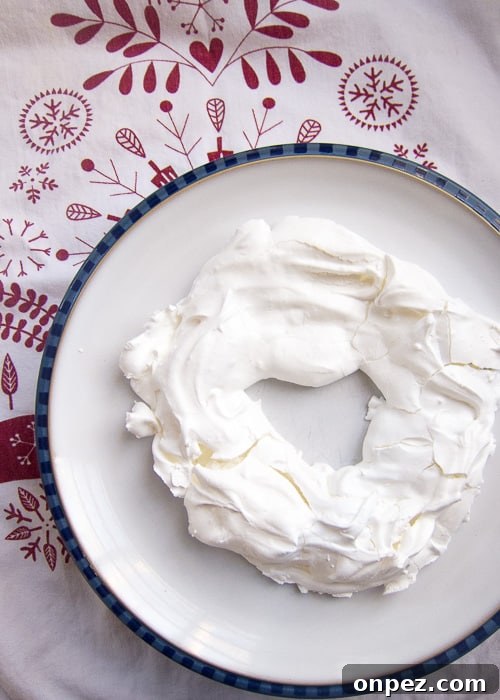
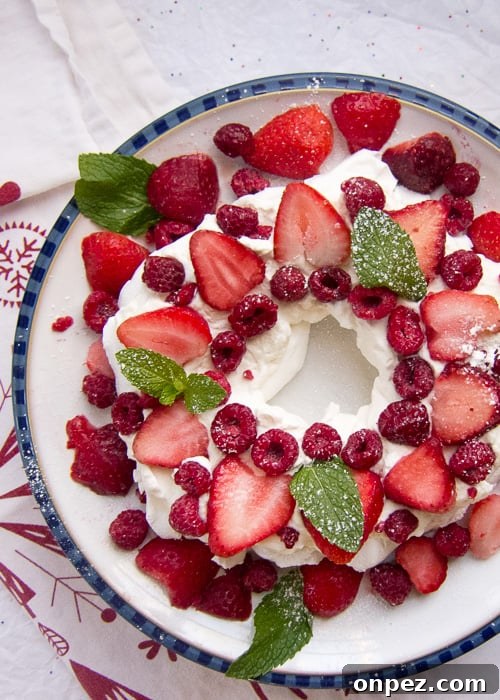
Once the baked meringue has cooled, top it with freshly whipped cream — as much or as little as you like — and arrange fresh fruit on top. I used strawberries and raspberries with a few sprigs of mint for color and brightness. If you prefer a touch of sweetness in the cream, lightly sweeten it with powdered sugar, or dust the finished pavlova with a bit of powdered sugar for a festive look.
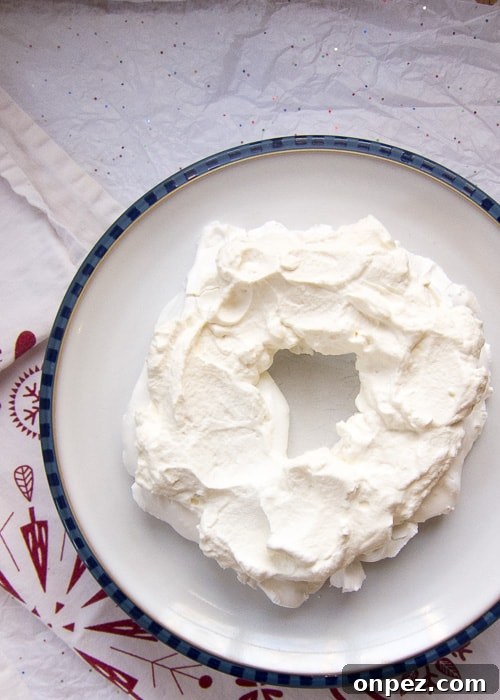
This dessert is best enjoyed soon after assembly. The meringue will soften and can crack when sliced, but that only adds to the rustic charm — and the flavor remains fantastic.
Eton Mess
Eton Mess is an easy, forgiving English dessert that’s perfect for using leftover meringue. It traditionally features broken meringue, whipped cream, and fresh strawberries, but you can customize the fruit and proportions to suit your taste. The name sometimes appears as “Eaton Mess,” though the more common spelling is “Eton.”
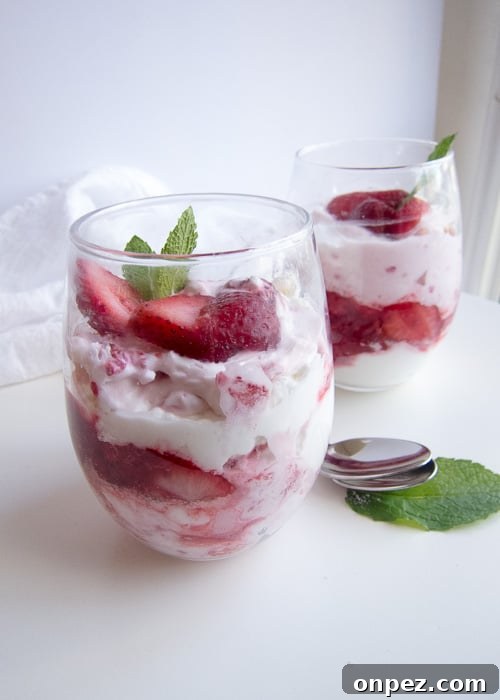
Eton Mess recipes often use store-bought meringues, but homemade meringue pieces work beautifully — I used leftover meringue mushrooms. Since the meringue gets broken into pieces, it doesn’t matter whether the meringue is shop-bought, homemade, crisp, or slightly chewy.
Strawberries are the classic choice for Eton Mess, though raspberries, blueberries, or a mixed berry combination are equally delicious. If your fruit isn’t very sweet, you can macerate it briefly by sprinkling a little sugar over the sliced fruit and letting it sit for 10–20 minutes to draw out the juices and intensify the flavor.
To assemble Eton Mess: whip cold cream to soft peaks, fold in broken meringue pieces and fruit just until combined, and serve immediately. Don’t overmix — you want visible streaks of cream, fruit, and meringue for a pretty, textural contrast. Reserve a few meringue pieces and some whole or halved berries to garnish each serving.
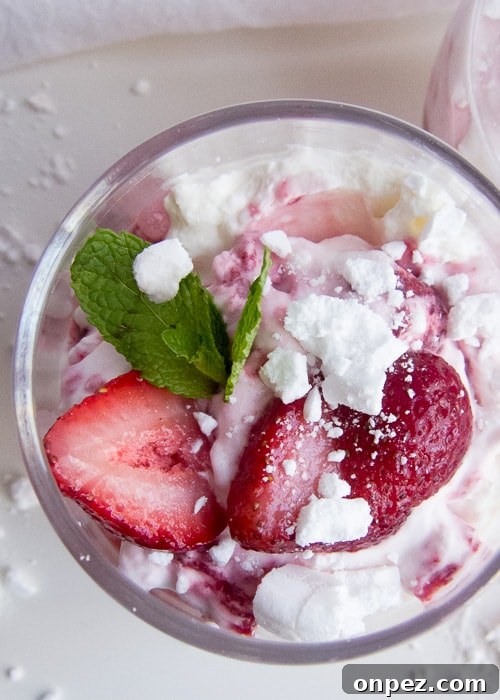
One of the best things about Eton Mess is its flexibility. If you love fruit, increase the fruit-to-cream ratio. If you want more crunch, add larger pieces of meringue. For a neater presentation, layer meringue, cream, and fruit in glasses instead of folding everything together. You can prepare each component in advance and assemble right before serving, or offer bowls of broken meringue, whipped cream, and sliced fruit so guests can build their own.
Both desserts are delightful, forgiving, and quick to assemble. They make a lovely lighter finish to a heavy holiday meal or a fresh, summery treat any time of year. Have fun experimenting with different fruits, herbs like mint or basil, and small flavor twists — the results will be delicious no matter how you put them together.