If you want to lose weight or become more aware of how food affects you physically and emotionally, keeping a food journal is one of the most effective tools. It helps you identify patterns in portion sizes, mood triggers, and which foods truly satisfy you.
When you aren’t paying attention, portion creep can quietly add extra calories and slow progress. A food journal lets you track what you eat and how you feel so you can make intentional changes. After a meal, record the answers to a few simple questions to get clear feedback from your body:
- What did I eat and how much?
- What was my mood during the meal, immediately after, and an hour later?
- Was the meal satisfying? Did I finish feeling full or still hungry?
- Did I feel tired, bloated, or unwell after eating?
- Was I fully present while eating, or distracted by screens and tasks?
- Did I include foods that bring me pleasure?
- Did the meal include healthy choices I actually enjoy, or foods I feel obligated to eat?
Food Journal for Recording Food
After a few days of journaling, review your notes to decide which foods will stay in your personal weight-loss plan. Choose healthy items you enjoy — food should nourish and delight you, not feel like punishment. Make a habit of recording every bite, every meal, and even snacks. The details matter: portion sizes, preparation methods, and timing all influence how food affects your body and mood.
Focus on realistic, sustainable choices. The goal is not to eliminate enjoyment but to favor nutritious options that support energy, mood, and long-term progress. Accurate records help you replace unconscious habits with intentional behavior.
Food Journal for Understanding Behavior
Journaling does more than log calories; it reveals the emotions, thoughts, and routines that drive eating. Writing down your internal dialogue reduces rumination and helps you process feelings rather than act on them automatically. Over time, this practice uncovers mental patterns—stress eating, boredom snacking, or reward-based indulgence—that quietly influence your weight and well-being.
YOUR BODY KEEPS AN ACCURATE RECORD, REGARDLESS OF WHAT YOU WRITE DOWN!
40 Journal Prompts for your Weight Loss Journey
Curiosity is a powerful tool. Asking thoughtful questions about your choices — even when you don’t have immediate answers — can interrupt automatic behavior and create space for new habits. Use these prompts to deepen your awareness and support lasting change.
Food Journal Prompts
- What am I thinking about right now as I begin a fresh start?
- What emotions surface when I think about food?
- How do I react to the number on the scale?
- What reasons do I eat besides physical hunger?
- What would a perfectly healthy day look like for me?
- What does the start of a new eating plan usually feel like?
- How have my thoughts about food shifted in the last week?
- What food rules have I followed that make mindful eating harder?
- What excuses do I use that prevent mindful eating?
- In what situations do I tend to eat without paying attention?
- What justifications do I use to allow a bite or binge I know I’ll regret?
- What brings me satisfaction when I eat mindfully?
- What shortens the gap between seeing food and eating it impulsively?
- Which dieting beliefs deserve to be questioned?
- When did I first become aware of my weight?
- What physical activity brings me the most joy?
- Which foods make me feel nourished and energized?
- What non-food activities give me pleasure?
- Where in my life do I feel most unfulfilled?
- How do I show respect and care for my body?
Food Journal Prompts Continued
- What would committing to the daily process, rather than immediate results, look like?
- How do I want to feel when I reach my physical goals?
- What is my immediate reaction after eating something I consider unhealthy?
- How will I recognize when I’m making an excuse instead of taking action?
- How might my life change when I reach my goal weight?
- What do I want in life that matters more than losing weight?
- How am I contributing to others or to a cause I care about?
- List non-hunger reasons that lead me to eat.
- What would I lose if I always prevented myself from a planned binge?
- What recurring obstacles keep me from my goals?
- Dear body, I love you because… (finish the sentence)
- What is one thing I haven’t done because of my weight?
- Describe my comfort food and explain why it comforts me.
- List 10 activities that help me relax and unwind.
- Who in my life needs encouragement, and how can I offer it?
- What fears do I have about maintaining an eating plan long-term?
- What one habit, if mastered, would make healthy living easier?
- How can I make exercise feel like mindful movement instead of punishment?
- What am I most grateful for about my body?
- How will I practice mindful eating consistently over the next 40 days?
These prompts are a starting point. Use them regularly to notice patterns, test new strategies, and celebrate progress. If other questions occur to you, add them to your journal—personalized prompts are often the most revealing.
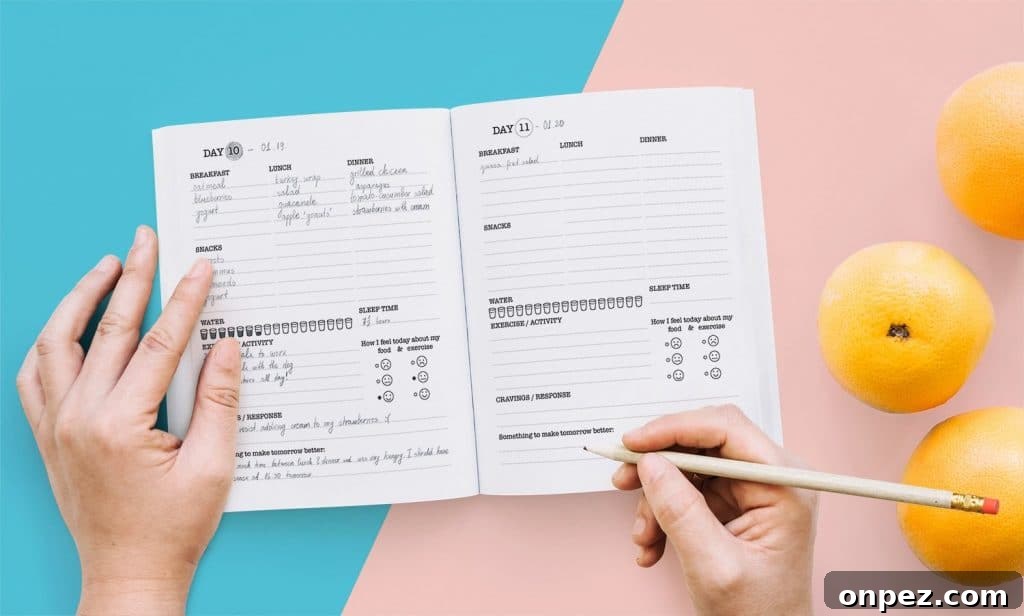
There are printable food journal templates available to help you begin, and many people also find dedicated notebooks or guided journals useful to stay consistent. Below are images of sample templates and journal pages to inspire your own practice.
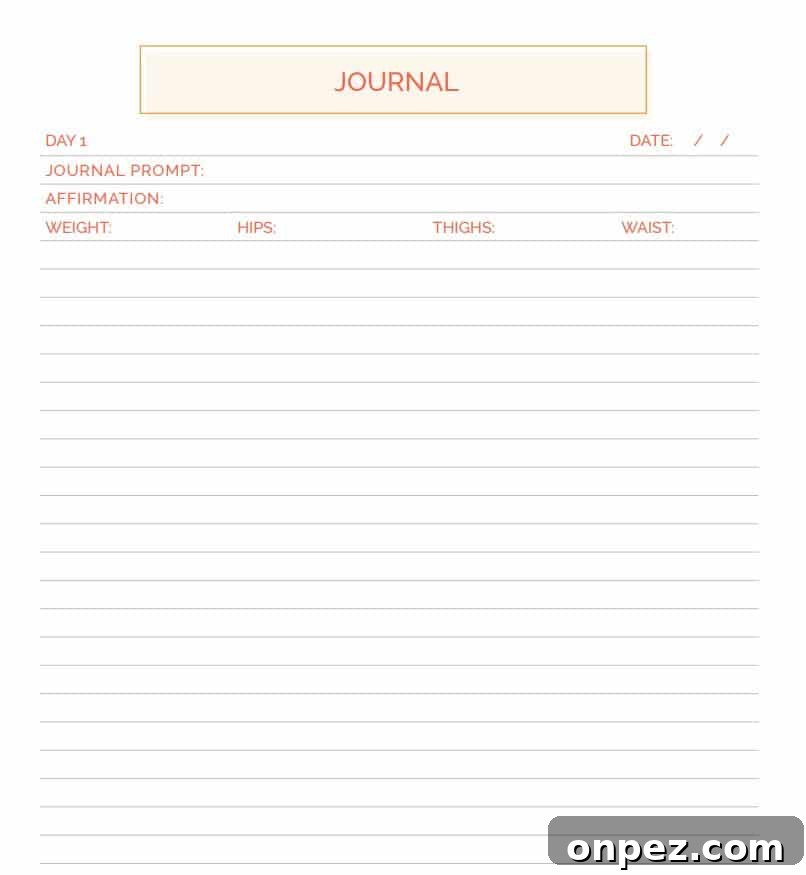
Some journal options to consider
Examples of popular guided food journals (names and typical prices at time of publishing): Hello New Me — about $8.42; Daily Food Journal — about $7.95; Book Factory Food Journal — about $7.99. Choose a format that feels manageable and pleasing to use.
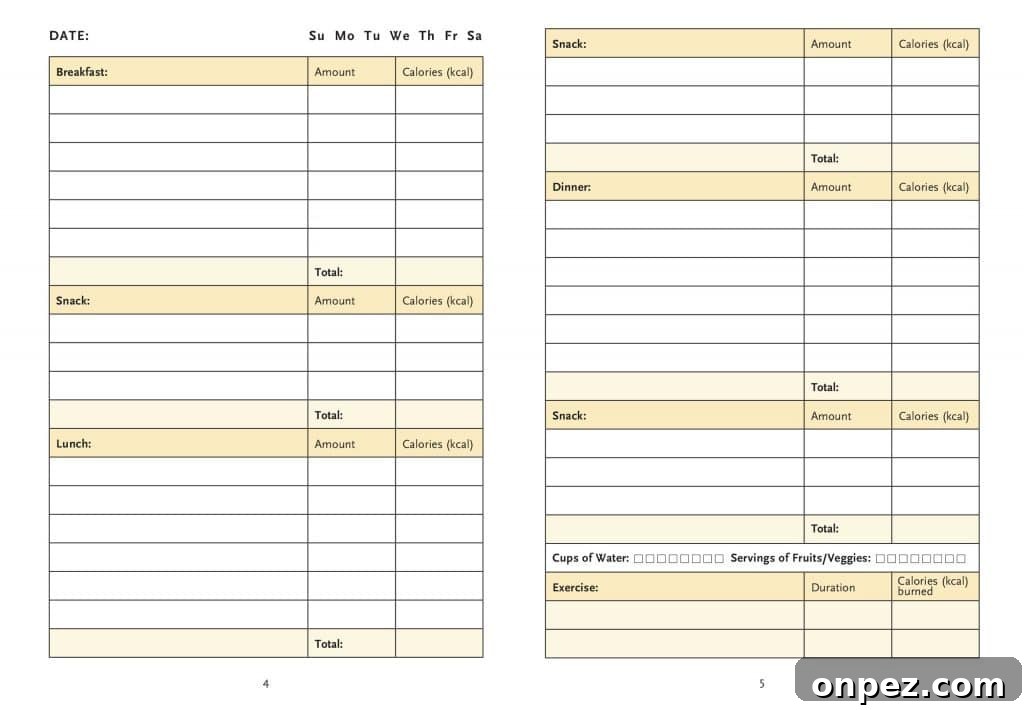
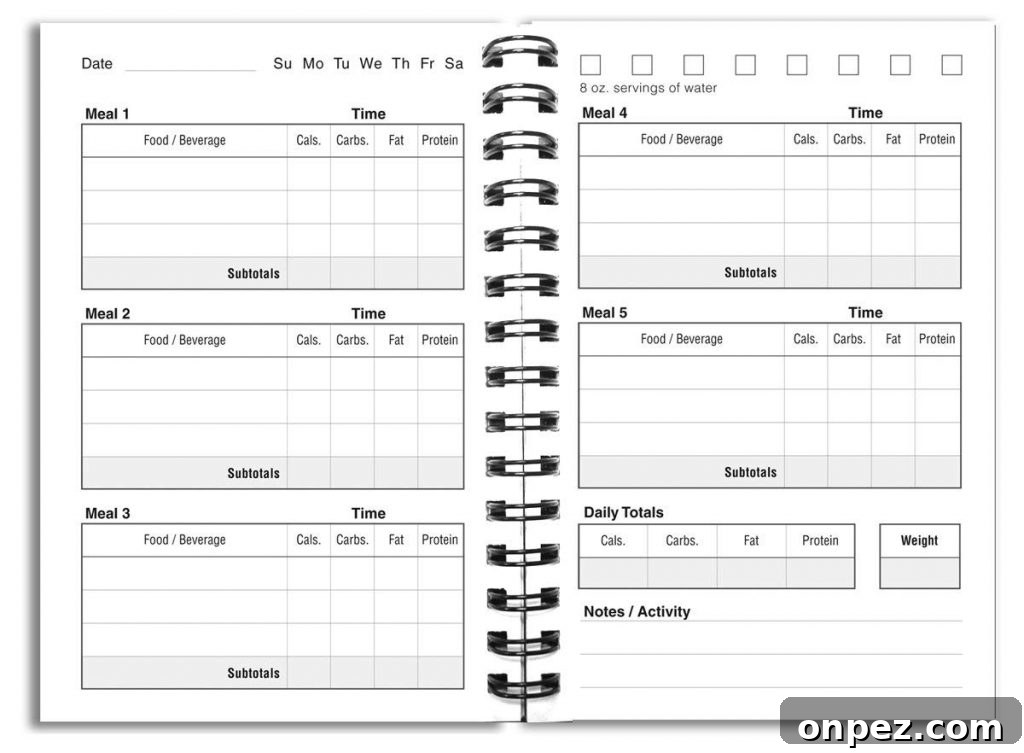
This article includes content adapted from a free weight loss ebook titled “The Purposeful Diet.” The book explores mindful eating and practical strategies for sustainable weight loss.
If you like this, you might also like
- Body for Life Cheesecake
- 52 Weight Loss Affirmations To Start Using Today
- 7 Portion Control Handouts to Put on Your Fridge
- Importance of Mindful Eating on Weight Loss
- My Best Weight Loss Tips To Stick To Your Diet in 2022