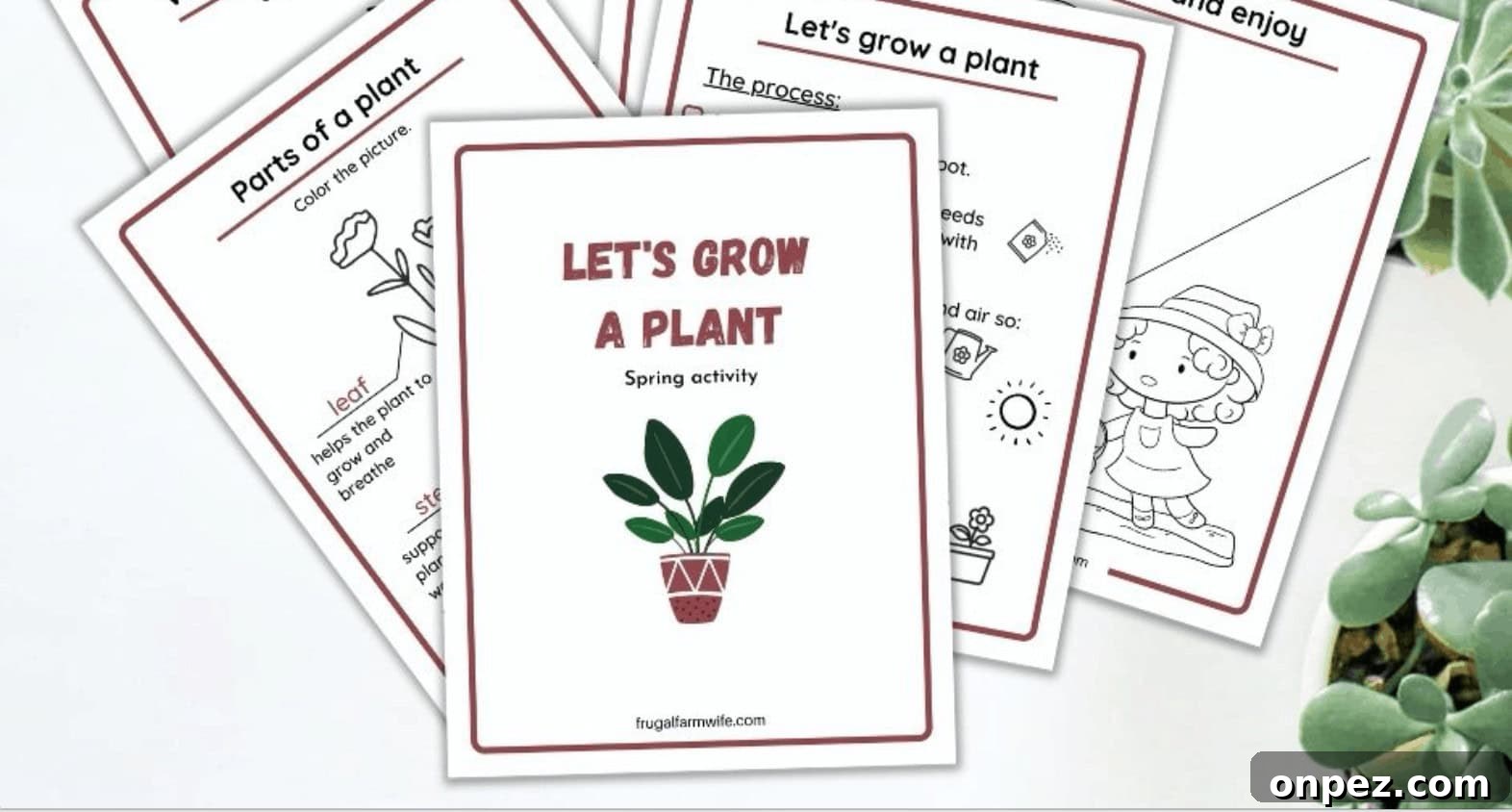
Looking for an engaging way to spark your children’s interest in nature this spring? This spring garden printable for kids is designed to be both educational and simple to use, making it perfect for home, classroom, or homeschool science time.
As a parent—especially if you homeschool—you constantly look for activities that turn curiosity into learning. This printable pack turns a basic planting project into a hands-on science lesson that encourages observation, critical thinking, and creativity.
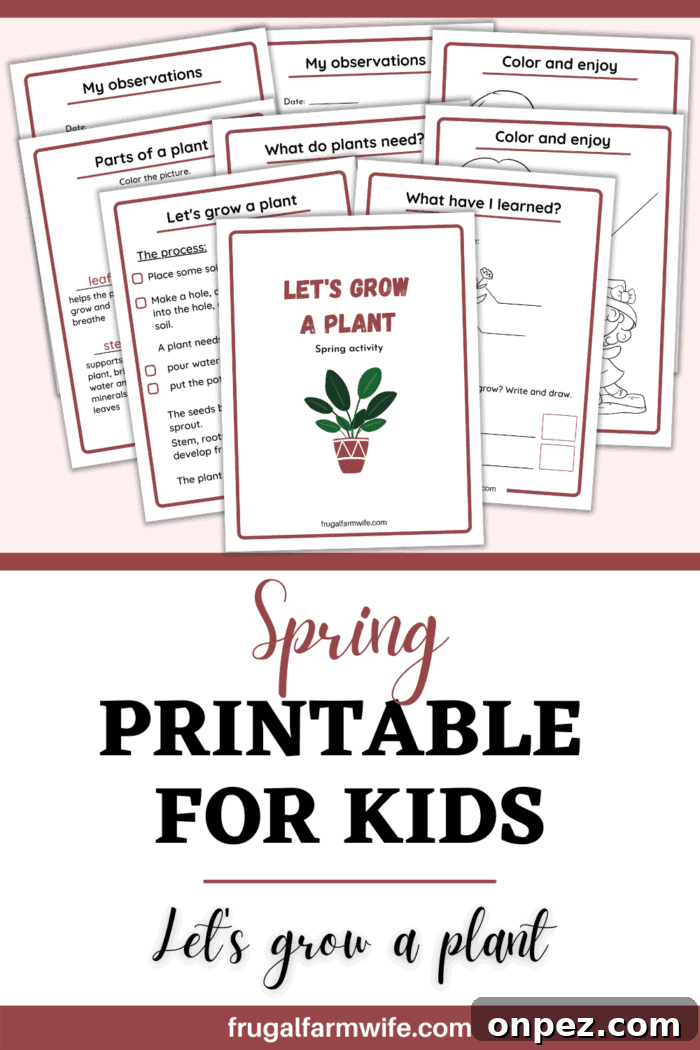
The set blends a checklist, basic information pages, a simple journal, and coloring sheets with the real-world challenge of growing a plant. My seven-year-old has been captivated by the process—planning, planting, watching, and recording—and the variety of pages keeps the experience fresh.
In a homesteading household, children often help with gardening and animal care, but it’s important they understand the reasons behind each task—not just how to do them. This printable encourages discussion about cause and effect in nature: why we choose certain soil, how water moves through a plant, and what the sun does for growth. Those conversations deepen understanding and make the activity more meaningful.
The coloring pages are a gentle but effective way to reinforce those lessons. Coloring feels like play, yet it visually reinforces the parts of a plant and the stages of growth, helping younger learners retain information while enjoying the process.
Page one: Parts of a plant. Use this page to talk through each part and its purpose. Explain that roots anchor the plant and absorb water and nutrients from the soil. The stem supports the plant and transports water and nutrients upward. Leaves are the site of photosynthesis, exchanging gases and producing energy for the plant. Flowers attract pollinators and produce seeds, allowing the plant to reproduce.
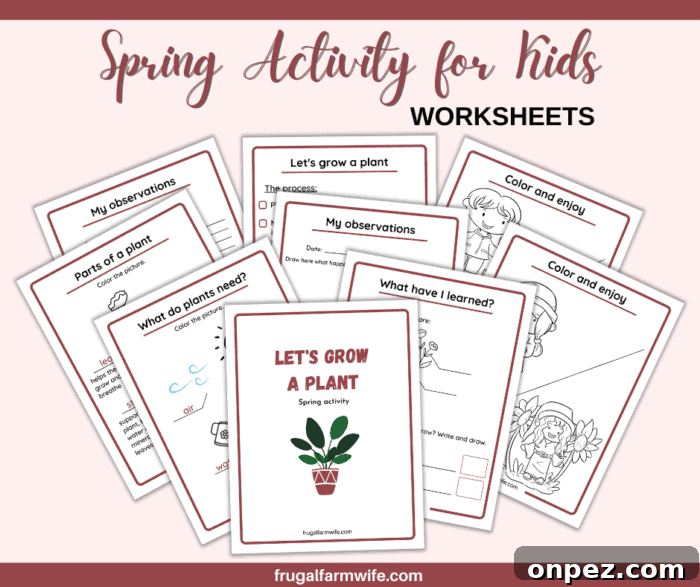
Page two: What do plants need? This page introduces the essentials: soil, water, air, and sunlight. Discuss how soil provides nutrients and structure, water moves nutrients through the plant, air supplies carbon dioxide for photosynthesis, and sunlight powers energy production.
Page three: The project checklist and planning page. Gather your materials together, choose a container and soil, and decide on seeds. Use the checklist to walk through your planting steps and discuss why each choice matters—soil type, seed depth, watering schedule, and sunlight exposure. If questions come up you don’t have immediate answers to, use the moment to research together. Finding answers as a team models curiosity and research skills.
Pages four and five: Observation journal. These pages prompt kids to make regular notes and drawings as their plant grows. Writing down measurements, recording dates, and sketching changes trains observation skills and reinforces learning. Over time, children often learn more from this active journaling than from passive reading.
Page six: Conclusion and reflection. At the end of the experiment, use this page to summarize what worked, what didn’t, and what your child learned about plant growth. Revisit the plant parts and the roles they played in the growing process.
Pages seven and eight: Coloring and review. These sheets can be used anytime—during the project or afterward. Coloring the plant stages and parts helps reinforce the concepts while allowing kids to express creativity. It also makes the science project feel like a fun craft session.
To use the printable, download the full set and print the pages you want to include in your child’s science binder. The checklist and journal pages work best as ongoing references, while the coloring sheets are great for transition times or quiet activities.
Spring Garden Printable for Kids
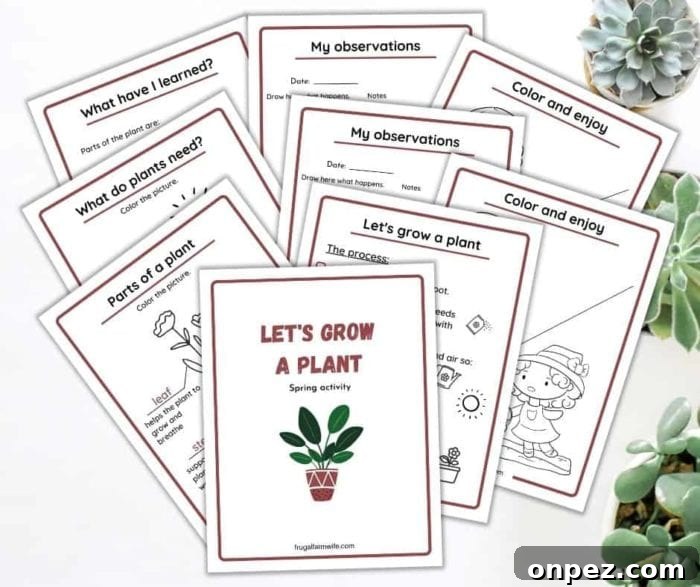
If you enjoy seasonal activities that promote learning and hands-on discovery, consider adding this printable to your teaching resources. It pairs well with outdoor planting time, nature walks, and simple experiments that show how light, water, and soil affect plant growth. Happy planting and observing—this small project can spark a lifelong interest in nature and science.